
As wireless communication, automotive radar, and high-speed electronic systems continue to advance, high-frequency PCB materials must maintain stable electrical performance under changing operating temperatures.
At millimeter-wave frequencies, even small variations in PCB material properties can introduce:
- Impedance deviation
- Phase shift
- Increased insertion loss
- Signal degradation
For applications such as 5G communication systems, 77 GHz automotive radar, RF modules, and microwave devices, selecting a high-frequency PCB material with excellent temperature stability is essential to maintaining long-term reliability.
Why Temperature Stability Matters in High-Frequency PCBs
Traditional PCB material evaluations are often performed at room temperature (approximately 25°C). However, real-world electronic systems may operate under much more challenging conditions due to:
- Internal heat generation
- Outdoor environmental temperature changes
- High RF power operation
- Compact device structures
At elevated temperatures, PCB materials may experience changes in:
- Dielectric constant (Dk)
- Dissipation factor (Df)
- Thermal expansion behavior
- Signal transmission characteristics
These variations can directly affect RF and mmWave circuit performance.
For high-frequency applications, engineers need to evaluate not only the material’s room-temperature performance but also its stability across the entire operating temperature range.
Key Temperature-Dependent Parameters for High-Frequency PCB Materials
1. Temperature Coefficient of Dielectric Constant (TCDk)
The dielectric constant (Dk) determines how electrical signals propagate through PCB materials.
When temperature changes, Dk may also change, causing:
- Impedance variation
- Phase instability
- Frequency shift in RF circuits
Ideally, high-frequency PCB materials should have minimal Dk variation over temperature.
A lower TCDk value indicates better dielectric stability, which is particularly important for:
- mmWave antennas
- RF transceivers
- Phase-controlled systems
2. Temperature Coefficient of Insertion Loss (TCIL)
Insertion loss represents the signal power lost during transmission through a PCB structure.
At higher temperatures, material changes may increase:
- Conductor loss
- Dielectric loss
- RF attenuation
TCIL helps engineers understand how PCB transmission performance changes under different temperature conditions.
For systems operating at millimeter-wave frequencies, stable insertion loss is critical for maintaining:
- Signal strength
- Communication range
- Radar detection accuracy
Impact of Temperature on mmWave PCB Performance
Dk Variation and Phase Stability
At mmWave frequencies, even small dielectric changes can create noticeable phase errors.
For example, in 77 GHz applications, temperature-related Dk variation may influence:
- Antenna radiation characteristics
- Beamforming accuracy
- Signal synchronization
This is especially important for automotive radar and 5G communication systems where precise phase control is required.
Material Example: Rogers RO3003G2 for mmWave Applications
Advanced high-frequency laminates such as Rogers RO3003G2 are designed for applications requiring:
- Low dielectric loss
- Stable Dk performance
- Excellent frequency consistency
- High-temperature reliability
RO3003G2 uses a PTFE-based material system with ceramic fillers to achieve improved dielectric consistency, making it suitable for:
- 77/79 GHz automotive radar
- RF front-end modules
- High-frequency communication systems
Testing results show that RO3003G2 maintains stable dielectric performance under elevated temperature conditions, helping reduce phase variation in mmWave circuits.
How Temperature Stability Influences RF System Reliability
For RF and microwave systems, unstable PCB materials may result in:
Phase Error
Temperature-induced dielectric changes can shift signal phase, affecting:
- Antenna performance
- Beamforming accuracy
- RF calibration
Increased Signal Loss
Higher temperature may increase insertion loss, reducing:
- Transmission efficiency
- Signal margin
- System reliability
Frequency Drift
In antenna applications, material instability can cause resonance frequency shifts, affecting overall system performance.
PCB Manufacturing Considerations for High-Frequency Materials
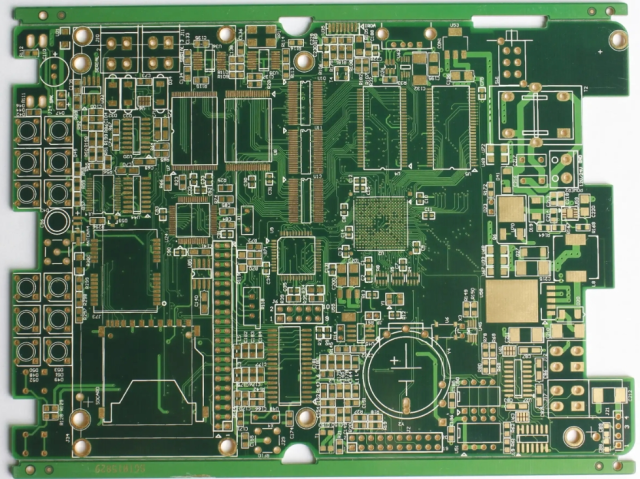
Selecting advanced laminate materials is only the first step. Manufacturing processes also significantly influence RF performance.
Reliable high-frequency PCB fabrication requires:
Controlled Stackup Design
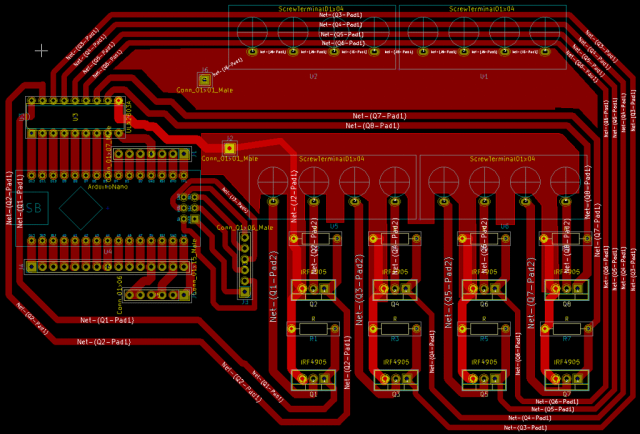
- Precise dielectric thickness control
- Stable layer registration
- Optimized RF transmission structures
Copper Surface Optimization
Smooth copper surfaces help reduce conductor loss, especially at high frequencies.
Impedance Control
Tight impedance tolerance is required to maintain predictable RF behavior.
Process Verification
Key validation methods include:
- TDR impedance testing
- Material verification
- RF performance testing
KKPCB High-Frequency PCB Manufacturing Capability
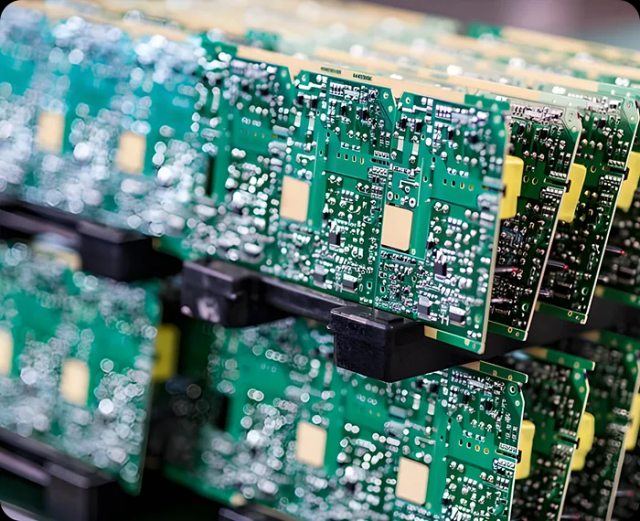
KKPCB provides high-frequency PCB manufacturing solutions for RF, microwave, and mmWave applications.
Our engineering support includes:
- High-frequency laminate processing
- Rogers/PTFE material fabrication
- Multilayer RF stackup optimization
- Controlled impedance manufacturing
- DFM analysis before production
- Prototype and volume production support
By combining advanced materials with precise manufacturing processes, KKPCB helps customers achieve reliable RF performance in demanding environments.
Conclusion
Temperature stability is a critical factor in high-frequency PCB performance. As RF systems move toward higher frequencies and more compact designs, PCB material selection must consider not only electrical characteristics at room temperature but also performance under real operating conditions.
Parameters such as TCDk and TCIL provide valuable insight into how materials behave under temperature changes, helping engineers select reliable solutions for mmWave, 5G, radar, and high-speed communication applications.
With advanced PCB manufacturing capability and engineering support, KKPCB helps customers develop high-frequency circuit solutions with consistent performance, reliability, and manufacturability.
