
Rigid-Flex PCB: Integrating Mechanical Flexibility with Rigid PCB Performance
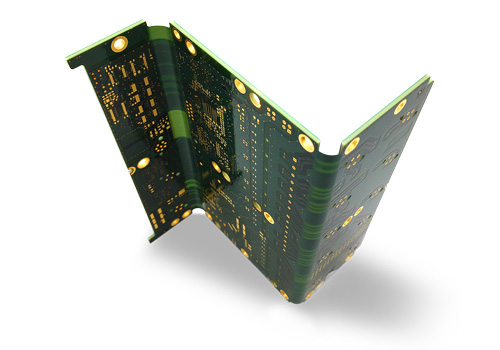
A Rigid-Flex PCB is a hybrid printed circuit board that combines rigid PCB sections and flexible circuits into a single integrated structure. By embedding flexible polyimide layers between rigid FR-4 or high-performance laminates, Rigid-Flex PCB architectures eliminate connectors, reduce interconnect failures, and enable compact three-dimensional electronic assemblies.
Rigid-Flex PCB technology has become a preferred solution for electronics requiring high reliability, space optimization, vibration resistance, and complex mechanical integration.
Why Rigid-Flex PCB Is Critical for Modern Electronic Systems
Traditional designs rely on separate rigid boards connected by cables or connectors, which introduce signal loss, mechanical failure points, and assembly complexity. A Rigid-Flex PCB consolidates these elements into one unified structure.
Key advantages of Rigid-Flex PCB designs include:
-
Reduced connector count and interconnect loss
-
Improved signal integrity across moving or folded sections
-
Higher mechanical reliability under vibration and shock
-
Compact and lightweight system architecture
-
Simplified assembly and improved yield
By integrating electrical and mechanical design, Rigid-Flex PCBs enable system-level optimization rather than board-level compromises.
Signal Integrity Benefits of Rigid-Flex PCB Structures
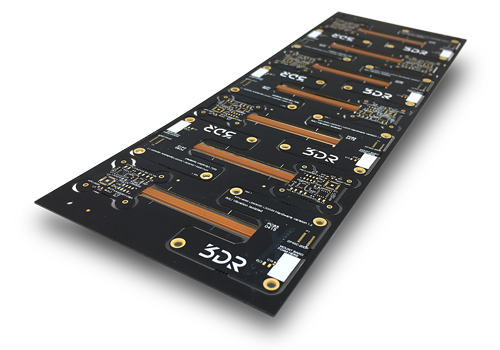
High-speed and high-frequency signals are sensitive to impedance discontinuities introduced by connectors and cables. Rigid-Flex PCB technology significantly improves signal integrity by maintaining continuous copper traces across rigid and flex regions.
From an electrical perspective, Rigid-Flex PCBs provide:
-
Stable controlled impedance across rigid-to-flex transitions
-
Reduced reflection and insertion loss
-
Improved phase consistency for high-speed interfaces
-
Lower EMI risk compared to cable-based interconnections
-
Better grounding continuity across mechanical folds
These characteristics make Rigid-Flex PCB designs ideal for high-speed digital, RF, and mixed-signal applications.
Mechanical Reliability Advantages of Rigid-Flex PCB Designs
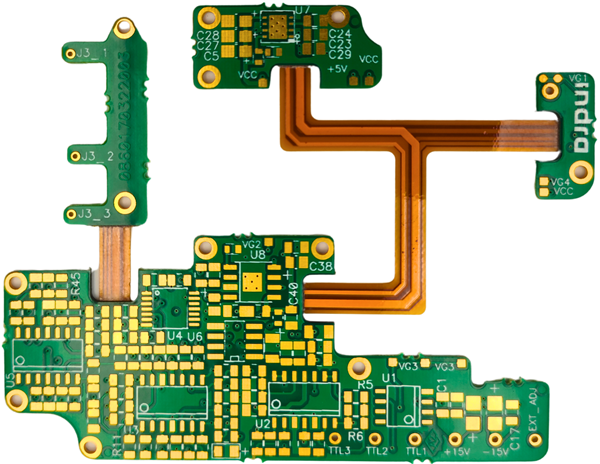
Mechanical stress is one of the leading causes of PCB failure in harsh environments. Rigid-Flex PCB constructions are engineered to absorb stress through flexible regions while protecting rigid component areas.
Key mechanical advantages include:
-
High resistance to vibration and repetitive bending
-
Reduced solder joint stress compared to rigid boards
-
Improved shock resistance in portable and mobile devices
-
Longer product lifespan under dynamic mechanical loads
Because flex layers are designed with controlled bend radius and copper grain orientation, Rigid-Flex PCBs maintain long-term reliability even in moving assemblies.
Rigid-Flex PCB Stackup and Material Engineering
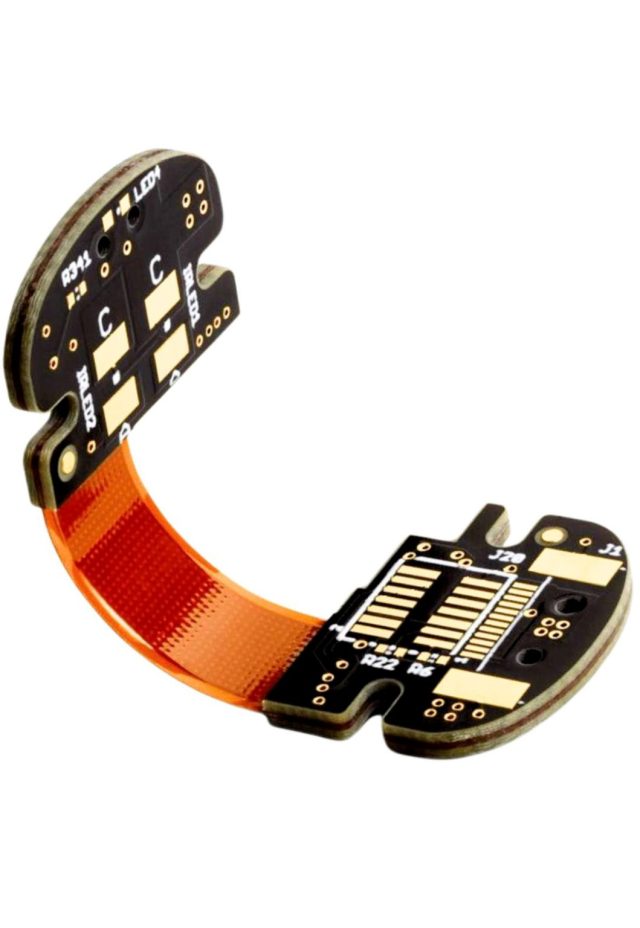
Designing a reliable Rigid-Flex PCB stackup requires careful material selection and layer transition control.
Typical Rigid-Flex PCB stackup considerations include:
-
Polyimide dielectric for flex layers
-
Rolled annealed copper for improved flex endurance
-
FR-4, high-Tg, or low-loss laminates for rigid sections
-
Adhesiveless constructions for improved thermal reliability
-
Controlled coverlay thickness for mechanical protection
Proper stackup symmetry and copper balance are critical to prevent warpage and ensure dimensional stability in Rigid-Flex PCB manufacturing.
Manufacturing Complexity of Rigid-Flex PCBs
Fabricating a Rigid-Flex PCB is significantly more complex than producing standard rigid boards. It requires tight process control across multiple fabrication stages.
Key manufacturing challenges include:
-
Precision laser or mechanical routing of flex areas
-
Accurate alignment between rigid and flexible layers
-
Controlled lamination pressure to protect flex regions
-
Coverlay application and curing consistency
-
Electrical testing across dynamic interconnect paths
Because errors cannot be reworked easily, Rigid-Flex PCB fabrication demands advanced equipment, experienced engineering, and rigorous quality inspection.
Thermal and Reliability Performance of Rigid-Flex PCB
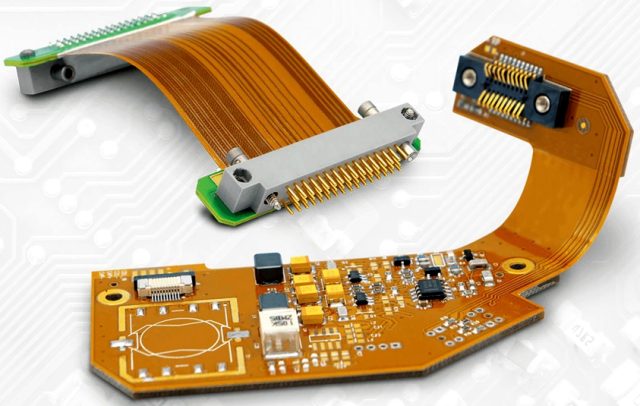
Rigid-Flex PCB designs can be optimized for thermal performance by integrating internal copper planes and thermal paths within rigid sections while maintaining flexibility elsewhere.
Reliability advantages include:
-
Improved thermal cycling performance
-
Reduced failure points from eliminated connectors
-
Stable electrical performance over temperature extremes
-
Long-term durability in mission-critical applications
These properties make Rigid-Flex PCBs suitable for environments where mechanical and thermal stresses coexist.
Applications of Rigid-Flex PCB Technology
Rigid-Flex PCBs are widely used in applications requiring compact design and high reliability, including:
-
Aerospace and avionics systems
-
Medical devices and implantable electronics
-
Automotive ADAS and in-vehicle electronics
-
Industrial automation and robotics
-
Wearable electronics and IoT devices
In these applications, Rigid-Flex PCB solutions enable innovative product form factors while maintaining electrical integrity.
KKPCB Rigid-Flex PCB Capabilities
KKPCB offers full-spectrum Rigid-Flex PCB engineering and manufacturing services, including:
-
Custom rigid-flex stackup design and DFM support
-
Adhesiveless and high-reliability constructions
-
Controlled impedance rigid-flex routing
-
High-layer-count rigid-flex PCB fabrication
-
Prototype to volume production scalability
Every Rigid-Flex PCB produced by KKPCB is engineered to meet strict electrical, mechanical, and reliability requirements.
Conclusion
A Rigid-Flex PCB enables compact integration, superior signal integrity, and exceptional mechanical reliability by combining rigid and flexible technologies into a single platform. As electronic systems become smaller, faster, and more mechanically complex, Rigid-Flex PCB architectures provide a decisive engineering advantage.
KKPCB delivers reliable Rigid-Flex PCB solutions through advanced materials, precision manufacturing, and deep engineering expertise—supporting next-generation electronic systems from concept to production.
