
With the rapid development of Industrial Internet of Things (IIoT), intelligent manufacturing, and automated monitoring systems, smart sensors have become essential components in modern industrial environments.
Unlike traditional sensors that only collect basic signals, industrial smart sensors integrate sensing elements, signal processing circuits, communication modules, and embedded control functions to provide real-time monitoring and intelligent data processing.
At the core of these systems, the customized PCBA (Printed Circuit Board Assembly) serves as the electronic foundation responsible for:
- Sensor signal acquisition
- Data processing
- Power management
- Communication functions
- System control and protection
A reliable PCBA solution enables industrial smart sensors to achieve higher accuracy, stronger environmental adaptability, and long-term stable operation in demanding industrial conditions.
1. What Is an Industrial Smart Sensor PCBA?
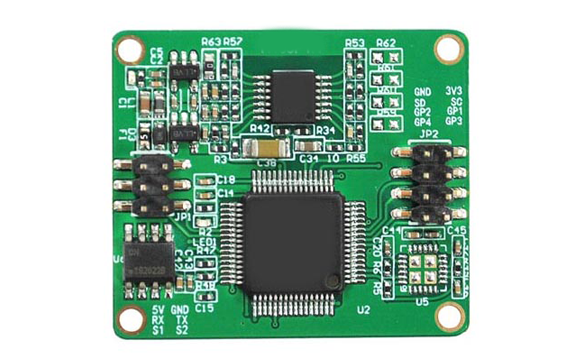
An industrial smart sensor PCBA is a customized electronic assembly designed to support intelligent sensing systems used in industrial applications.
It integrates multiple functional circuits, including:
- Microcontrollers (MCUs)
- Analog front-end circuits
- Signal conditioning circuits
- Communication interfaces
- Power supply modules
- Protection circuits
The basic operation flow is:
Sensor Element → Signal Acquisition → Signal Processing → Data Communication → Industrial Control System
The PCBA acts as the bridge between physical measurements and digital industrial systems.
2. Key Requirements for Industrial Smart Sensor PCBAs
Industrial smart sensors often operate in complex environments involving:
- Temperature fluctuations
- Vibration
- Electromagnetic interference
- Dust and moisture
- Continuous operation
Therefore, their PCBAs require high reliability and optimized design.
2.1 High-Precision Signal Processing
Industrial sensors often measure small electrical signals from:
- Temperature sensors
- Pressure sensors
- Vibration sensors
- Optical sensors
- Current sensors
The PCBA must maintain signal accuracy by controlling:
- Noise interference
- Signal distortion
- Grounding paths
- Analog and digital separation
Proper PCB layout is essential to ensure stable measurement results.
2.2 Reliable Communication Interfaces
Modern smart sensors require communication with industrial networks.
Common interfaces include:
- RS-485
- CAN bus
- Ethernet
- IO-Link
- Wireless communication modules
PCBA design must consider:
- Signal integrity
- Impedance matching
- EMI protection
- Surge protection
This helps maintain reliable data transmission in industrial environments.
2.3 Low-Power and Efficient Power Management
Many smart sensors operate continuously and may require low power consumption.
Power management circuits need to provide:
- Stable voltage regulation
- Protection against voltage fluctuations
- Efficient energy conversion
Design considerations include:
- DC-DC converters
- LDO regulators
- Power filtering
- Battery management (for wireless sensors)
2.4 Compact and Integrated Design
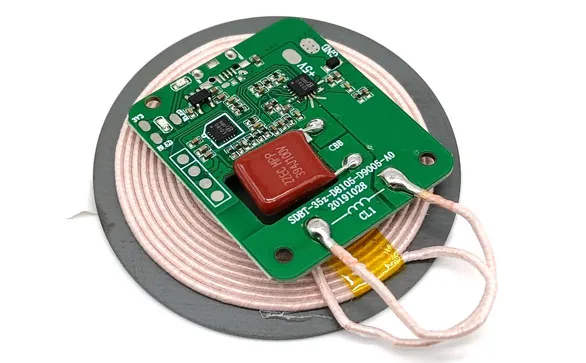
Industrial sensors often require small installation spaces.
PCBA design challenges include:
- Limited PCB area
- Multiple functional modules
- High component density
Solutions include:
- Multilayer PCB structures
- HDI technology
- Miniature SMD components
- Optimized component placement
2.5 Environmental Reliability
Industrial smart sensor PCBAs must withstand harsh operating conditions.
Important reliability factors include:
- Temperature resistance
- Moisture protection
- Vibration resistance
- Chemical resistance
Possible solutions include:
- Conformal coating
- High-Tg PCB materials
- Industrial-grade components
- Robust connector design
3. Main Design Challenges for Smart Sensor PCBAs
3.1 Analog and Digital Signal Isolation
Smart sensors often contain both:
- Sensitive analog circuits
- High-speed digital circuits
Poor isolation may cause:
- Measurement errors
- Signal noise
- Communication instability
Design approaches include:
- Separate analog and digital ground areas
- Optimized return paths
- Controlled signal routing
3.2 EMI/EMC Control
Industrial environments contain many electromagnetic noise sources:
- Motors
- Inverters
- Switching power supplies
- Industrial communication equipment
PCBAs require:
- Proper grounding
- Shielding structures
- Filtering components
- Protection circuits
Effective EMC design improves sensor reliability.
3.3 Thermal Management
Although smart sensors typically have lower power consumption than industrial controllers, heat management remains important.
Thermal considerations include:
- Component placement
- Copper area optimization
- Heat dissipation paths
This helps maintain:
- Measurement accuracy
- Component lifetime
3.4 Protection Circuit Design
Industrial sensors may face electrical disturbances such as:
- Voltage spikes
- Electrostatic discharge (ESD)
- Surge events
Protection methods include:
- TVS diodes
- ESD protection devices
- Overvoltage protection circuits
4. Customized PCBA Manufacturing Process for Smart Sensors
4.1 Engineering Review and DFM Analysis
Before manufacturing, engineers evaluate:
- PCB layout
- BOM availability
- Component selection
- Assembly feasibility
DFM review helps identify:
- Manufacturing risks
- Assembly issues
- Reliability concerns
4.2 PCB Fabrication
Depending on sensor requirements, PCB technologies may include:
Material selection may consider:
4.3 Component Procurement
Industrial smart sensors require reliable components.
Key considerations:
- Component lifecycle
- Supply chain stability
- Industrial temperature ratings
4.4 SMT Assembly
The SMT process includes:
- Solder paste printing
- Component placement
- Reflow soldering
- Inspection
Quality control methods include:
- SPI inspection
- AOI inspection
- X-ray inspection
4.5 Testing and Validation
Smart sensor PCBAs require comprehensive testing.
Electrical Testing
Includes:
- Continuity testing
- Insulation testing
Functional Testing
Verification of:
- Sensor signal acquisition
- Communication functions
- Power performance
Environmental Testing
May include:
- Temperature cycling
- Vibration testing
- Long-term operation testing
5. PCB Technologies Used in Industrial Smart Sensors
5.1 Multilayer PCB
Advantages:
- Higher routing density
- Better signal separation
- Improved power distribution
Applications:
- Complex sensor controllers
5.2 HDI PCB
Advantages:
- Compact size
- Fine-pitch component support
Applications:
- Miniaturized smart sensors
- IoT sensor modules
5.3 Flexible PCB
Advantages:
- Space-saving
- Supports dynamic installation
Applications:
- Wearable industrial sensors
- Compact sensor assemblies
5.4 Rigid-Flex PCB
Advantages:
- Combines mechanical flexibility and structural reliability
Applications:
- Complex industrial sensor systems
6. Applications of Industrial Smart Sensor PCBAs
Industrial Automation
Applications:
- Machine condition monitoring
- Production line sensors
- Equipment diagnostics
Requirements:
- High reliability
- Real-time communication
Predictive Maintenance Systems
Smart sensors monitor:
- Vibration
- Temperature
- Pressure
PCBAs support:
- Data processing
- Communication with monitoring platforms
Energy Management Systems
Applications:
- Power monitoring
- Energy consumption analysis
Requirements:
- Accurate measurement
- Stable operation
Robotics and Intelligent Equipment
Applications:
- Position sensing
- Force detection
- Environmental monitoring
Requirements:
- Fast response
- Reliable communication
7. Benefits of Customized PCBA Solutions
A professional custom PCBA solution can provide:
Design Optimization
Including:
- Circuit review
- PCB layout optimization
- Component selection support
Manufacturing Integration
Including:
- PCB fabrication
- Component sourcing
- SMT assembly
- Testing
Improved Product Reliability
Through:
- Process control
- Quality inspection
- Engineering verification
8. Future Trends of Industrial Smart Sensor PCBAs
Edge Intelligence Integration
Future smart sensors will integrate:
- AI processing capability
- Local data analysis
- Faster decision-making
Wireless Industrial Sensors
Development trends include:
- Low-power wireless communication
- Battery optimization
- Energy harvesting technologies
Higher Integration Density
Future PCBAs will require:
- Smaller form factors
- Advanced packaging
- HDI technology
Enhanced Reliability Requirements
Industrial applications will continue demanding:
- Longer operating life
- Better environmental resistance
- Higher manufacturing consistency
Conclusion
Customized PCBAs are the foundation of industrial smart sensor systems, enabling accurate sensing, intelligent processing, and reliable communication.
Successful smart sensor PCBA development requires careful consideration of:
- Signal integrity
- Power management
- EMI/EMC protection
- Thermal performance
- Environmental reliability
- Manufacturing feasibility
Through advanced PCB technologies, optimized design processes, and strict quality control, customized PCBA solutions help industrial smart sensors achieve higher accuracy, longer service life, and improved performance in modern intelligent manufacturing environments.
