
As electronic products continue to evolve toward miniaturization, lightweight structures, and higher integration, flexible printed circuit boards (Flex PCBs) have become an essential technology for modern electronic systems.
Compared with traditional rigid PCBs, Flex PCBs offer unique advantages:
- Three-dimensional assembly capability
- Reduced product thickness and weight
- Improved space utilization
- Fewer connectors and wiring components
- Better resistance to vibration and mechanical stress
These advantages make Flex PCBs widely used in:
- Wearable devices
- Medical electronics
- Automotive electronics
- Aerospace systems
- Industrial equipment
- Consumer electronics
- High-frequency communication products
However, selecting a fast Flex PCB manufacturer requires more than evaluating production lead time. A capable supplier must balance speed, engineering expertise, manufacturing capability, and quality reliability.
A manufacturer that can deliver quickly but lacks process control may introduce risks such as:
- Copper cracking
- Layer delamination
- Poor dimensional accuracy
- Assembly failures
- Reduced product lifetime
Therefore, engineers and procurement teams should evaluate multiple aspects before choosing a Flex PCB partner.
1. Evaluate Flex PCB Manufacturing Experience
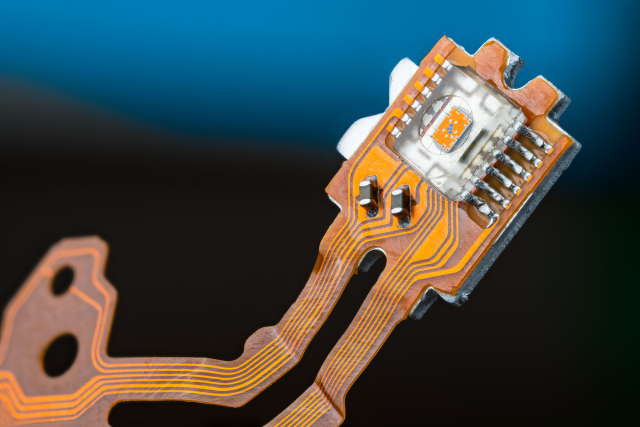
Flex PCB manufacturing involves different processes compared with rigid PCB production because flexible materials behave differently during:
- Lamination
- Drilling
- Etching
- Assembly
- Mechanical bending
An experienced manufacturer should understand critical factors such as:
- Polyimide material characteristics
- Copper foil selection
- Coverlay processing
- Stiffener application
- Bend reliability requirements
A supplier with extensive Flex PCB experience can identify potential manufacturing risks during the early design stage and provide practical solutions.
2. Check Technical Manufacturing Capabilities
A reliable Flex PCB manufacturer should have the ability to support different structural requirements.
2.1 Flexible PCB Layer Capability
Depending on product requirements, Flex PCBs may include:
The manufacturer should have suitable process capability for the required structure.
2.2 Fine-Line and High-Density Manufacturing
Modern electronic products require increasingly compact PCB designs.
Important capabilities include:
- Fine trace width and spacing
- High-density routing
- Microvia processing
- Small pad manufacturing
These capabilities are especially important for:
- Wearable electronics
- Medical monitoring devices
- Compact sensors
- Portable electronic products
2.3 Material Selection Capability
Material selection directly affects:
- Flexibility
- Electrical performance
- Thermal reliability
- Mechanical durability
Common flexible PCB materials include:
Polyimide (PI)
Advantages:
- Excellent flexibility
- High temperature resistance
- Stable mechanical properties
Adhesive-Free Flexible Materials
Advantages:
- Reduced thickness
- Improved dimensional stability
- Better electrical performance
High-Frequency Flexible Materials
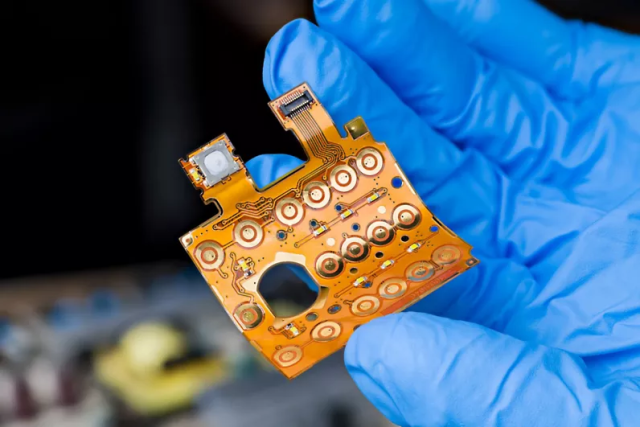
Used for:
- RF modules
- Antenna circuits
- High-speed communication systems
A professional manufacturer should recommend materials according to:
- Operating environment
- Signal requirements
- Mechanical conditions
3. Balance Manufacturing Speed and Production Reliability
Fast delivery is important for:
- Prototype verification
- Product development cycles
- Small-batch production
- Urgent market launches
However, production speed should not compromise quality.
A capable Flex PCB manufacturer should have:
- Efficient engineering review procedures
- Optimized production workflow
- Stable material supply
- Flexible production scheduling
Key evaluation points include:
- Prototype turnaround capability
- Small-volume production support
- Engineering response efficiency
- Production capacity stability
4. Consider DFM Engineering Support
Flex PCB manufacturing success depends heavily on design feasibility.
Before production, professional manufacturers should provide Design for Manufacturing (DFM) analysis.
Important review items include:
Bend Area Design
Engineers should evaluate:
- Bend location
- Bend frequency
- Minimum bend radius
Incorrect design may cause:
- Copper fatigue
- Trace fracture
- Electrical failure
Layer Transition Design
Attention should be given to:
- Rigid-flex transition areas
- Copper thickness changes
- Mechanical stress concentration
Assembly Feasibility
Manufacturers should review:
- Component placement
- Stiffener requirements
- SMT process compatibility
Early DFM analysis helps reduce:
- Production delays
- Redesign costs
- Quality risks
5. Examine Flex PCB Design Expertise
Flex PCB design requires different principles compared with conventional rigid PCB design.5.1 Bend Radius Control
The bend radius determines mechanical reliability.
Improper bending conditions may result in:
- Copper cracking
- Insulation damage
- Layer separation
Design considerations include:
- Static bending requirements
- Dynamic bending cycles
- Material thickness
5.2 Trace Routing Optimization
Flexible areas should avoid:
- Sharp corners
- Sudden width changes
- Excessive copper concentration
Recommended methods:
- Rounded trace corners
- Smooth routing paths
- Proper copper balancing
5.3 Component Placement Strategy
Components should generally be placed in rigid areas.
Avoid locating heavy components in bending zones because mechanical stress may affect:
- Solder joints
- Copper connections
- Component reliability
6. Verify Manufacturing Quality Control
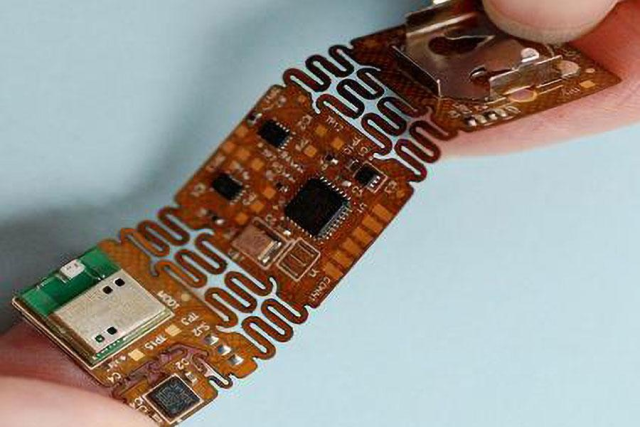
A fast Flex PCB manufacturer must also maintain strict quality management.
Important inspection processes include:
Automated Optical Inspection (AOI)
Detects:
- Open circuits
- Short circuits
- Pattern defects
Electrical Testing
Verifies:
- Circuit continuity
- Insulation resistance
- Electrical connections
Dimensional Inspection
Ensures:
- Board outline accuracy
- Hole positioning
- Assembly compatibility
Reliability Testing
Depending on application requirements, testing may include:
- Bend cycle testing
- Thermal cycling
- Humidity testing
- Mechanical stress testing
7. Evaluate Flex PCB Assembly Capability
Many Flex PCB projects require complete PCBA solutions rather than bare board manufacturing.
A capable supplier should understand:
- SMT assembly on flexible substrates
- Flexible board reinforcement
- Connector assembly
- Stiffener integration
Important assembly considerations include:
- PCB support during SMT placement
- Reflow temperature control
- Solder joint reliability
8. Assess Supply Chain and Turnkey Capability
For PCBA projects, supply chain capability can significantly improve project efficiency.
A complete Flex PCB solution provider may support:
- PCB fabrication
- Component sourcing
- BOM analysis
- PCB assembly
- Functional testing
Benefits include:
- Reduced supplier coordination
- Faster communication
- Better quality consistency
9. Consider Industry Application Experience
Different applications require different Flex PCB solutions.
Consumer Electronics
Key requirements:
- Thin structure
- Lightweight design
- High-volume production
Medical Electronics
Key requirements:
- High reliability
- Stable electrical performance
- Long service life
Automotive Electronics
Key requirements:
- Temperature resistance
- Vibration durability
- Environmental reliability
RF and Communication Systems
Key requirements:
- Controlled impedance
- Low signal loss
- Stable dielectric performance
A manufacturer with relevant industry experience can better understand application-specific challenges.
10. Common Mistakes When Selecting a Flex PCB Manufacturer
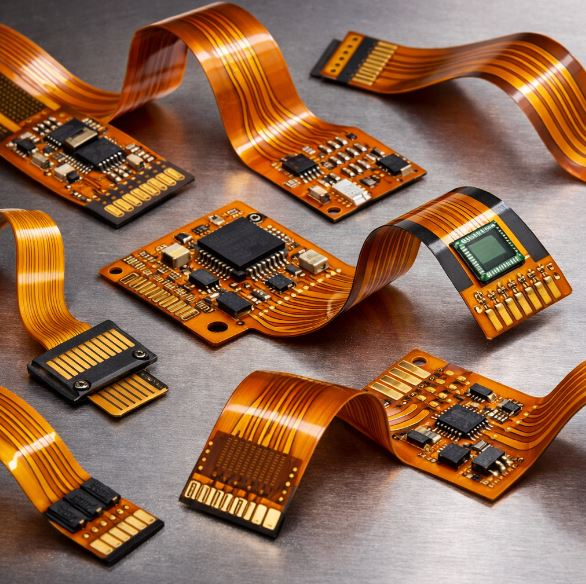
Choosing Only Based on Low Price
Low-cost suppliers may have limitations in:
- Material selection
- Engineering support
- Quality control
Ignoring Prototype Capability
A supplier experienced only in mass production may not provide sufficient support for development projects.
Overlooking Manufacturing Feedback
Without DFM suggestions, design problems may appear during production.
Focusing Only on Delivery Time
Fast manufacturing without process control may increase:
- Rework costs
- Production delays
- Field failures
11. Flex PCB Manufacturer Evaluation Checklist
Technical Capability
- Flexible PCB manufacturing experience
- Multilayer Flex PCB capability
- Material selection expertise
- Fine-line processing capability
Engineering Support
- DFM analysis
- Design optimization suggestions
- Manufacturing risk assessment
Production Capability
- Rapid prototype support
- Small-batch flexibility
- Stable production capacity
Quality Control
- AOI inspection
- Electrical testing
- Reliability verification
Service Capability
- Fast technical communication
- Supply chain support
- PCBA integration capability
Conclusion
Choosing the right fast Flex PCB manufacturer requires comprehensive evaluation of technology, engineering capability, manufacturing reliability, and service support.
A qualified Flex PCB partner should provide:
- Advanced flexible PCB manufacturing technology
- Professional engineering assistance
- Reliable quality control systems
- Flexible production capability
For industries requiring compact, lightweight, and highly reliable electronic products, selecting the right Flex PCB manufacturer can accelerate product development, reduce manufacturing risks, and improve long-term product performance.
