
Why Ceramic PCBs Are Gaining Importance
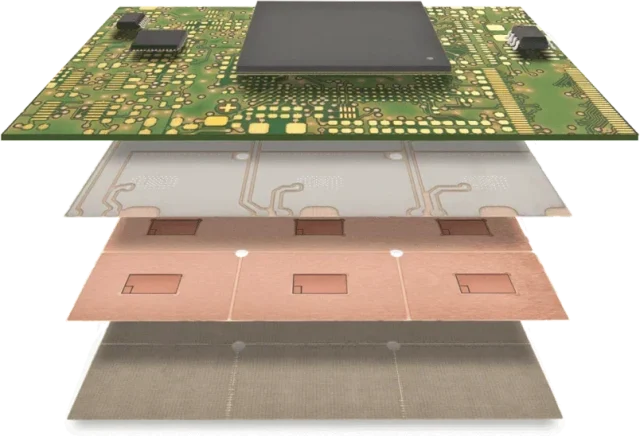
As electronic systems evolve toward higher power density, higher operating temperatures, and higher frequencies, traditional FR4 PCBs face limitations in:
- Thermal conductivity
- Heat dissipation capability
- Mechanical stability under extreme conditions
This has led to the increasing adoption of ceramic PCB substrates, especially alumina (Al₂O₃) PCBs, in applications requiring excellent thermal performance, electrical insulation, and long-term reliability.
At KKPCB, ceramic PCB solutions are widely used in high-power, RF, and harsh-environment electronics.
2. What Is a Ceramic PCB?
A ceramic PCB is a type of printed circuit board that uses ceramic materials as the substrate instead of traditional fiberglass (FR4).
Common ceramic materials include:
- Alumina (Al₂O₃)
- Aluminum nitride (AlN)
- Beryllium oxide (BeO)
These materials provide:
- High thermal conductivity
- Excellent electrical insulation
- Strong mechanical stability
- Resistance to high temperatures
3. What Is an Alumina PCB (Al₂O₃ Substrate)?
3.1 Definition of Alumina PCB
An alumina PCB uses aluminum oxide (Al₂O₃) as its base material. It is the most widely used ceramic substrate due to its cost-effectiveness and balanced performance.
3.2 Key Characteristics of Alumina Substrates
- Thermal conductivity: ~20–30 W/m·K
- High dielectric strength
- Good mechanical strength
- Excellent chemical stability
- Stable performance under high temperature
4. Structure of Ceramic PCB
A typical ceramic PCB consists of:
- Ceramic substrate (Al₂O₃ / AlN)
- Conductive layer (copper, silver, or gold)
- Dielectric interface (if required)
Unlike traditional PCBs, ceramic PCBs often use:
- Direct Bonded Copper (DBC)
- Direct Plated Copper (DPC)
- Thick-film or thin-film metallization
5. Key Advantages of Ceramic PCB and Alumina PCB
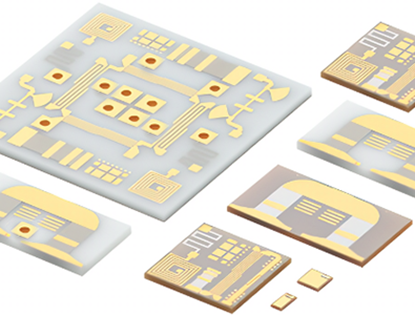
5.1 Superior Thermal Conductivity
Ceramic substrates efficiently dissipate heat, making them ideal for high-power electronics.
5.2 High Temperature Resistance
Ceramic PCBs can operate at:
- Extremely high temperatures
- Harsh industrial environments
5.3 Excellent Electrical Insulation
Ceramic materials provide:
- High dielectric strength
- Low leakage current
5.4 Dimensional Stability
Low thermal expansion ensures:
- Reliable performance under thermal cycling
- Reduced mechanical stress
5.5 High-Frequency Performance
Ceramic PCBs are suitable for:
- RF and microwave circuits
- High-frequency signal transmission
6. Manufacturing Processes of Ceramic PCB
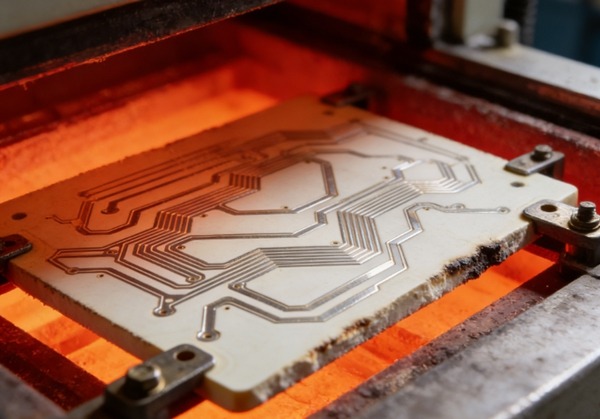
6.1 Direct Bonded Copper (DBC)
- Copper bonded directly to ceramic at high temperature
- Suitable for high-power applications
6.2 Direct Plated Copper (DPC)
- Thin copper layers plated onto ceramic
- High precision for fine circuits
6.3 Thick Film Technology
- Conductive paste printed and sintered
- Cost-effective for simple circuits
6.4 Thin Film Technology
- High-resolution metallization
- Suitable for high-frequency and precision circuits
7. Applications of Ceramic PCB and Alumina PCB
Ceramic PCBs are widely used in:
7.1 Power Electronics
- Power modules
- Inverters
- Motor drives
7.2 LED Lighting
- High-power LED modules
- Heat-sensitive lighting systems
7.3 Automotive Electronics
- Electric vehicles (EV) power systems
- Automotive control modules
7.4 RF and Microwave Systems
- High-frequency communication modules
- Radar systems
7.5 Aerospace and Defense
- Satellite systems
- High-reliability electronics
8. Ceramic PCB vs FR4 PCB
| Feature | Ceramic PCB | FR4 PCB |
|---|---|---|
| Thermal Conductivity | Very high | Low |
| Temperature Resistance | Excellent | Moderate |
| Mechanical Stability | High | Moderate |
| Cost | Higher | Lower |
| Application | High-power, RF | General electronics |
9. KKPCB Ceramic PCB Manufacturing Capability
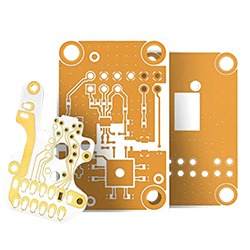
At KKPCB, capabilities include:
- Alumina (Al₂O₃) PCB fabrication
- DBC and DPC processing
- High thermal performance design support
- High-reliability manufacturing for harsh environments
This ensures:
- Efficient heat dissipation
- Stable electrical performance
- Long-term reliability
10. Conclusion
Ceramic PCBs, especially alumina substrates, are essential for modern electronics requiring high thermal conductivity, high reliability, and high-frequency performance.
Compared to traditional PCBs, ceramic PCBs offer superior performance in power electronics, RF systems, automotive applications, and aerospace environments.
With advanced material expertise and manufacturing capability, KKPCB provides high-quality ceramic PCB solutions tailored for demanding applications.
