
In aerospace systems, electronic assemblies operate under some of the most demanding conditions in the world. From aircraft avionics and satellite communication systems to space exploration equipment, PCB assemblies must deliver exceptional reliability, durability, and long-term performance under extreme environments.
Unlike standard commercial electronics, aerospace PCB assemblies must withstand temperature fluctuations, vibration, shock, radiation exposure, and strict safety requirements. Every stage — from PCB design and material selection to component assembly and testing — directly impacts system reliability.
A professionally manufactured aerospace PCB assembly provides the foundation for mission-critical electronics by ensuring stable signal transmission, reliable power delivery, and consistent operation throughout the product lifecycle.
What Is Aerospace PCB Assembly?
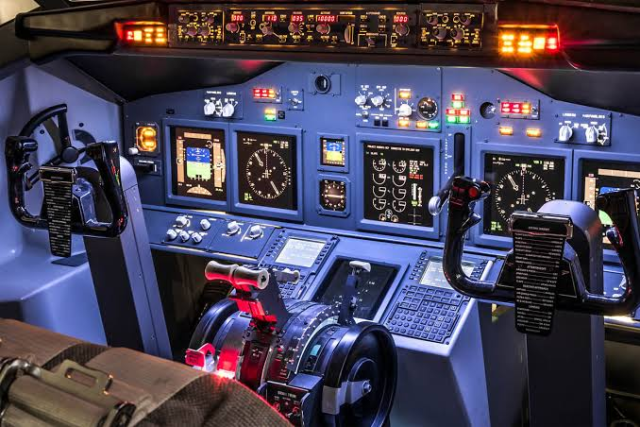
Aerospace PCB assembly refers to the process of assembling printed circuit boards designed specifically for aerospace applications, where reliability and environmental resistance are critical.
These assemblies typically integrate:
- High-reliability electronic components
- Advanced multilayer PCB structures
- Surface Mount Technology (SMT)
- Through-Hole Technology (THT)
- Protective coatings and environmental protection solutions
Compared with standard PCB assemblies, aerospace-grade assemblies require stricter process control, advanced inspection methods, and compliance with aerospace quality standards such as AS9100.
Key Manufacturing Processes for Aerospace PCB Assembly
1. Aerospace-Grade Component Selection
Component selection is one of the most critical steps in aerospace PCB assembly.
Components must be carefully evaluated for:
- Wide operating temperature ranges
- High vibration resistance
- Long-term availability
- Radiation tolerance (for space applications)
- High reliability requirements
Selecting suitable components helps prevent premature failures and ensures stable operation throughout the system lifecycle.
2. High-Reliability PCB Design Optimization
Aerospace PCB design requires careful consideration of electrical and mechanical performance.
Key design considerations include:
Signal Integrity Control
High-speed aerospace electronics require:
- Controlled impedance routing
- Optimized stackup design
- Proper return path management
- Crosstalk reduction strategies
These measures ensure reliable data transmission in sensitive avionics and communication systems.
Thermal Management
Aerospace systems often operate in environments with limited cooling capability. PCB designs must consider:
- Heat dissipation paths
- Copper weight optimization
- Thermal vias
- High-temperature materials
Effective thermal management improves component lifetime and system stability.
EMI/EMC Protection
Electromagnetic interference can affect navigation, communication, and control systems.
PCB assemblies require:
- Grounding optimization
- Shielding structures
- Filtering solutions
- Noise reduction techniques
to maintain electromagnetic compatibility.
Aerospace PCB Assembly Process
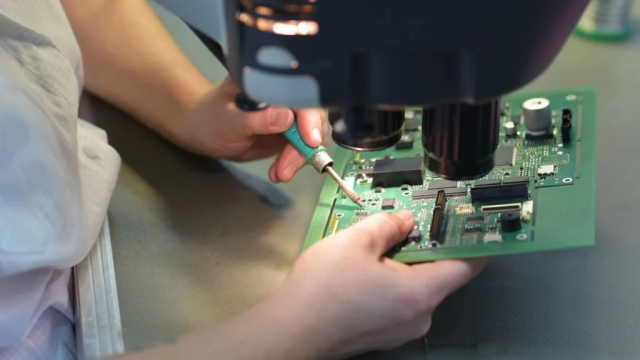
Surface Mount Technology (SMT)
SMT assembly enables:
- High-density component placement
- Reduced PCB size and weight
- Improved electrical performance
Advanced placement equipment ensures accurate component positioning and repeatable assembly quality.
Through-Hole Technology (THT)
THT remains important for aerospace applications requiring:
- Strong mechanical connections
- High-current capability
- Enhanced durability under vibration and shock
Typical applications include connectors, power components, and mechanically stressed components.
Inspection and Testing
Reliability verification is essential for aerospace PCB assemblies.
Common inspection and testing methods include:
Automated Optical Inspection (AOI)
Detects:
- Component placement errors
- Solder defects
- Missing components
- PCB assembly issues
X-Ray Inspection
Used for inspecting hidden solder joints, especially:
- BGA packages
- QFN components
- High-density assemblies
In-Circuit Testing (ICT)
Validates:
- Electrical connections
- Component functionality
- Circuit performance
Functional and Environmental Testing
Depending on application requirements, aerospace PCB assemblies may undergo:
- Thermal cycling tests
- Vibration testing
- Humidity testing
- Reliability verification
Applications of Aerospace PCB Assembly
Avionics Systems
Aerospace PCB assemblies are widely used in:
- Flight control systems
- Navigation equipment
- GPS modules
- Radar systems
- Aircraft monitoring systems
These electronics require high accuracy and continuous reliability during operation.
Communication Systems
PCB assemblies support:
- Aircraft communication systems
- Satellite communication modules
- Ground-to-air communication links
- High-frequency RF systems
High-performance PCB materials and controlled impedance design ensure reliable signal transmission.
Power Management Systems
Aerospace power electronics require PCB assemblies capable of handling:
- High current loads
- Thermal stress
- Long operating cycles
Advanced PCB structures improve power efficiency and reliability.
Space and Satellite Electronics
Space applications introduce additional challenges, including:
- Vacuum environments
- Radiation exposure
- Extreme temperature variations
PCB assemblies must use appropriate materials and reliability-focused manufacturing processes.
Major Challenges in Aerospace PCB Assembly
1. Extreme Environmental Conditions
Aerospace electronics must operate under:
- Wide temperature variations
- Mechanical vibration
- Shock loading
- Humidity and contamination risks
PCB materials and assembly processes must maintain structural and electrical stability.
2. Weight and Size Optimization
Aircraft and spacecraft require lightweight electronic systems.
Engineers must balance:
- Miniaturization
- High functionality
- Thermal performance
- Mechanical reliability
HDI PCB technology and advanced assembly techniques help achieve compact designs.
3. Long-Term Reliability Requirements
Aerospace systems often operate for many years without maintenance.
Reliable PCB assembly requires:
- High-quality materials
- Strict manufacturing control
- Advanced inspection processes
- Traceability management
4. Radiation Resistance
Space electronics face exposure to radiation that can affect semiconductor performance.
Solutions include:
5. Moisture and Environmental Protection
Protective solutions such as conformal coating help prevent:
- Moisture penetration
- Chemical contamination
- Corrosion
- Environmental degradation
How Advanced Manufacturing Improves Aerospace PCB Reliability
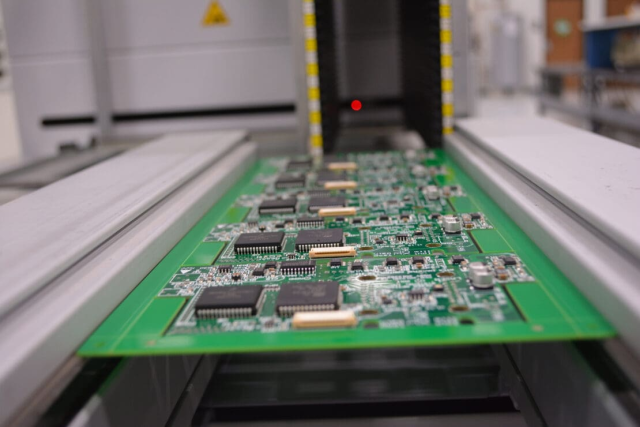
A reliable aerospace PCB assembly requires a combination of engineering expertise and manufacturing capability.
Key technologies include:
Advanced PCB Materials
High-performance materials such as:
provide improved thermal and electrical stability.
HDI and High-Density Manufacturing
HDI technology enables:
- Smaller form factors
- Higher routing density
- Improved signal integrity
Precision Assembly and Quality Control
Strict process control ensures:
- Consistent solder quality
- Accurate component placement
- Reliable electrical performance
Conclusion
Aerospace PCB assembly is a critical technology supporting modern aviation, satellite communication, and space exploration systems. Due to extreme operating environments and strict reliability requirements, aerospace electronics demand advanced PCB design, precision manufacturing, and comprehensive testing.
By combining high-performance materials, advanced assembly technologies, and rigorous quality control, experienced PCB manufacturers help aerospace companies achieve reliable, long-life electronic systems.
A trusted aerospace PCB assembly partner provides not only manufacturing capability but also engineering support to improve reliability, reduce risks, and accelerate product development from prototype to production.
