
What is a Ceramic PCB?
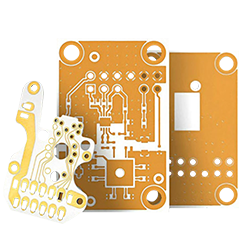
A Ceramic PCB is a type of printed circuit board that uses ceramic materials as the substrate instead of traditional FR4. These materials provide exceptional thermal conductivity, electrical insulation, and mechanical stability, making them ideal for high-power and high-temperature applications.
Unlike standard PCBs, ceramic boards can efficiently dissipate heat directly through the substrate, eliminating the need for additional heat sinks in some designs.
Main Types of Ceramic PCB Materials
Different ceramic materials offer varying levels of performance and cost:
1. Alumina (Al₂O₃) PCB
- Most widely used ceramic material
- Thermal conductivity: ~20–30 W/m·K
- Cost-effective solution
- Suitable for general power electronics
2. Aluminum Nitride (AlN) PCB
- High thermal conductivity: ~170–230 W/m·K
- Excellent electrical insulation
- Ideal for high-power and high-frequency applications
3. Beryllium Oxide (BeO) PCB
- Extremely high thermal conductivity
- Excellent electrical properties
- Rarely used due to toxicity and safety concerns
Key Advantages of Ceramic PCB
1. Superior Thermal Conductivity
Ceramic materials dissipate heat much faster than FR4 or even metal-core PCBs (IMS), making them ideal for high-power devices.
2. High Temperature Resistance
Ceramic PCBs can operate in extreme environments (over 300°C in some cases).
3. Excellent Electrical Insulation
Maintains strong dielectric properties even under high voltage conditions.
4. Low Thermal Expansion (CTE)
Closely matches semiconductor materials, reducing stress and improving reliability.
5. High Mechanical Stability
Resistant to deformation, even under thermal cycling.
Ceramic PCB vs FR4 vs IMS
| Property | Ceramic PCB | IMS PCB | FR4 PCB |
|---|---|---|---|
| Thermal Conductivity | Very High | Medium | Low |
| Heat Dissipation | Excellent | Good | Poor |
| Cost | High | Medium | Low |
| Application | High-power | LED, power | General electronics |
Reality check:
- FR4 → cheapest, but poor heat handling
- IMS → transitional solution
- Ceramic → used when heat is a real bottleneck
Manufacturing Technologies
Ceramic PCBs are produced using advanced processes:
1. DBC (Direct Bonded Copper)
- Copper bonded directly onto ceramic substrate
- Excellent for high-current applications
2. AMB (Active Metal Brazing)
- Strong bonding for high reliability
- Suitable for power modules
3. Thick Film / Thin Film Technology
- Used for precision circuits and hybrid designs
Each process impacts cost, performance, and application suitability.
Applications of Ceramic PCB
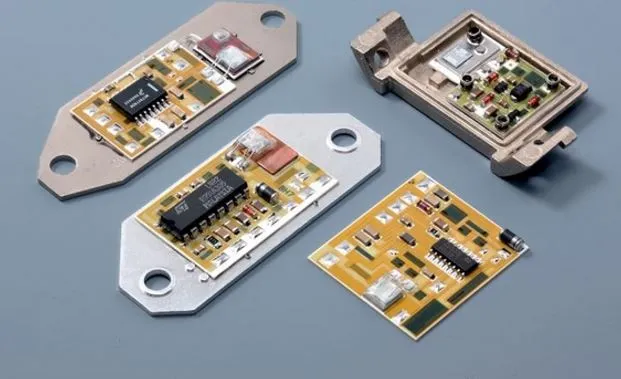
1. LED Lighting
High-power LEDs require efficient heat dissipation to maintain lifespan.
2. Power Electronics
Used in inverters, converters, and power modules.
3. Automotive Systems
Electric vehicles, power control units, and onboard chargers.
4. RF & Microwave Devices
Stable dielectric properties support high-frequency circuits.
5. Aerospace & Defense
Extreme reliability under harsh conditions.
Manufacturing Challenges
Ceramic PCB is not easy to produce. Key challenges include:
- Brittle material (risk of cracking)
- Complex processing (laser drilling, metallization)
- Higher cost compared to FR4/IMS
- Limited supplier capability
Many PCB factories claim they can do ceramic, but real capability lies in process control and yield consistency.
When Should You Choose Ceramic PCB?
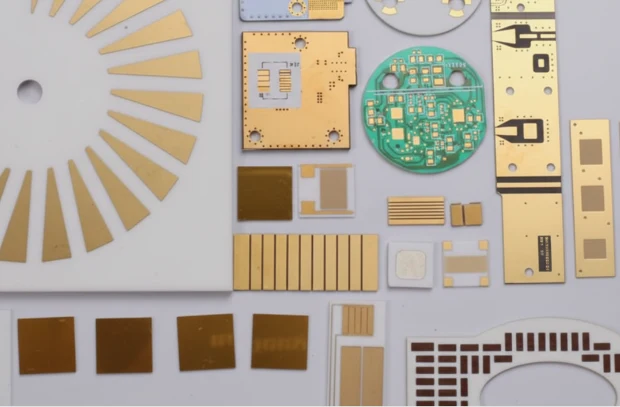
Choose Ceramic PCB if your design involves:
- High power density
- Severe heat generation
- High operating temperatures
- Long-term reliability requirements
Avoid it if:
- Your design is cost-sensitive
- Thermal performance is not critical
- Standard FR4 or IMS can meet requirements
Conclusion
Ceramic PCB is a premium solution for thermal management and high-reliability electronics, offering unmatched performance in demanding applications.
While the cost is higher, it becomes the only viable option when heat dissipation and reliability are critical to system performance.
