
What is a High Current PCB?
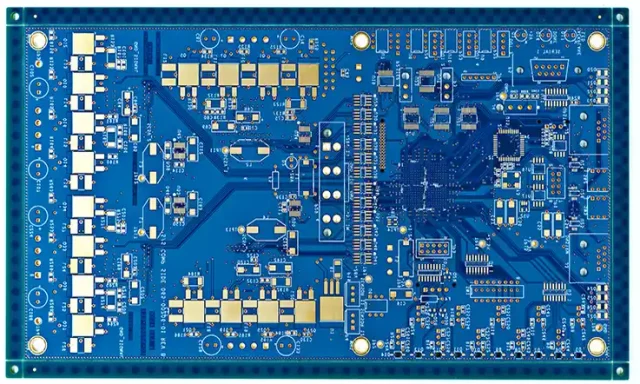
A High Current PCB is a printed circuit board designed to carry large currents—often several amps or more—while maintaining electrical performance and thermal stability. Unlike standard PCBs, high current boards require thicker copper, optimized trace widths, and precise thermal management to prevent overheating, voltage drop, and potential damage.
High current PCBs are essential in:
-
Power electronics and converters
-
Electric vehicles and battery management systems
-
Industrial equipment and motor controllers
-
Renewable energy systems such as solar inverters
High Current PCB Design
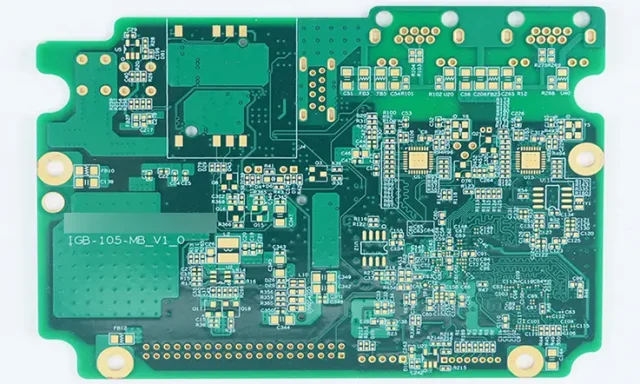
Designing a high current PCB involves careful consideration of electrical, thermal, and mechanical factors:
-
Trace Width and Copper Thickness:
Trace width and copper weight are calculated based on current-carrying requirements and acceptable temperature rise. Thicker copper (2–5 oz or more) and wider traces reduce resistance and heat generation. -
Layer Stack-Up Optimization:
Multilayer designs often include dedicated power and ground planes to distribute current evenly, minimize voltage drop, and reduce EMI. -
Thermal Management:
Heat generated by high currents must be efficiently dissipated. Thermal vias, copper pours, and heat-spreading layers transfer heat away from critical areas. In some designs, external heat sinks or forced airflow are integrated to maintain safe operating temperatures. -
Component Placement and Mechanical Support:
High current components, such as power MOSFETs, diodes, and connectors, are placed to minimize trace length and voltage drop. Reinforced pads and vias enhance mechanical stability and reduce stress during thermal cycling.
Manufacturing Considerations and QA
High current PCBs require advanced fabrication techniques to ensure reliability:
-
Heavy Copper Plating: Thicker copper layers improve current capacity and reduce resistance.
-
High-Precision Etching: Ensures trace widths match calculated specifications to handle expected currents.
-
Via and Pad Reinforcement: Buried or plated-through vias provide reliable interlayer connectivity.
-
Quality Testing: Electrical testing, thermal cycling, and AOI/X-ray inspections verify trace integrity, via reliability, and thermal performance.
KKPCB’s manufacturing expertise ensures that high current PCBs maintain performance under demanding electrical and thermal loads.
Applications of High Current PCBs
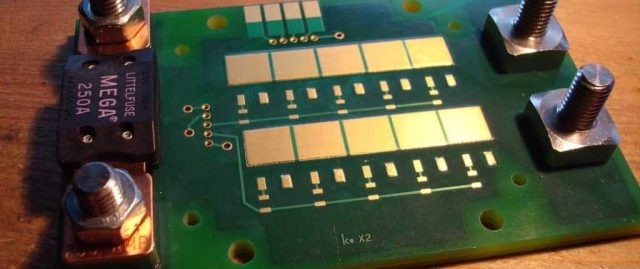
High current PCBs are widely used in applications where power delivery and reliability are critical:
-
Electric Vehicles (EVs): Battery management, motor controllers, and DC–DC converters.
-
Industrial Equipment: High-power drives, automation systems, and welding machines.
-
Renewable Energy Systems: Solar inverters, energy storage controllers, and power converters.
-
Power Supplies: High-current switching regulators and server power modules.
By combining precise design, heavy copper fabrication, thermal optimization, and thorough testing, KKPCB delivers high current PCBs capable of reliable operation in demanding environments, ensuring both performance and longevity.
