
Automated Test Equipment (ATE) plays a vital role in validating electronic components, modules, and systems. At the heart of these test platforms are Custom ATE PCBs, engineered to handle high-speed signals, precise routing, and repeated testing cycles without failure. These PCBs must balance electrical performance, mechanical stability, and long-term reliability to meet stringent testing requirements.
PCB Design Considerations
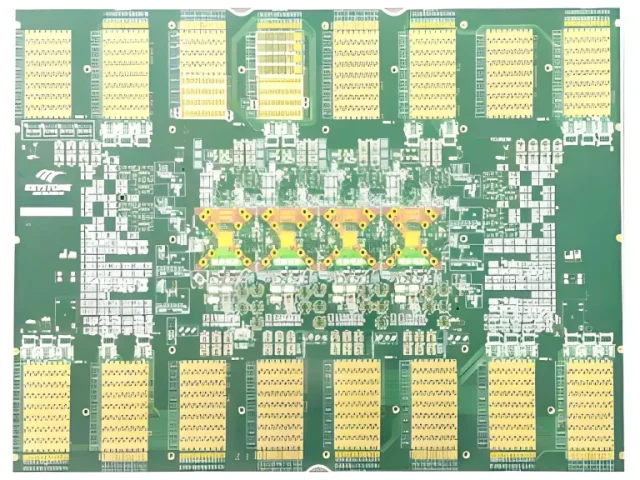
-
Signal Integrity and Routing:
Custom ATE PCBs often carry high-frequency signals or precision analog inputs. Careful trace PCB design, controlled impedance routing, and separation of signal layers from power planes are critical to prevent noise, crosstalk, and signal degradation. -
Layer Stack-Up Optimization:
Depending on complexity, ATE PCBs may require 6 to 12 layers or more. Optimal layer stack-up ensures minimal interference, proper grounding, and thermal dissipation, supporting both high-speed digital and sensitive analog measurements. -
Component Placement and Interface:
ATE boards often interface with sockets, probes, or connectors that require precise mechanical alignment. Placement accuracy and pad design are critical for repeatable testing cycles and long-term durability. -
Thermal Management:
Continuous operation in ATE systems generates heat. Custom PCBs must include copper pours, thermal vias, and heat-spreading layers to maintain stable temperatures and prevent drift in measurement accuracy.
PCB Manufacturing Considerations
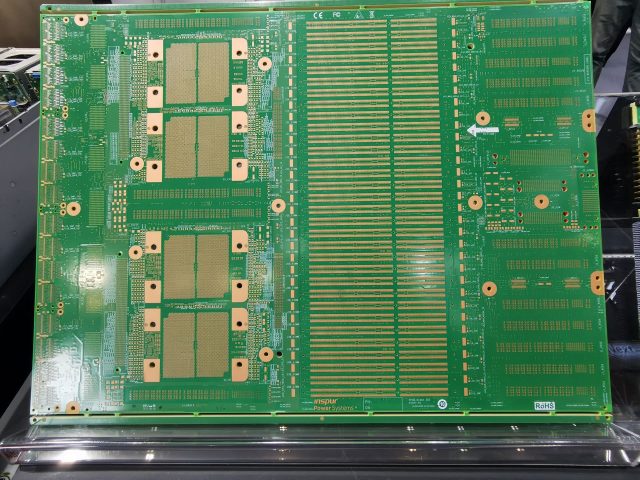
Creating high-reliability Custom ATE PCBs involves advanced manufacturing techniques:
-
High-Precision Drilling and Plating: For vias and through-hole connectors to maintain consistent electrical connectivity.
-
Controlled Impedance Fabrication: Ensuring signal fidelity in high-speed or analog test circuits.
-
Material Selection: Using low-loss laminates and high-Tg materials to handle thermal cycles and prevent warping.
-
Mechanical Tolerance Management: Ensuring alignment for probe interfaces, connectors, and test sockets.
KKPCB leverages these manufacturing capabilities to produce Custom ATE PCBs that withstand the rigorous operational demands of automated test systems.
Testing and Quality Assurance
Given the critical role of ATE boards, rigorous QA is essential:
-
Electrical Testing: Verifies continuity, impedance, and functional signal paths.
-
Thermal and Reliability Testing: Simulates repeated operational cycles to ensure long-term stability.
-
AOI and X-ray Inspection: Detects surface and internal defects, including via integrity, solder mask coverage, and pad alignment.
-
Functional Validation: Boards may undergo sample testing with ATE systems to confirm interface compatibility and performance under load.
Applications of Custom ATE PCBs
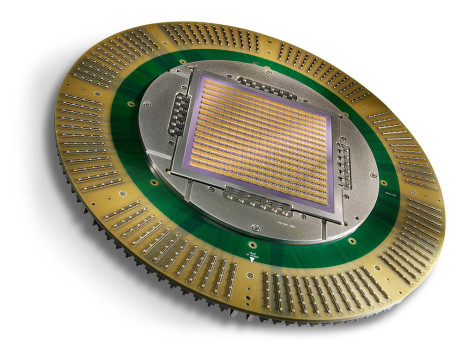
Custom ATE PCBs are used in:
-
Semiconductor Testing: Validating ICs, memory modules, and microcontrollers.
-
High-Speed Communication Modules: Ensuring consistent performance for 5G, RF, and optical components.
-
Automotive Electronics: Testing ECUs, sensor modules, and safety-critical systems.
-
Industrial and Consumer Electronics: Supporting functional and burn-in tests for boards and modules prior to shipment.
By providing robust design, precise manufacturing, and thorough testing, KKPCB ensures that Custom ATE PCBs deliver accurate, repeatable results for automated test systems, reducing downtime and increasing reliability across production lines.
