
As electronic devices become more powerful and compact, heat management has become a critical design consideration. Aluminum Nitride (AlN) PCBs offer exceptional thermal conductivity, electrical insulation, and mechanical stability, making them the ideal choice for high-power modules, RF circuits, and industrial electronics.
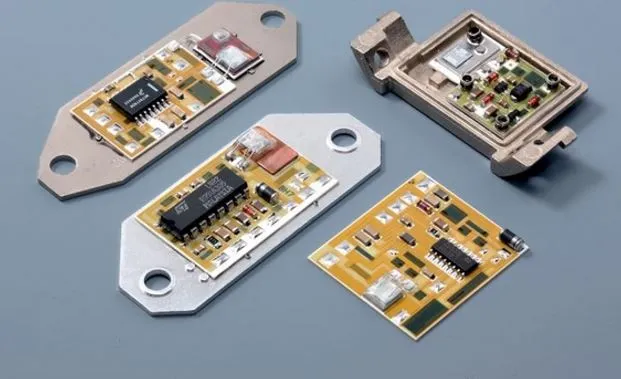
Unlike traditional FR4 or even standard ceramic PCBs, Aluminum Nitride PCBs efficiently dissipate heat, protecting sensitive components and ensuring long-term reliability.
What is an Aluminum Nitride PCB?
An Aluminum Nitride PCB (AlN PCB) is a printed circuit board fabricated using Aluminum Nitride ceramic substrates. AlN is known for:
-
High thermal conductivity: Typically 170–230 W/m·K, far exceeding FR4 and most ceramics.
-
Electrical insulation: Ideal for high-voltage or high-frequency applications.
-
Dimensional stability: Low thermal expansion ensures precise multilayer alignment.
-
Chemical and mechanical robustness: Resistant to warping, corrosion, and high temperatures.
These properties allow AlN PCBs to operate reliably in applications where heat dissipation is crucial.
Advantages of Aluminum Nitride PCBs
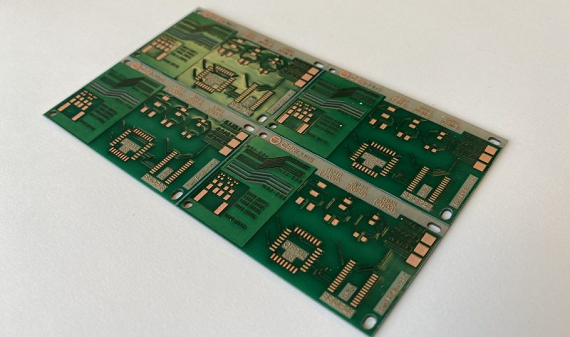
Superior Thermal Management
High-power devices, such as LEDs, power modules, and RF amplifiers, generate substantial heat. AlN PCBs efficiently transfer this heat away from components, preventing thermal degradation.
Electrical Insulation with High Dielectric Strength
AlN provides excellent electrical insulation, allowing PCBs to safely handle high voltages while maintaining thermal performance.
High-Frequency and RF Compatibility
Stable dielectric properties make AlN PCBs suitable for RF and microwave circuits, minimizing signal loss and supporting impedance-controlled designs.
Mechanical Stability
AlN maintains dimensional stability under thermal cycling, supporting precision assembly and multilayer structures.
Applications of Aluminum Nitride PCBs
AlN PCBs are widely used in industries requiring thermal-critical and high-reliability electronics:
-
LED Lighting: High-power LEDs and laser diodes
-
Power Electronics: IGBTs, MOSFETs, and DC-DC converters
-
RF & Microwave Circuits: Amplifiers, filters, and antennas
-
Industrial Electronics: Motor controllers, robotics, and automation boards
-
Aerospace & Defense: Radar modules, satellite electronics, and high-power RF devices
-
Medical Electronics: Imaging equipment and laser treatment systems
By using AlN PCBs, engineers ensure efficient heat dissipation, reliable performance, and longer device lifespan.
Design Considerations for AlN PCBs
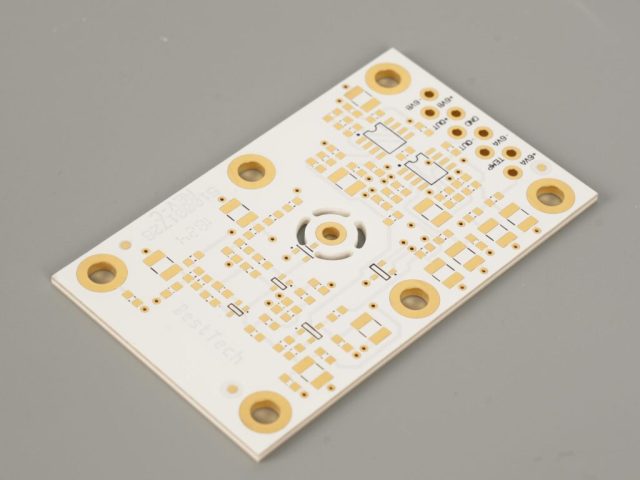
Copper Cladding
AlN PCBs often require direct copper bonding or plated copper layers to create conductive paths while preserving thermal performance.
Thermal Via Design
Integrating thermal vias or heat pipes enhances heat transfer from components to the PCB substrate.
Surface Finish
Finishes such as ENIG, silver, or gold plating improve solderability and electrical contact without affecting thermal performance.
Assembly and Soldering
AlN’s mechanical stability allows precise component placement, but specialized soldering techniques may be required to handle ceramic substrates.
Choosing an Aluminum Nitride PCB Manufacturer
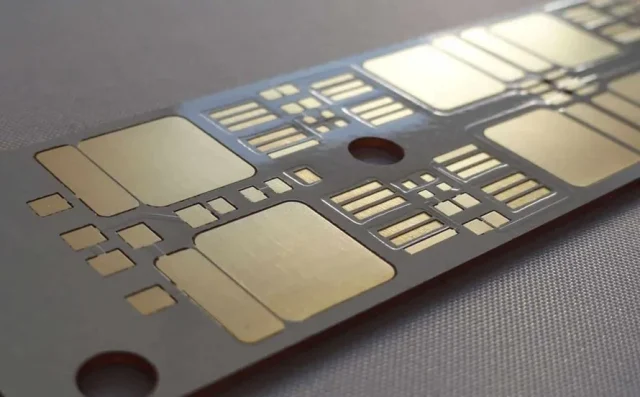
Manufacturing AlN PCBs is more specialized than standard FR4 or ceramic boards. When selecting a partner, consider:
-
Experience with high-thermal-conductivity ceramics
-
Capability to bond copper and manage multilayer designs
-
Expertise in thermal simulation and impedance control
-
Advanced QA to ensure reliability in high-power and high-frequency applications
Working with an experienced manufacturer guarantees that your AlN PCBs deliver consistent thermal performance and reliability.
Conclusion
Aluminum Nitride PCBs (AlN PCBs) are a high-performance solution for thermal-critical, high-power, and RF electronics. Their combination of exceptional thermal conductivity, electrical insulation, and mechanical stability makes them ideal for LEDs, power modules, industrial automation, aerospace, and medical devices.
Investing in high-quality AlN PCBs ensures efficient heat management, reliable operation, and longer lifespan for advanced electronic systems.
