
A High Pin Count IC Test Board is a specialized semiconductor test PCB engineered to interface ICs with Automated Test Equipment (ATE) that require hundreds or even thousands of test channels. These boards provide high-density routing, controlled impedance, and mechanical reliability, ensuring accurate functional, parametric, and performance testing of modern ICs.
As semiconductor devices evolve with higher pin counts, finer pitches, and faster operation, test boards must deliver superior signal integrity, reliable connectivity, and thermal stability to support complex testing environments.
Key Design Features of High Pin Count IC Test Boards
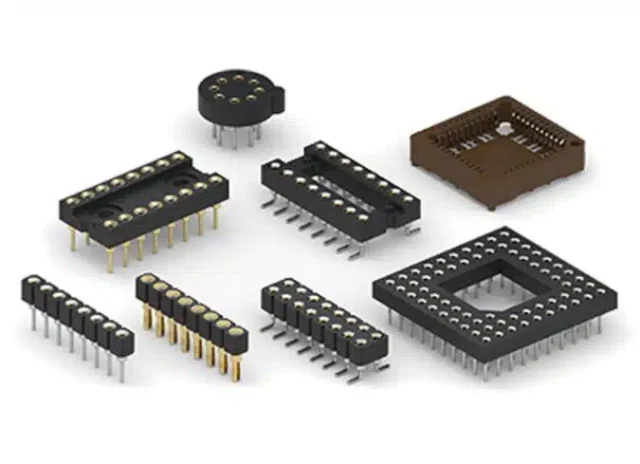
1. Ultra-High Pin Count and Dense Fanout
Modern ICs often have hundreds or thousands of pins, necessitating HDI PCB technology, microvias, multilayer stackups, and fine-line routing to achieve reliable interconnections while maintaining signal integrity.
2. Controlled Impedance and High-Frequency Signal Integrity
High-speed ICs require precise impedance control, trace length matching, and minimized crosstalk, ensuring accurate high-speed measurements and reducing signal distortion across dense routing layers.
3. Mechanical Precision and Reliability
High pin count test boards must maintain flatness, pad alignment, and dimensional stability to guarantee reliable contact with IC sockets, probe cards, or test fixtures over repeated test cycles.
4. Robust Power Distribution
Optimized power and ground planes, decoupling strategies, and low-impedance design ensure stable power delivery to the IC under test, preventing voltage fluctuations during high-speed functional testing.
5. Thermal Management and Material Selection
High-Tg, low-loss materials allow the test board to withstand thermal stress and extended test durations, ensuring consistent electrical performance and long-term reliability.
Applications of High Pin Count IC Test Boards
High pin count IC test boards are widely used in:
-
Advanced processor and FPGA testing
-
Memory IC validation and DRAM/Flash testing
-
Mixed-signal and RF IC evaluation
-
Automotive and industrial high-reliability semiconductor testing
-
High-speed IC functional and parametric testing
These applications require extreme accuracy, repeatable connections, and robust electrical performance.
Manufacturing Capabilities for High Pin Count IC Test Boards
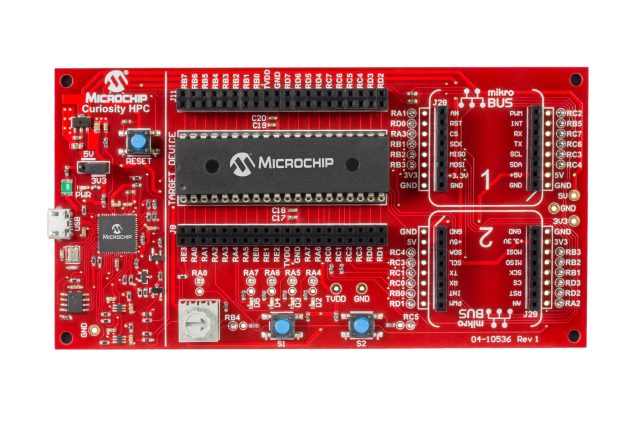
Producing reliable high pin count IC test boards requires:
-
Multilayer and HDI PCB fabrication
-
Fine-line etching, microvia, and blind/buried via technology
-
Controlled impedance verification and high-density fanout design
-
Precision lamination and flatness control
-
Prototype, small batch, and volume production support
Advanced manufacturing ensures stable signal integrity, mechanical reliability, and long-term performance for complex IC testing.
Why High Pin Count IC Test Board Quality Matters
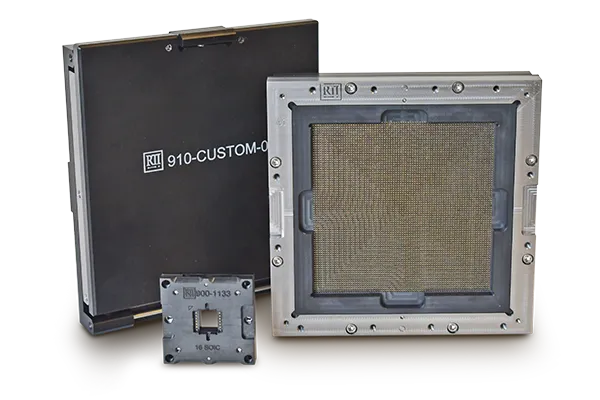
Inferior boards can result in:
-
Unstable or incomplete pin contact
-
Signal degradation and measurement errors
-
Increased test equipment downtime
-
Reduced test yield and higher operational costs
A high-quality High Pin Count IC Test Board guarantees accurate, repeatable, and efficient IC testing, supporting high-speed, high-density, and high-reliability applications.
Conclusion
The High Pin Count IC Test Board is a cornerstone of modern semiconductor testing, providing precise routing, controlled impedance, and mechanical stability for hundreds or thousands of IC pins. With advanced HDI design, multilayer construction, and premium materials, these boards enable reliable functional, parametric, and performance testing for next-generation ICs.
Partnering with an experienced high pin count IC test board manufacturer ensures consistent test accuracy, improved yield, and long-term reliability in complex ATE environments.
