
High-Speed PCB: Engineering Principles, Core Challenges & KKPCB Capabilities
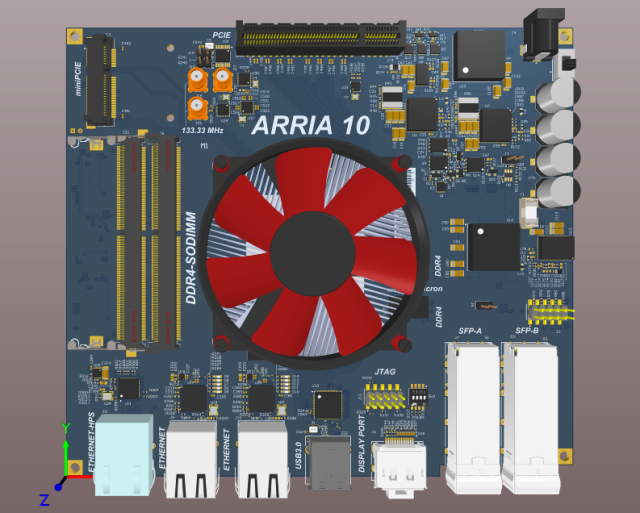
High-Speed PCB technology is at the center of every modern data-intensive system—from 5G infrastructure and AI servers to autonomous machines and aerospace communication modules. As signal frequencies climb beyond 3 GHz, 10 GHz, even 28–56 Gbps, traditional PCB design rules become insufficient. High-speed PCB engineering demands precise material selection, controlled impedance, ultra-low-loss dielectrics, optimized stackups, and strict process discipline.
Below is an enhanced, highly technical, keyword-dense article optimized for professional readers and search engines.
1. Engineering Context: What Defines a High-Speed PCB
A High-Speed PCB (High-Speed Printed Circuit Board) involves signals whose rise time, bandwidth, and frequency directly impact performance. In these systems, PCB design becomes an electrical engineering challenge—not only a mechanical layout task.
Key high-speed PCB requirements include:
-
Signal Integrity (SI) preservation across long transmission paths
-
Controlled Impedance for differential pairs (50Ω / 90Ω / 100Ω)
-
Low-Loss Material Systems (Rogers 4003C / 4350B, Megtron 6, Tachyon 100G, TU-872, F4B)
-
Accurate Stackup Simulation for high-speed routing
-
Skew Control, copper roughness optimization, loss tangent management
-
EMI/EMC suppression through disciplined return-path engineering
In high-frequency domains, everything matters: prepreg flow, dielectric thickness variation, trace geometry, resin content, copper foil roughness, and plating uniformity.
2. Core Engineering Challenges in High-Speed PCB
2.1 Signal Integrity Degradation
High-speed signals suffer from:
-
Insertion Loss (IL)
-
Return Loss (RL)
-
Crosstalk (NEXT/FEXT)
-
Skin Effect & Dielectric Loss
-
Mode conversion in poorly matched differential pairs
These degrade eye-diagram opening and cause timing collapse in 10–112 Gbps SerDes links.
2.2 Copper Surface Roughness & Loss Tangent
High-speed PCB performance is dominated by:
-
Dielectric loss tangent (Df)
-
Dielectric constant (Dk) stability
-
Copper roughness (Ra) affecting conductor loss
High-speed materials like Megtron 7 / Tachyon 100G / Rogers laminates deliver extremely low-loss performance compared to FR-4.
2.3 Controlled Impedance Precision
To maintain tight impedance windows (±5% or even ±3%), the PCB manufacturer must control:
-
Dielectric thickness variation
-
Copper plating thickness
-
Etching accuracy
-
Prepreg resin content
-
Lamination pressure & flow
This is why engineering-first manufacturers such as KKPCB are critical in high-speed applications.
2.4 Warpage & Stackup Asymmetry
High-speed stackups require perfect symmetry to avoid:
-
Bow and twist
-
Inner-layer misregistration
-
Via breakout
-
Differential skew imbalance
3. Material Science for High-Speed PCB
High-speed PCBs use low-loss, low-Dk, stable dielectric materials. Popular systems include:
| Material | Dk | Df | Notes |
|---|---|---|---|
| Rogers 4003C | 3.38 | 0.0027 | Stable, low-loss RF material |
| Rogers 4350B | 3.48 | 0.0037 | Excellent for RF & high-speed digital |
| Megtron 6 | 3.3 | 0.002 | Industry-leading loss performance |
| Tachyon 100G | 3.02 | 0.0021 | 100 Gbps & 56G PAM-4 systems |
| Isola I-Tera MT40 | 3.45 | 0.0031 | Good balance of cost and stability |
Material choice determines insertion loss, trace length capability, and bandwidth.
4. KKPCB High-Speed PCB Engineering Capabilities
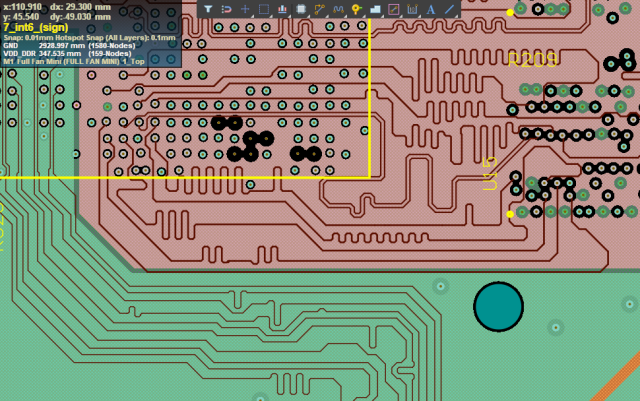
KKPCB specializes in engineering-driven high-speed PCB manufacturing, supporting projects requiring:
-
28–112 Gbps SerDes
-
5G/6G RF Front-Ends
-
AI/Server Backplanes
-
High-Frequency Radar
-
Automotive High-Speed Networking (1000BASE-T1 / PCIe / LVDS)
Key capabilities include:
4.1 Impedance-Controlled Fabrication
-
±5% / ±3% impedance tolerance
-
Dielectric modeling based on real press-out data
-
Full stackup simulation before production
4.2 Advanced Microvia & HDI Technology
-
Laser via (1-2-3 steps HDI)
-
Stacked & staggered microvias
-
High aspect-ratio mechanical vias
4.3 Low-Loss Material Lamination Expertise
-
Rogers + FR-4 hybrid stackups
-
Megtron & Tachyon high-speed systems
-
Resin-flow-controlled lamination
4.4 High-Speed Test & Validation
-
TDR impedance testing
-
S-parameter extraction
-
Insertion-loss measurement
-
Crosstalk characterization
5. High-Speed PCB Design Guidelines
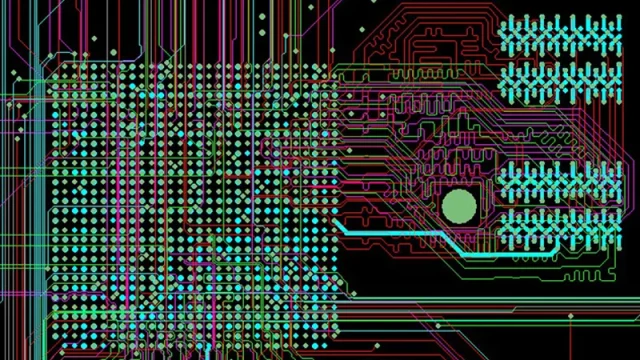
To achieve optimal performance:
-
Route differential pairs with fixed spacing and symmetry
-
Avoid stubs; use back-drilling or via-in-pad
-
Minimize layer transitions
-
Keep return paths continuous
-
Choose low-loss materials for lengths > 10 cm (at 10+ GHz)
-
Match trace lengths precisely for multi-lane SerDes
KKPCB’s engineering team provides full DFM/DFE support to help clients optimize signal integrity before production.
6. Engineering Summary
High-Speed PCB technology requires a deep understanding of high-frequency physics, advanced materials, precision fabrication, and simulation-driven stackup engineering. As data rates continue to rise, manufacturing capability—not just design—becomes a decisive factor.
KKPCB combines engineering expertise + advanced material handling + high-speed validation to deliver stable, manufacturable, and high-performance PCBs for next-generation systems.
