
As microwave, satellite, radar, and millimeter-wave systems move deeper into high GHz operating regions, engineers require PCB materials with ultra-stable dielectric behavior, extremely high Dk, and exceptionally low loss. This is where Duroid 6010 PCB—based on Rogers RT/duroid® 6010LM—becomes a foundational choice for critical RF and microwave engineering.
With a dielectric constant (Dk) of ~10.2, Duroid 6010 PCB enables compact RF components, reduced wavelength structures, and exceptionally stable performance across harsh environmental conditions. This article explains why Duroid 6010 PCB is one of the highest-performance materials used in high-frequency and microwave design.
1. Why Duroid 6010 PCB Is Chosen for High-Frequency Engineering
The defining characteristics of a Duroid 6010 PCB include:
-
Very high dielectric constant (Dk ~10.2)
Enables smaller resonators, antennas, filters, and RF structures. -
Extremely low dissipation factor (Df ~0.0023)
Ensures low insertion loss even at microwave frequencies. -
High dimensional stability
Critical in radar, satellite, and aerospace systems. -
Low thermal coefficient of dielectric constant (TCDk)
Prevents impedance drift at temperature extremes. -
Stable performance up to 40 GHz+
Ideal for high-frequency and millimeter-wave designs.
These properties make Duroid 6010 PCB a premium choice for microwave filters, antennas, inductors, couplers, power amplifiers, and radar subsystems.
2. Material Science Behind Duroid 6010 PCB
Duroid 6010 PCB is a PTFE-based ceramic-filled laminate engineered for extreme RF precision.
Key material properties
| Property | Duroid 6010 Value | Engineering Impact |
|---|---|---|
| Dk | 10.2 | Ultra-compact RF design |
| Df (Tanδ) | 0.0023 | Low microwave loss |
| TCDk | +23 ppm/°C | Stable impedance vs. temperature |
| Thermal Conductivity | 0.72 W/m·K | Improved heat flow from RF circuits |
| Moisture Absorption | <0.02% | High stability for outdoor/military |
Duroid 6010 PCB behaves predictably even in harsh aerospace, defense, and high-power microwave conditions, enabling robust RF architecture.
3. Duroid 6010 PCB Stackup Engineering
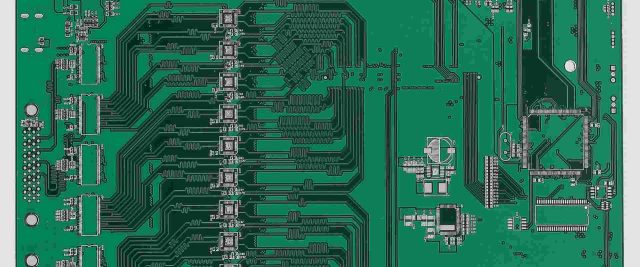
Due to its high Dk and PTFE base, engineering the Duroid 6010 PCB stackup requires precision.
Critical stackup considerations
• Controlled dielectric thickness
Small changes cause significant impedance shifts at high Dk.
• Copper type selection (RA copper preferred)
Reduces conductor loss at microwave frequencies due to skin effect.
• Bonding layer compatibility
Duroid requires specialized bonding films (e.g., Rogers 2929) for multilayer structures.
• Thermal expansion alignment
Reduces stress and maintains reliability for launch, aerospace, and outdoor radar systems.
• Hybrid stackups
Duroid 6010 can be combined with FR-4, RO4350B, or RO4003C to reduce cost while keeping RF performance in critical regions.
KKPCB utilizes advanced modeling to ensure that Duroid 6010 PCB stackups meet strict impedance and microwave tolerances.
4. RF Routing & Microwave Optimization on Duroid 6010 PCB
Routing microwave circuits on a Duroid 6010 PCB requires strict electromagnetic discipline.
High-frequency routing guidelines
-
Microstrip or CPWG structures for precise impedance control
-
Tight etching tolerance (±0.02 mm typical)
-
No solder mask over RF traces to avoid dielectric loading
-
Mitered or curved RF bends to reduce reflection
-
Ground via fences around critical microwave lines
-
Via-in-pad for power amplifiers and MMICs
-
Minimal via transitions to prevent phase distortion
Because of the high Dk, the wavelength inside the material is significantly shorter, making layout accuracy essential.
5. Manufacturing Capabilities at KKPCB for Duroid 6010 PCB

PTFE-based Duroid laminates are more complex to fabricate compared to FR-4. KKPCB provides specialized processes for Duroid 6010 PCB manufacturing:
-
Controlled PTFE lamination pressure and temperature
-
High-frequency copper adhesion treatment
-
Precision drilling and plasma desmear for PTFE substrates
-
Tight impedance control for mmWave applications
-
Laser direct imaging for microwave accuracy
-
Hybrid bonding for mixed-material stackups
-
Thick copper availability for high-power microwave amplifiers
These capabilities ensure every Duroid 6010 PCB we deliver meets radar-grade, satellite-grade, and aerospace-grade precision.
6. Engineering Summary
A Duroid 6010 PCB is engineered for the most demanding high-frequency applications—where dielectric stability, ultra-high Dk, low loss, and thermal consistency define system performance. It is the material of choice for:
-
Radar front-end modules
-
Satellite communication equipment
-
Microwave filters and couplers
-
Phased-array antenna systems
-
GNSS and spaceborne electronics
-
High-power RF amplifiers
-
Millimeter-wave sensors
By combining advanced Duroid material science with KKPCB’s RF manufacturing expertise, we deliver ultra-stable, low-loss, and mission-ready Duroid 6010 PCB solutions for next-generation microwave engineering.
