
Engineering the Future: Smart Factory PCB Engineering for Industry 4.0

In the era of Industry 4.0 connectivity, the demand for intelligent automation and real-time control has transformed PCB design requirements. High-performance Rigid-Flex PCB technology is now the cornerstone of industrial robotics and smart sensing. However, sophisticated Rigid-Flex manufacturing can be capital-intensive. Mastering Rigid Flex PCB cost optimization is essential for companies looking to deploy scalable, high-tech automation solutions.
At KKPCB, we specialize in electronics manufacturing that bridges the gap between advanced Smart Factory PCB engineering and budget-conscious production.
1. Precision Stack-ups for Real-Time Control
Intelligent automation relies on lightning-fast data processing. Achieving real-time control requires a PCB design that prioritizes signal integrity while maintaining strict PCB cost optimization.
- High-Speed Layer Management: By isolating high-speed signals to specific layers in a Rigid-Flex PCB, you can use high-frequency materials only where necessary, significantly lowering your total electronics manufacturing spend.
- Controlled Impedance DFM: Implementing rigorous DFM (Design for Manufacturing) ensures that your Rigid-Flex manufacturing process yields consistent results, reducing expensive scrap rates.
2. Enhancing Industry 4.0 Connectivity via Rigid-Flex
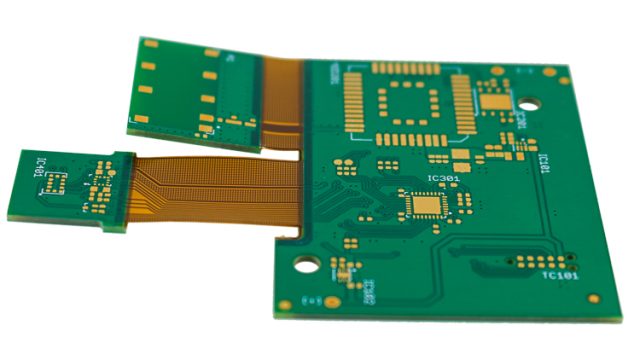
The transition to Industry 4.0 connectivity requires hardware that can withstand constant motion. A flex PCB or Rigid-Flex PCB eliminates the need for bulky, unreliable connectors in robotic arms and automated guided vehicles (AGVs).
- Minimized Flex Layers: A key pillar of Rigid Flex PCB cost optimization is limiting the flex layers. Designing a flex PCB section with 1 or 2 layers provides the necessary durability for intelligent automation at a fraction of the cost of complex multilayer flex.
- Integrated Rigid Sections: Use rigid zones for dense processing units and the flexible portion for seamless Industry 4.0 connectivity.
3. Industrial-Grade DFM and Material Strategy
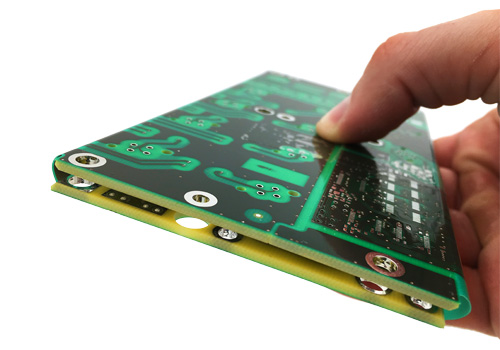
The harsh environments of a smart factory—characterized by EMI and vibration—demand a robust PCB design.
- Strategic Material Selection: Choosing the right substrate is vital for Rigid Flex PCB cost optimization. At KKPCB, we help you select materials that balance thermal stability with cost-efficiency.
- Panelization for Automation: Optimizing your Rigid-Flex PCB layout for maximum panel yield is the most effective way to reduce unit costs in electronics manufacturing.
4. Reliability in Smart Factory PCB Engineering
Real-time control systems cannot afford unexpected downtime. Reliability is built during the Rigid-Flex manufacturing phase.
- Stiffener Integration: Instead of a full Rigid-Flex build, using a localized flex PCB with an FR4 stiffener is a proven PCB cost optimization tactic for sensors and simple interfaces.
- Strain Relief DFM: Incorporating flexible transition zones into your DFM strategy prevents fatigue failure in high-speed intelligent automation systems.
5. Collaborate with KKPCB for Optimized Results
Successful Smart Factory PCB engineering requires early collaboration. Our team at KKPCB provides expert DFM reviews to ensure your Industry 4.0 connectivity solutions are both high-performing and cost-effective. We analyze every aspect of your Rigid-Flex PCB to deliver the best value in electronics manufacturing.
Optimize Your Industry 4.0 Hardware with KKPCB
Don’t let high production costs stall your intelligent automation goals. Leverage our expertise in Rigid-Flex manufacturing and PCB cost optimization today.
