
Introduction
As modern electronic systems continue evolving toward smaller form factors, higher integration density, improved reliability, and greater mechanical flexibility, traditional rigid PCB structures often face limitations in space utilization and interconnection design.
Applications including:
- Aerospace electronics
- Medical devices
- Automotive systems
- Wearable electronics
- Industrial robotics
- Consumer electronics
- High-speed communication equipment
increasingly require PCB solutions that can achieve:
- Three-dimensional packaging
- Flexible mechanical integration
- High-density interconnection
- Reliable signal transmission
- Reduced system weight and complexity
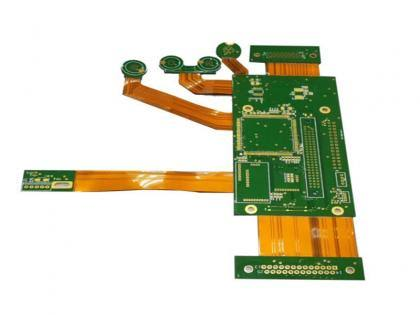
To address these challenges, engineers widely adopt Rigid-Flex PCB technology.
A rigid-flex PCB combines rigid circuit board sections and flexible circuit layers into a single integrated structure, providing the mechanical strength of rigid PCBs together with the flexibility of flexible circuits.
This advanced PCB architecture enables:
- Compact electronic packaging
- Reduced connector usage
- Improved reliability
- Better signal integrity
- Enhanced mechanical durability
This article explores the fundamentals of rigid-flex PCB layered design, including:
- PCB stackup structure
- Flexible layer integration
- Manufacturing processes
- Design considerations
- Advantages
- Industrial applications
- Future development trends
What Is a Rigid-Flex PCB?
Definition of Rigid-Flex PCB
A Rigid-Flex PCB is a hybrid printed circuit board that integrates:
- Rigid PCB layers
- Flexible PCB layers
within one continuous electrical and mechanical structure.
The rigid sections provide:
- Component mounting support
- Mechanical stability
- Structural reinforcement
while the flexible sections provide:
- Bending capability
- Folding capability
- Dynamic movement
- Space-saving interconnections
Unlike traditional PCB assemblies that rely on cables, connectors, and wiring harnesses, rigid-flex PCBs combine multiple functions into a single integrated board.
This reduces:
- Assembly complexity
- Connection points
- Mechanical failure risks
Basic Structure of Rigid-Flex PCB Layer Design
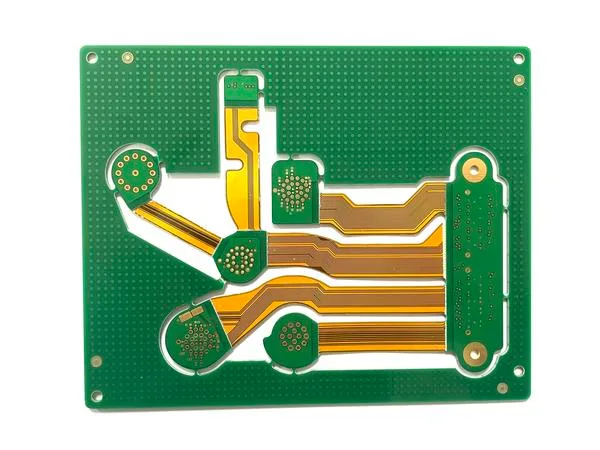
A typical rigid-flex PCB stackup consists of multiple material layers, including:
- Copper conductive layers
- Polyimide flexible dielectric layers
- FR-4 rigid PCB materials
- Adhesive bonding layers
- Coverlay protection films
- Solder mask layers
Depending on application requirements, rigid-flex PCB structures may include:
- Single-layer flex sections
- Double-sided flex circuits
- Multilayer flexible circuits
- Multilayer rigid PCB sections
- HDI microvia structures
The stackup design directly influences:
- Electrical performance
- Mechanical flexibility
- Thermal stability
- Manufacturing reliability
Main Components of Rigid-Flex PCB Layer Structure
1. Rigid PCB Layers
Rigid sections are commonly manufactured using:
- FR-4 laminates
- High-Tg materials
- High-speed PCB materials
- RF laminates
They provide:
- Component support
- BGA mounting areas
- Connector integration
- Power distribution structures
Rigid areas are typically used for components requiring mechanical stability.
2. Flexible PCB Layers
Flexible sections usually use:
- Polyimide substrate materials
- Rolled annealed copper (RA copper)
These layers allow:
- Repeated bending
- Compact folding
- Three-dimensional assembly
Flexible circuits are widely used in:
- Cameras
- Wearable electronics
- Medical devices
- Aerospace systems
- Automotive sensors
3. Coverlay Layer
Unlike rigid PCB solder mask, flexible PCB areas commonly use coverlay film.
Coverlay provides:
- Electrical insulation
- Mechanical protection
- Environmental resistance
- Improved bending durability
It protects exposed flexible copper traces during operation.
4. Adhesive and Bonding Materials
Adhesive layers connect:
- Flexible circuits
- Rigid PCB sections
- Copper structures
Proper bonding technology is essential to maintain:
- Layer adhesion
- Thermal reliability
- Flexing performance
- Long-term durability
Types of Rigid-Flex PCB Structures
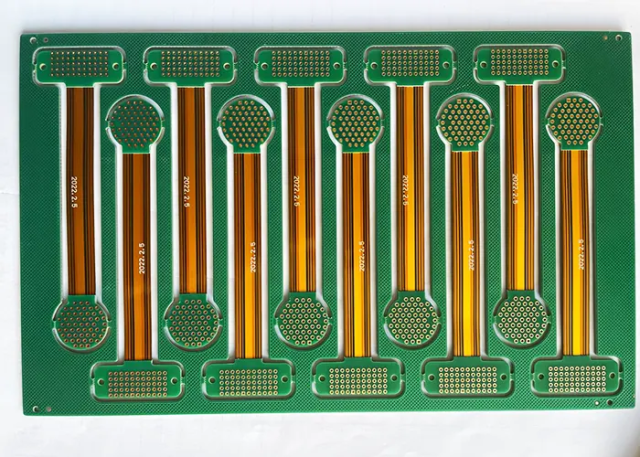
1. Single-Sided Flex with Rigid Sections
Structure:
- One flexible copper layer
- Rigid mounting areas
Advantages:
- Simple construction
- Lower manufacturing complexity
- Cost-effective solution
Applications:
- Portable electronics
- Compact consumer devices
2. Double-Sided Flexible PCB Structure
Features:
- Copper layers on both sides of the flexible substrate
Advantages:
- Higher routing density
- Improved grounding capability
- Better electrical performance
Applications:
- Sensors
- Compact control modules
- Industrial electronics
3. Multilayer Rigid-Flex PCB
Combines:
- Multilayer rigid PCB structures
- Multilayer flexible circuits
Advantages:
- High-density interconnection
- Complex signal routing
- Advanced system integration
Common applications:
- Aerospace electronics
- Military systems
- Medical imaging equipment
4. HDI Rigid-Flex PCB
Advanced rigid-flex designs may incorporate:
- Laser microvias
- Blind vias
- Buried vias
- Fine-line routing
Benefits:
- Higher component density
- Smaller form factor
- Improved high-speed performance
Advantages of Rigid-Flex PCB Layer Design
1. Compact Design and Space Reduction
Rigid-flex PCB technology reduces the need for:
- Cable assemblies
- Board-to-board connectors
- Additional wiring structures
This enables:
- Smaller product dimensions
- Lightweight system designs
- Higher integration density
2. Improved Reliability
Traditional connectors and cables are common failure points.
Rigid-flex PCBs reduce:
- Connector fatigue
- Wiring failures
- Mechanical connection issues
Resulting in:
- Longer service life
- Higher vibration resistance
- Improved system reliability
3. Enhanced Mechanical Flexibility
Flexible sections support:
- Dynamic bending
- Folding structures
- Mechanical movement
Ideal for:
- Wearable devices
- Folding electronics
- Robotics
4. Reduced Assembly Complexity
By integrating multiple connection functions into one PCB structure, rigid-flex designs reduce:
- Manual wiring
- Connector installation
- Assembly steps
Benefits include:
- Improved production consistency
- Reduced assembly time
- Lower system complexity
5. Better Signal Integrity
Rigid-flex PCB designs can improve electrical performance by reducing:
- Connector discontinuities
- Signal reflection points
- EMI coupling risks
This is especially important for:
- High-speed digital circuits
- RF applications
- Communication systems
6. Weight Reduction
Removing cables and connectors significantly reduces system weight.
This is particularly valuable in:
- Aerospace systems
- UAV electronics
- Portable devices
Key Design Considerations for Rigid-Flex PCBs
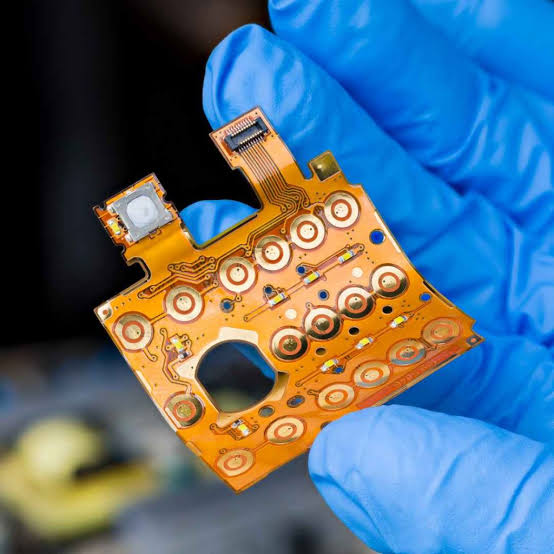
1. Bend Radius Control
Improper bending design may cause:
- Copper cracking
- Layer separation
- Conductor fatigue
Engineers must carefully consider:
- Minimum bend radius
- Copper thickness
- Flex layer arrangement
2. Stackup Optimization
Rigid-flex stackup design affects:
- Impedance control
- Flexibility
- Thermal performance
- Signal integrity
A balanced stackup helps prevent:
- Warpage
- Mechanical stress
- Lamination issues
3. Controlled Impedance Design
High-speed rigid-flex PCBs require precise impedance control.
Important factors include:
- Dielectric thickness
- Copper thickness
- Trace geometry
- Reference plane positioning
Critical for:
- RF PCB applications
- High-speed interfaces
- Antenna systems
4. Via Placement Optimization
Vias should avoid dynamic bending areas.
Incorrect via placement may increase:
- Mechanical stress
- Crack risks
- Reliability issues
5. Copper Balancing
Balanced copper distribution helps minimize:
- Layer deformation
- Thermal stress
- Lamination distortion
6. EMI Shielding Design
Rigid-flex PCBs may require:
- Ground layers
- Shielding films
- RF isolation structures
Especially important in:
- Aerospace electronics
- Medical equipment
- Wireless systems
Rigid-Flex PCB Manufacturing Process
1. Flexible Circuit Fabrication
Flexible layers are manufactured using:
- Polyimide films
- Rolled annealed copper
- Precision etching processes
2. Rigid PCB Fabrication
Rigid sections follow standard multilayer PCB manufacturing processes, including:
- Inner layer imaging
- Lamination
- Drilling
- Plating
- Surface finishing
3. Lamination Process
Rigid and flexible layers are combined through controlled:
- Temperature
- Pressure
- Alignment processes
Precision lamination is essential for long-term reliability.
4. Drilling and Via Formation
Manufacturing may include:
- Mechanical drilling
- Laser microvia formation
- Plated through holes
to achieve reliable interlayer connections.
5. Surface Finish and Assembly
Common surface finishes include:
- ENIG
- Immersion gold
- Immersion silver
depending on assembly requirements.
Applications of Rigid-Flex PCB Technology
Aerospace and Defense
Used in:
- Avionics systems
- Satellite electronics
- Military communication equipment
Requirements:
- High reliability
- Lightweight design
- Environmental resistance
Medical Electronics
Applications include:
- Portable medical devices
- Imaging equipment
- Monitoring systems
Benefits:
- Compact packaging
- Reliable connections
Automotive Electronics
Used in:
- ADAS systems
- Sensor modules
- Infotainment systems
Advantages:
- Vibration resistance
- Space optimization
Industrial Robotics
Applications:
- Robotic arms
- Motion control systems
- Automation equipment
Wearable Electronics
Including:
- Smart watches
- Health monitoring devices
- AR/VR equipment
Challenges of Rigid-Flex PCB Manufacturing
Higher Manufacturing Complexity
Rigid-flex PCB production requires more advanced processes than standard multilayer PCBs.
Challenges include:
- Precise layer alignment
- Complex lamination
- Material compatibility control
Advanced Stackup Engineering
Engineers must balance:
- Flexibility
- Electrical performance
- Mechanical reliability
Mechanical Reliability Control
Poor design may lead to:
- Copper fatigue
- Delamination
- Flex failure
Future Trends of Rigid-Flex PCB Technology
Ultra-Thin Flexible Electronics
Supporting:
- Foldable devices
- Wearable AI electronics
- Flexible displays
HDI Rigid-Flex PCB
Enabling:
- Higher routing density
- Smaller electronic systems
- Advanced packaging
High-Speed and RF Rigid-Flex PCB
Supporting:
- 5G communication
- mmWave systems
- Aerospace RF electronics
Embedded Component Integration
Future rigid-flex designs will increasingly include:
- Embedded passive components
- Integrated thermal structures
- Advanced shielding solutions
Conclusion
Rigid-flex PCB layered design represents a key advancement in modern PCB technology, combining the mechanical strength of rigid boards with the flexibility of flexible circuits.
Through optimized stackup design, advanced materials, and precise manufacturing processes, rigid-flex PCBs enable:
- Compact electronic packaging
- Improved reliability
- Better signal integrity
- Reduced assembly complexity
- Lightweight system integration
As electronic products continue moving toward higher integration, smaller form factors, and advanced communication capabilities, rigid-flex PCB technology will remain an essential solution for next-generation electronic systems.
