
As modern wireless systems continue to evolve toward higher frequencies and faster data rates, achieving high-frequency stability and low-loss signal transmission has become a critical requirement in RF PCB design. One of the most effective ways to optimize high-frequency PCB performance is through advanced material selection—specifically RF-35 PCB laminates.
RF-35 laminates are engineered for high-frequency PCB applications, offering low dielectric loss, stable dielectric constant, and excellent thermal performance. These properties make RF-35 PCB materials ideal for modern wireless communication systems, including 5G, RF modules, and high-speed networking devices.
What Are RF-35 PCB Laminates?
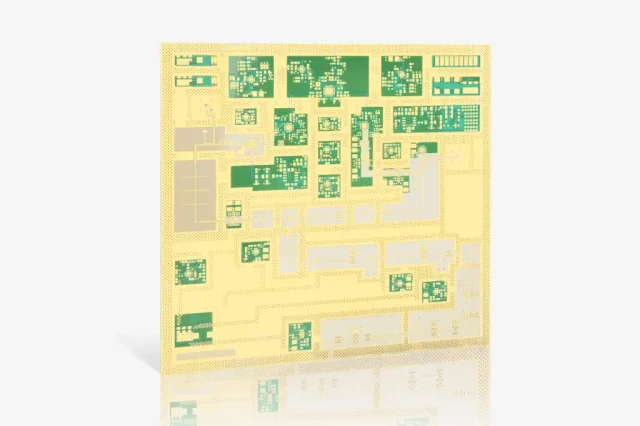
RF-35 PCB laminates are high-performance, low-loss materials designed for RF PCB manufacturing and high-speed PCB design. Compared to standard FR4, RF-35 laminates provide significantly improved signal integrity, reduced insertion loss, and enhanced high-frequency stability.
Key properties of RF-35 PCB materials:
- Low dielectric constant (Dk) for controlled impedance
- Low dissipation factor (Df) for reduced signal loss
- उत्कृष्ट thermal stability for high-reliability applications
- Consistent electrical performance across frequency ranges
These features make RF-35 PCB laminates essential for low-loss RF PCB design.
Importance of High-Frequency Stability in RF PCB Design
In high-frequency wireless systems, maintaining signal stability is crucial for performance and reliability.
Challenges in high-frequency PCB design:
- Signal attenuation at GHz frequencies
- Impedance mismatch causing reflection
- Phase instability in RF signals
- EMI and noise interference
Using RF-35 PCB laminates helps minimize these issues by ensuring consistent electrical performance and stable signal propagation.
Low-Loss Transmission in High-Frequency PCB Systems
Low-loss transmission is essential for maintaining signal strength over long distances and high frequencies.
Factors affecting low-loss PCB transmission:
- Dielectric loss of PCB material
- Conductor loss (skin effect)
- Surface roughness of copper
- PCB stack-up design
RF-35 laminates are specifically designed to reduce dielectric loss, making them ideal for low-loss RF PCB applications.
Key Design Strategies Using RF-35 PCB Laminates
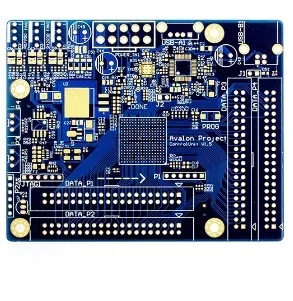
1. Controlled Impedance PCB Design
Controlled impedance routing is critical for RF PCB design.
With RF-35 laminates, designers can:
- Achieve precise impedance control (50Ω, 100Ω differential)
- Maintain consistent impedance across multilayer stack-ups
- Reduce signal reflection and return loss
2. Optimized PCB Stack-Up Design
A well-structured multilayer PCB stack-up enhances signal integrity.
Best practices:
- Use dedicated ground planes for RF signals
- Maintain uniform dielectric thickness
- Optimize layer transitions for minimal loss
3. High-Frequency Signal Routing Techniques
Proper RF PCB layout is essential for maximizing RF-35 laminate performance.
Key techniques:
- Minimize trace length to reduce attenuation
- Use smooth routing to avoid impedance discontinuities
- Avoid unnecessary vias in high-frequency paths
4. Thermal Stability and Reliability
RF-35 PCB laminates offer excellent thermal performance, ensuring stable operation in demanding environments.
Design considerations:
- Optimize heat dissipation using copper planes
- Maintain thermal balance across PCB layers
- Ensure material compatibility with reflow processes
5. EMI/EMC Optimization
Reducing electromagnetic interference (EMI) is critical in wireless communication PCB design.
Using RF-35 laminates, designers can:
- Improve shielding effectiveness
- Maintain stable ground reference
- Reduce radiation losses in RF circuits
Applications of RF-35 PCB Laminates in Wireless Systems
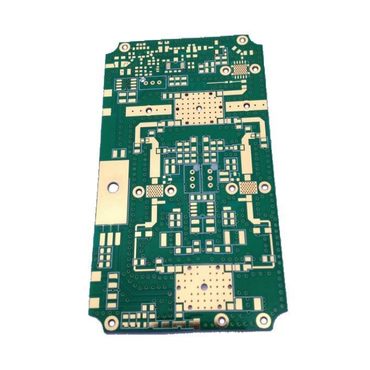
High-performance RF-35 PCB materials are widely used in:
- 5G communication systems
- RF transceivers and antennas
- Satellite communication modules
- High-speed networking equipment
- Automotive radar and ADAS systems
These applications require high-frequency PCB stability and low-loss signal transmission, making RF-35 laminates a preferred choice.
Advantages of RF-35 PCB Laminates
- Excellent high-frequency stability
- Low dielectric loss for low-loss PCB transmission
- Superior signal integrity in RF PCB design
- Consistent electrical performance across wide frequency ranges
- Reliable performance in high-speed and high-frequency environments
Conclusion
Optimizing high-frequency stability and achieving low-loss transmission are critical goals in modern RF PCB design. By leveraging RF-35 PCB laminates, engineers can significantly improve signal integrity, reduce loss, and enhance overall system performance.
For high-frequency PCB manufacturing and advanced RF PCB solutions, selecting the right materials—such as RF-35 laminates—is a key factor in achieving reliable and efficient wireless communication systems.
