
TLY-5 PCB laminates occupy a critical space in modern high-frequency design, where RF power density, dielectric stability, and consistent impedance performance determine the reliability of next-generation wireless modules. As high-speed systems extend beyond 20–40 GHz into true mmWave architecture, the engineering of TLY-5 PCB stackups becomes essential for maintaining ultra-low loss, stable dielectric constant (Dk), and predictable high-frequency propagation.
TLY-5 is valued for its low Dk (~2.2) and exceptionally low dissipation factor (Df), enabling RF front-end modules, phased-array beamforming designs, satellite transceivers, and broadband radar units to achieve maximum power efficiency and minimal signal distortion under high thermal loads and extended bandwidth.
1. High-Frequency Linearity Through Ultra-Low-Loss TLY-5 PCB Laminates
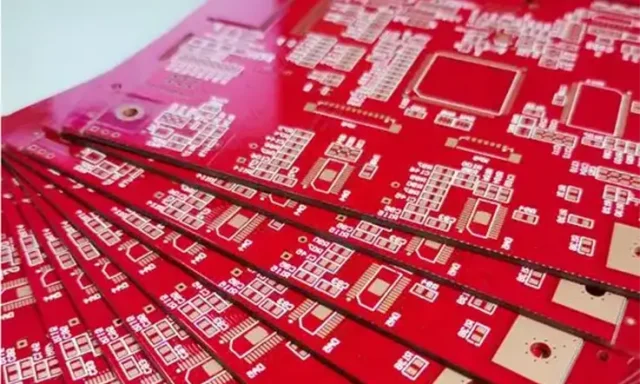
The low-loss nature of TLY-5 PCB material helps RF modules maintain clean waveform propagation. High-frequency linearity is a direct consequence of:
• ultra-low Df reducing attenuation across microwave/mmWave bands
• stable dielectric composition preventing phase distortion
• uniform E-field distribution across microstrip and coplanar structures
These features improve Q-factor in resonators and filters, minimize group-delay variation in wideband transceivers, and support coherent modulation in OFDM, QAM, and phased-array systems.
A TLY-5 PCB provides the electrical stability needed to support advanced standards such as 5G FR2, satellite Ka-band, and high-throughput radar front-ends.
2. RF Power Handling Efficiency in TLY-5 PCB Architectures
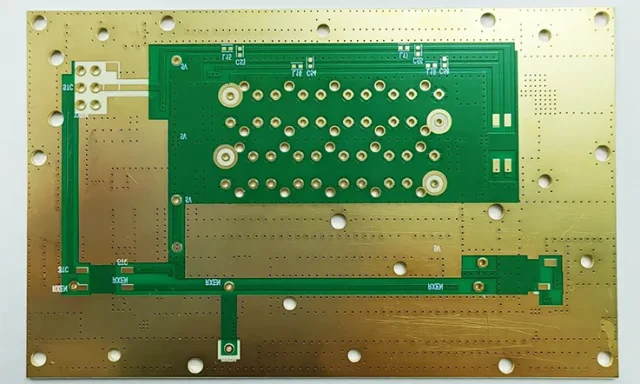
RF power handling is not merely about copper thickness; it is the subtle interaction between thermal conductivity, dielectric strength, and stackup design. TLY-5 PCB structures enhance RF power delivery through:
• low dielectric absorption minimizing heat-induced loss
• stable Dk ensuring voltage swings do not distort propagation
• high-voltage dielectric breakdown reliability reducing arcing risk
• consistent power distribution across microstrip, stripline, and CPW modes
These characteristics make TLY-5 PCB ideal for high-power LNAs, PAs, VCOs, and microwave front-end modules, where overheating and dielectric drift can rapidly degrade performance.
3. Dielectric Reliability for Harsh, High-Speed RF Environments
A key advantage of TLY-5 PCB materials is long-term dielectric stability. High-frequency systems operating with continuous high-power transmission require laminates that maintain Dk and Df across:
• temperature variations
• humidity cycling
• mechanical fatigue
• extended field operation
TLY-5 PCB materials feature a closed-cell PTFE composite, providing excellent moisture resistance, low thermal expansion, and consistent dielectric characteristics. This reliability is crucial for mission-critical applications such as aerospace RF modules, tactical communications, and precision radar systems.
4. Thermal Performance and Heat Spreading in TLY-5 PCB Designs
Heat generated by high-speed signal switching and RF power stages places constant stress on PCB materials. TLY-5 supports thermal resilience through:
• uniform thermal conductivity reducing local hotspots
• low-loss dielectric reducing RF-to-heat conversion
• stable dielectric performance even under rising junction temperatures
• compatibility with metal-backed structures for enhanced heat extraction
Integrating TLY-5 PCB into high-speed modules ensures that PAs, mixers, up/down converters, and mmWave beam-steering ICs maintain consistent electrical behavior without drift.
5. Precision Impedance Control for Broadband and mmWave Modules
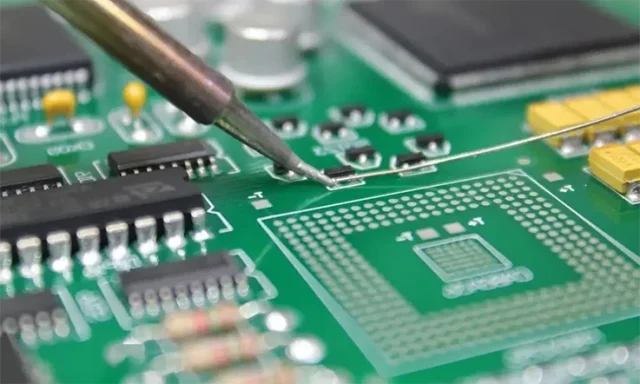
TLY-5 PCB materials enable extremely tight impedance tolerance, essential for:
• broadband power amplifiers
• frequency synthesizers
• phased-array routing networks
• coherent radar links
• high-density RF distribution layers
The laminate’s stable Dk supports microstrip and coplanar waveguide geometries with predictable modal propagation, improving:
• return loss
• insertion loss
• group delay
• phase consistency
This accuracy ensures that next-generation high-speed RF modules operate with precision across wide fractional bandwidths.
6. Stackup Optimization for Maximum Signal Integrity
TLY-5 PCB engineering requires thoughtful layer design to leverage its electrical advantages. High-frequency stackups often combine:
• TLY-5 as critical RF layers
• FR-4 or mid-loss substrates for digital logic
• copper-balanced structure to suppress warp
• heavy copper planes for power routing
Hybrid stackups maintain RF purity while supporting complex mixed-signal systems that combine RF, baseband, and digital processing.
Perfecting stackup composition is essential for compact integration in 5G radios, high-throughput satellite terminals, automotive radar sensors, and advanced microwave modules.
Conclusion
TLY-5 PCB engineering provides a powerful foundation for high-speed RF modules requiring top-tier signal integrity, predictable dielectric performance, and robust RF power handling. As wireless systems continue scaling into mmWave and wideband territory, TLY-5 materials offer the low-loss, thermally stable, and electrically consistent platform needed to deliver next-generation performance.
The more demanding the RF environment becomes, the more the advantages of TLY-5 PCB material dominate system architecture and long-term reliability.
