
The Internet of Things (IoT) is reshaping industries by connecting intelligent devices, collecting real-time data, and enabling automated decision-making.
Behind every connected device is a critical hardware foundation — the IoT Sensor PCB.
From industrial monitoring systems and smart home products to wearable devices and healthcare equipment, IoT sensor PCBs provide the platform for:
- sensor data acquisition,
- wireless communication,
- signal processing,
- power management,
- embedded control.
Unlike traditional PCBs, IoT sensor PCBs must achieve a challenging balance between:
- compact size,
- low power consumption,
- reliable wireless performance,
- high signal accuracy,
- long-term operational stability.
As IoT applications continue expanding, advanced PCB design and manufacturing technologies are becoming essential for next-generation connected systems.
What Is an IoT Sensor PCB?
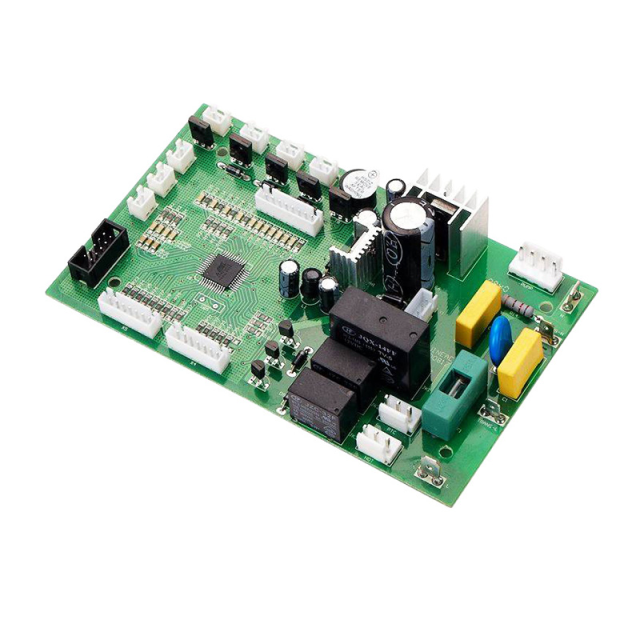
An IoT Sensor PCB is a specialized printed circuit board designed to integrate electronic components required for sensing, processing, and communication functions.
A typical IoT sensor PCB may include:
- sensor interfaces,
- microcontrollers (MCUs),
- wireless communication modules,
- power management circuits,
- data processing units,
- antenna structures.
These PCBs serve as the foundation for applications such as:
- industrial IoT (IIoT) monitoring,
- smart home devices,
- wearable electronics,
- medical monitoring systems,
- smart agriculture sensors,
- automotive IoT platforms.
Key Design Requirements for IoT Sensor PCBs
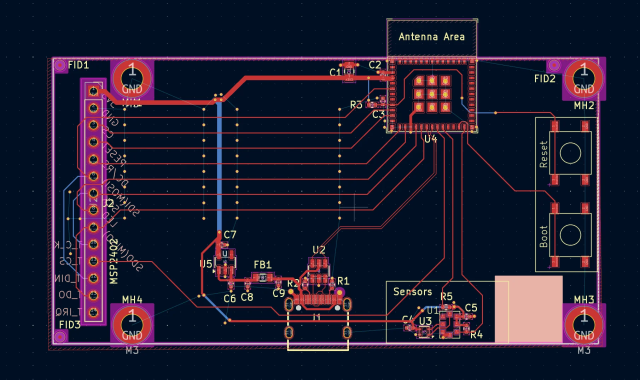
1. High-Density PCB Design for Miniaturized Devices
IoT products continue moving toward smaller and lighter designs while integrating more functions.
Engineers must accommodate:
- multiple sensors,
- wireless modules,
- processing units,
- power circuits
within limited PCB space.
Advanced PCB technologies such as HDI PCB design enable:
- finer trace routing,
- microvia structures,
- higher component density,
- reduced board size.
HDI technology is especially important for:
- wearable devices,
- compact smart sensors,
- portable IoT products.
2. Low-Power PCB Design for Long-Term Operation
Power efficiency is one of the most important considerations in IoT PCB design.
Many IoT devices operate:
- remotely,
- with limited battery capacity,
- in locations where maintenance is difficult.
Effective low-power PCB strategies include:
- optimized power distribution networks (PDN),
- low-power MCU selection,
- efficient voltage regulation,
- sleep-mode optimization,
- reduced unnecessary signal activity.
A well-designed low-power PCB can significantly extend device operating lifetime.
3. Signal Integrity and Wireless Communication Reliability
Modern IoT devices rely on wireless technologies including:
- Bluetooth,
- Wi-Fi,
- Zigbee,
- LoRa,
- 5G connectivity.
Reliable communication requires careful PCB engineering to control:
- impedance,
- signal loss,
- electromagnetic interference (EMI),
- crosstalk.
Important design considerations include:
- controlled impedance routing,
- RF trace optimization,
- proper grounding,
- antenna placement.
For wireless IoT applications, PCB layout directly influences communication range and stability.
4. Sensor Signal Accuracy and Noise Control
IoT sensors often process weak analog signals that can easily be affected by electrical noise.
PCB design must consider:
- analog and digital circuit separation,
- grounding strategy,
- noise isolation,
- ADC signal integrity.
Poor PCB layout may result in:
- inaccurate measurements,
- unstable sensor readings,
- reduced system reliability.
Optimized sensor PCB design improves measurement accuracy and overall system performance.
5. Thermal Management in Compact IoT Devices
Although many IoT devices operate at low power, thermal challenges still exist due to:
- dense component placement,
- continuous wireless transmission,
- limited airflow.
Thermal design techniques include:
- optimized copper areas,
- thermal vias,
- efficient component placement,
- improved power distribution.
Effective thermal management helps maintain long-term reliability.
Advanced PCB Technologies for IoT Applications
1. HDI PCB Technology
HDI PCB technology supports IoT miniaturization through:
- microvias,
- fine-line routing,
- high-density interconnections.
Advantages:
- smaller PCB footprint,
- improved electrical performance,
- higher integration capability.
Applications:
- wearable IoT devices,
- smart sensors,
- compact AIoT products.
2. Flexible and Rigid-Flex PCB Technology
Flexible PCB solutions provide:
- lightweight construction,
- three-dimensional packaging capability,
- improved space utilization.
Rigid-flex PCBs are widely used in:
- wearable electronics,
- medical IoT devices,
- compact consumer products.
They reduce the need for:
- cables,
- connectors,
- additional mechanical structures.
3. RF and High-Frequency PCB Design
Wireless communication is a core function of IoT devices.
RF PCB design focuses on:
- low signal loss,
- stable impedance,
- antenna integration,
- EMI control.
High-frequency PCB materials may be required for:
- 5G IoT systems,
- advanced wireless sensors,
- industrial communication modules.
4. Embedded Component Integration
Embedded PCB technology integrates components directly into PCB structures.
Benefits include:
- reduced package size,
- shorter electrical paths,
- improved reliability,
- better signal performance.
This technology supports highly integrated IoT products.
IoT Sensor PCB Manufacturing Process
1. Material Selection
Material selection directly affects:
- electrical performance,
- thermal stability,
- product reliability.
Common material choices include:
FR-4 Materials
Used for:
- standard IoT control boards,
- cost-sensitive applications.
High-Frequency Laminates
Used for:
- RF communication modules,
- antenna structures,
- high-speed wireless applications.
Flexible Materials
Used for:
- wearable electronics,
- compact flexible devices.
2. Precision PCB Fabrication
IoT PCB manufacturing requires high fabrication accuracy.
Key processes include:
- multilayer lamination,
- laser drilling,
- fine-line etching,
- controlled impedance manufacturing.
Precision fabrication ensures:
- reliable interconnections,
- stable signal transmission,
- consistent production quality.
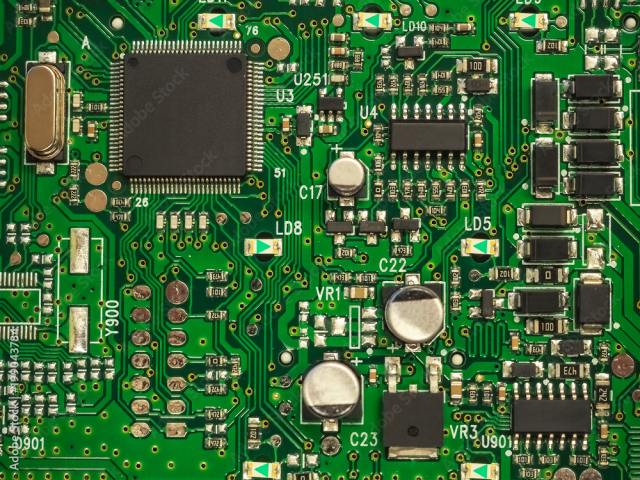
3. SMT Assembly for Miniaturized Components
IoT devices commonly use:
- miniature passive components,
- fine-pitch IC packages,
- advanced sensor modules.
High-quality SMT assembly enables:
- compact designs,
- efficient production,
- improved manufacturing consistency.
Important processes include:
- solder paste printing,
- component placement,
- reflow soldering,
- inspection.
4. Testing and Reliability Validation
IoT sensor PCBs require comprehensive testing, including:
- functional testing (FCT),
- electrical testing,
- wireless communication validation,
- environmental reliability testing.
Testing ensures stable operation under real-world conditions.
Key Challenges in IoT Sensor PCB Development
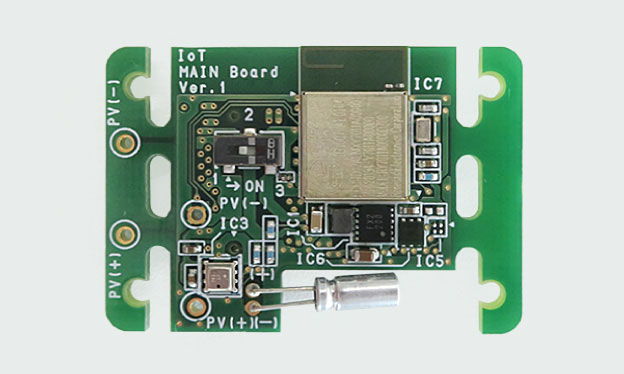
1. Miniaturization vs Function Integration
Engineers must continuously increase functionality while reducing PCB size.
Challenges include:
- component density,
- routing complexity,
- thermal limitations.
2. EMI and Wireless Interference
Multiple wireless systems operating together increase RF complexity.
Proper design requires:
- shielding strategies,
- grounding optimization,
- interference analysis.
3. Battery Life Optimization
IoT products require a balance between:
- performance,
- connectivity,
- energy efficiency.
4. Environmental Reliability
Many IoT devices operate in challenging environments:
- outdoor conditions,
- industrial facilities,
- high humidity areas,
- temperature variations.
PCB design must consider:
- material stability,
- protection methods,
- long-term durability.
Applications of IoT Sensor PCB Technology
IoT sensor PCBs are widely used in:
Industrial IoT (IIoT)
- equipment monitoring,
- predictive maintenance,
- industrial automation.
Smart Home
- security systems,
- environmental sensors,
- smart appliances.
Healthcare IoT
- wearable monitoring devices,
- portable medical equipment.
Smart Agriculture
- soil monitoring,
- environmental sensing,
- automated irrigation.
Automotive IoT
- vehicle sensors,
- connected systems,
- intelligent monitoring.
Future Trends in IoT Sensor PCB Engineering
1. AIoT Integration
Future IoT systems will combine:
- artificial intelligence,
- edge computing,
- intelligent sensor networks.
This will increase demand for:
- high-performance PCB designs,
- advanced processing capability,
- efficient power management.
2. Ultra-Low-Power PCB Systems
Future IoT devices will focus on:
- energy harvesting,
- extended battery life,
- sustainable electronics.
3. 5G and High-Speed Connectivity
Advanced IoT networks require PCB technologies supporting:
- higher frequency operation,
- faster data transmission,
- large-scale device connectivity.
4. Flexible and Wearable Electronics
Growing demand for:
- flexible PCBs,
- ultra-thin electronics,
- wearable intelligent devices
will continue driving PCB innovation.
Conclusion
IoT Sensor PCB technology is the foundation behind connected electronic systems, enabling:
- intelligent sensing,
- wireless communication,
- real-time processing,
- automated control.
As IoT devices become smaller, smarter, and more connected, PCB engineering must address increasingly complex requirements in:
- miniaturization,
- signal integrity,
- power efficiency,
- thermal management,
- manufacturing reliability.
Through advanced technologies such as:
- HDI PCB fabrication,
- RF PCB design,
- flexible PCB solutions,
- precision PCBA manufacturing,
high-performance IoT sensor PCBs will continue supporting innovation across industrial, medical, automotive, and consumer electronics applications.
