
In high-speed laptop and server motherboards, maintaining power integrity (PI) and minimizing electromagnetic interference (EMI) are crucial for stable system performance and signal reliability. Taconic RF-35 PCBs, with their low-loss dielectric properties and excellent thermal stability, have emerged as a preferred solution for high-frequency, high-speed PCB design.
By leveraging Taconic RF-35 PCB materials, designers can enhance power distribution network (PDN) stability, suppress EMI, and maintain signal integrity across dense, high-speed circuits in laptops and servers.
Why Taconic RF-35 PCBs?
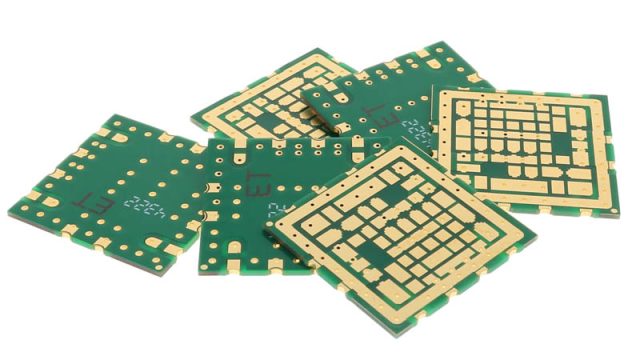
Taconic RF-35 laminates are engineered for high-frequency, high-speed applications. Their key advantages include:
- Low dielectric constant (Dk ≈ 3.5) for controlled impedance PCB design
- Low dissipation factor (Df ≈ 0.0018) for minimal signal loss
- Excellent thermal stability for high-speed computing applications
- Compatibility with multilayer PCB stackups and fine-pitch routing
These properties make RF-35 PCBs ideal for complex laptop and server motherboard layouts, especially where power integrity and EMI control are critical.
Power Integrity Challenges in High-Speed Motherboards
High-speed systems face several power integrity challenges:
- Voltage fluctuations across dense PDNs
- Simultaneous switching noise (SSN) from multiple ICs
- Ground bounce affecting signal timing
- Crosstalk between high-speed traces
Using RF-35 PCBs with optimized stackup and decoupling strategies can mitigate these issues.
EMI Suppression Techniques with RF-35 PCBs
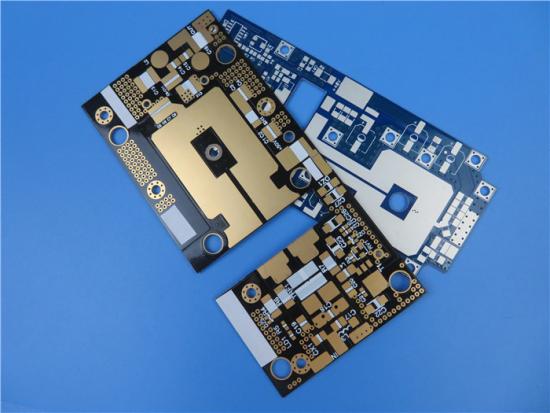
1. Optimized PCB Stack-Up Design
- Maintain adjacent ground and power planes to minimize loop area
- Use hybrid stack-ups to separate high-speed traces from sensitive analog sections
- Implement ground shielding layers to suppress EMI
2. Controlled Impedance Routing
- Use precise trace width and spacing
- Match trace impedance with driver and receiver ICs
- Ensure consistent differential pair routing for high-speed signals
3. Power Plane Segmentation and Decoupling
- Segment power planes for different voltage domains
- Place high-frequency decoupling capacitors close to ICs
- Optimize PDN layout to minimize voltage ripple
4. Via and Microvia Optimization
- Minimize via stubs in high-speed signal paths
- Use back-drilling for critical high-frequency traces
- Optimize via placement to reduce inductance and EMI
5. Shielding and Filtering Components
- Use ferrite beads and common-mode chokes on power and signal lines
- Add EMI suppression filters on I/O ports
- Implement chassis and board-level shielding where necessary
Power Integrity Best Practices
- Perform PDN impedance simulation to ensure voltage stability
- Optimize decoupling capacitor placement for effective high-frequency bypass
- Separate analog and digital power planes to reduce interference
- Use solid reference planes to reduce ground bounce
Applications in High-Speed Motherboards
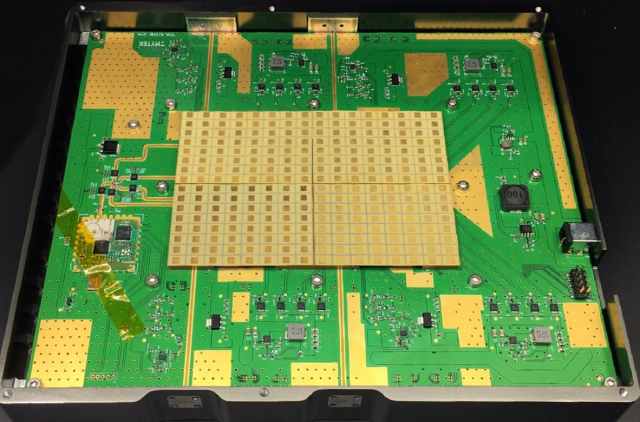
- High-performance laptops with multi-core processors
- Server motherboards supporting high-speed memory (DDR4/DDR5)
- Graphics-intensive workstation motherboards
- Networking and data center server boards
These applications demand stable power delivery, low EMI, and high signal integrity, which RF-35 PCBs can effectively provide.
Conclusion
Using Taconic RF-35 PCBs in high-speed laptop and server motherboards significantly enhances power integrity and EMI suppression, ensuring stable operation, reliable high-frequency performance, and improved signal integrity. By combining optimized PCB stack-up, controlled impedance routing, and advanced PDN design, engineers can achieve high-performance and reliable motherboard designs suitable for modern computing applications.
