
In modern automotive radar systems, aerospace communication modules, and high-frequency RF electronics, PCB material performance directly determines system stability, signal integrity, and long-term reliability. Among advanced RF laminates, RO4835 is widely used due to its excellent balance of low loss, thermal stability, and cost-effective high-frequency performance.
However, for mission-critical automotive and aerospace applications, material selection alone is not enough. Comprehensive RF testing and reliability evaluation of RO4835 PCBs is essential to ensure consistent performance under extreme environmental and electrical conditions.
Overview of RO4835 Material
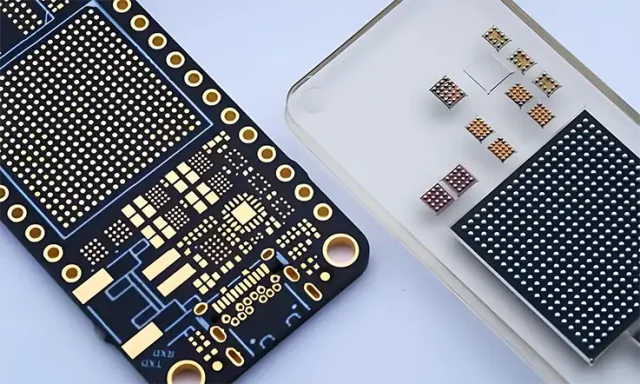
RO4835 is a ceramic-filled hydrocarbon thermoset laminate designed for high-frequency and low-loss PCB applications.
Key Characteristics:
- Low dielectric loss for RF signal integrity
- Stable dielectric constant across frequency range
- Compatible with standard FR4 fabrication processes
- Good thermal reliability under high-power conditions
These properties make it suitable for:
- Automotive radar (24 GHz / 77 GHz)
- Satellite communication modules
- Aerospace RF subsystems
- High-speed antenna circuits
Importance of RF Testing in RO4835 PCBs
In RF PCB design, even minor variations in material properties can significantly affect system performance.
RF testing ensures:
- Signal integrity at target frequencies
- Controlled impedance accuracy
- Low insertion loss and return loss
- Stable performance under temperature variation
Without proper RF validation, systems may suffer from:
- Frequency drift
- Increased signal attenuation
- Poor antenna efficiency
- Communication instability
Key RF Performance Tests for RO4835 PCBs
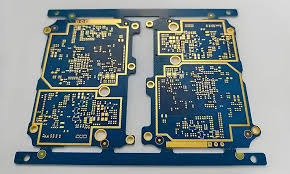
1. Dielectric Constant (Dk) Stability Test
The dielectric constant directly impacts impedance and signal velocity.
εr\varepsilon_rεr
Evaluation Focus:
- Variation with frequency
- Temperature-dependent stability
- Lot-to-lot material consistency
A stable Dk ensures predictable RF performance in automotive radar and aerospace communication systems.
2. Dissipation Factor (Df) / Loss Tangent Test
Low loss is critical for high-frequency efficiency.
tanδ\tan\deltatanδ
Impact:
- Lower signal attenuation
- Higher antenna efficiency
- Reduced heat generation in RF paths
RO4835 is specifically optimized for low-loss microwave applications.
3. Insertion Loss & Return Loss Testing
These parameters measure signal transmission efficiency.
- Insertion Loss: Measures signal power loss through PCB traces
- Return Loss: Measures signal reflection due to impedance mismatch
Poor results indicate:
4. Controlled Impedance Verification
Impedance control is essential in RF PCB design.
Testing Methods:
- TDR (Time Domain Reflectometry)
- VNA (Vector Network Analyzer) measurement
- Coupon-based impedance validation
5. Thermal Stability Testing
Automotive and aerospace environments expose PCBs to extreme temperatures.
Test Conditions:
- Thermal cycling (-55°C to +125°C or higher)
- High-temperature aging
- Thermal shock resistance
RO4835 must maintain:
- Stable dielectric properties
- Mechanical integrity
- Via reliability
6. Mechanical Reliability Testing
Includes:
- Peel strength testing (copper adhesion)
- Via reliability (PTH and microvia stress testing)
- Vibration and shock testing
Critical for:
- Automotive ECU radar systems
- Aerospace avionics modules
7. Moisture Absorption Testing
Humidity affects RF performance and long-term stability.
- Measures water absorption rate
- Evaluates dielectric drift under humidity exposure
- Ensures stable performance in outdoor environments
Design Factors Affecting RO4835 Reliability
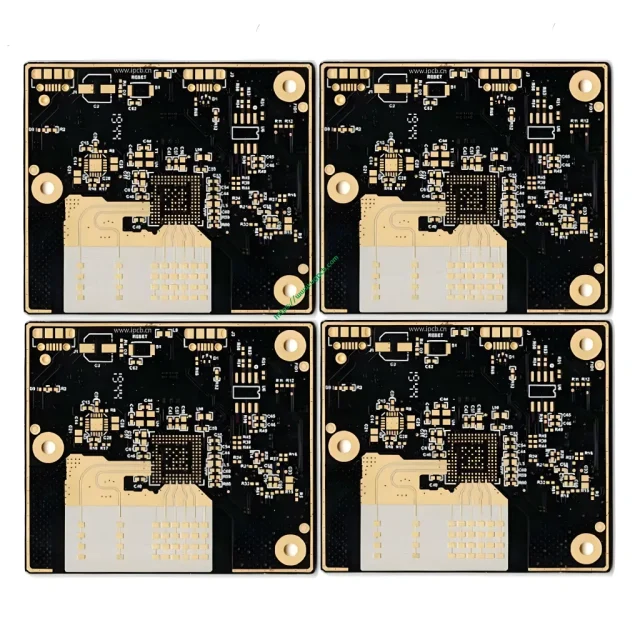
1. Stack-Up Design
- Maintain symmetrical layer structure
- Optimize ground plane continuity
- Reduce EMI coupling
2. Via Design
- Use short via stubs for RF paths
- Apply back-drilling if necessary
- Optimize via transition in high-frequency routing
3. Copper Roughness
- Lower copper roughness improves RF loss performance
- Important at mmWave frequencies
4. Impedance Control
- Tight tolerance routing (±5% or better)
- Consistent trace geometry across layers
Automotive and Aerospace Application Requirements
RO4835 PCBs used in these industries must meet strict standards:
Automotive RF Systems
- Radar sensing (ACC, collision avoidance)
- Vehicle-to-everything (V2X) communication
- ADAS systems
Aerospace RF Systems
- Satellite communication
- Navigation systems
- Radar and telemetry modules
Key requirements include:
- Long-term reliability (>10–15 years)
- High thermal endurance
- Stable RF performance under vibration
Manufacturing Considerations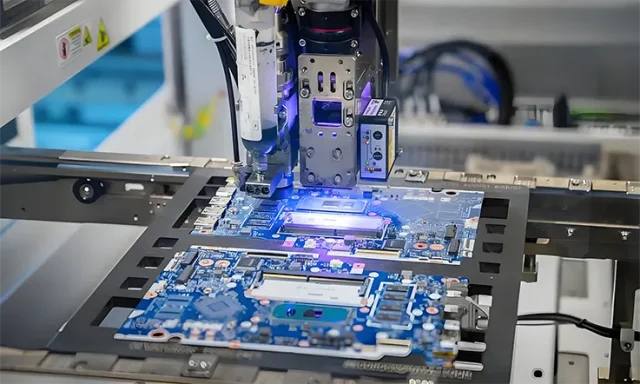
To ensure consistent RF performance:
- Controlled lamination pressure and temperature
- Strict drilling accuracy for vias
- Low-defect plating process
- High-quality impedance test coupons
- X-ray and micro-section inspection
Conclusion
The RF testing and reliability evaluation of RO4835 PCBs is essential for ensuring high-performance operation in automotive and aerospace RF systems. Through comprehensive testing of dielectric stability, loss characteristics, impedance control, and environmental reliability, engineers can guarantee consistent performance in demanding high-frequency applications.
By combining robust material properties with precise PCB design and strict manufacturing control, RO4835-based PCBs can deliver reliable RF performance in mission-critical environments.
