
1. Introduction: Why High-Frequency PCBs Are the Backbone of Modern Signal Transmission
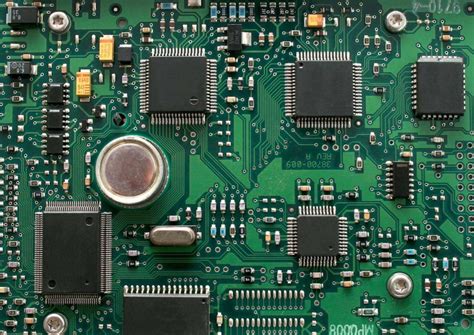
In today’s electronics industry, the demand for high-speed signal transmission and high-frequency communication is rapidly increasing due to the expansion of 5G/6G networks, automotive radar systems, satellite communications, and data center interconnects.
At these high frequencies (GHz to mmWave range), signal behavior is no longer governed only by basic conductivity, but by electromagnetic wave propagation effects, including:
- Signal reflection
- Transmission loss
- Impedance mismatch
- Dielectric dispersion
This makes high-frequency PCB (HF PCB) design essential for maintaining signal integrity and stable high-speed performance.
At KKPCB, high-frequency PCB solutions are optimized for low-loss transmission, controlled impedance routing, and high-speed circuit reliability.
2. What Is a High-Frequency PCB?
A high-frequency PCB is a printed circuit board designed specifically for circuits operating at frequencies typically above 1 GHz, extending into microwave and millimeter-wave ranges.
Unlike standard FR4 boards, high-frequency PCBs are engineered to ensure:
- Minimal signal attenuation
- Stable dielectric properties
- Controlled impedance transmission
- Reduced electromagnetic interference (EMI)
These characteristics are critical for high-speed digital and RF communication systems.
3. Key Electrical Principles in High-Frequency Signal Transmission
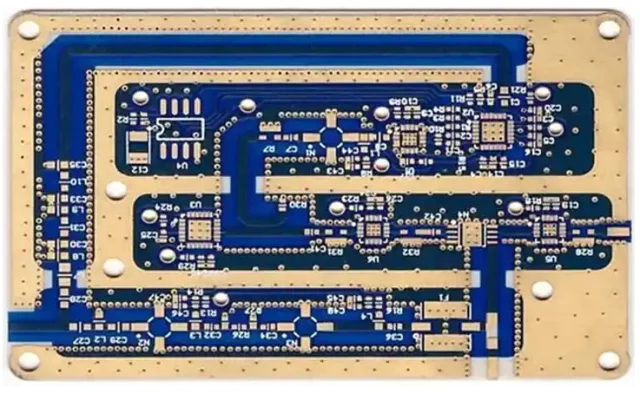
3.1 Dielectric Constant and Signal Propagation
The dielectric constant determines how fast signals propagate through the PCB:
εr
A stable dielectric constant ensures:
- Consistent signal velocity
- Reduced phase distortion
- Reliable timing in high-speed circuits
Unstable dielectric behavior leads to:
- Signal delay variation
- Data errors in high-speed systems
3.2 Loss Tangent and Signal Attenuation
High-frequency signal loss is governed by dielectric loss:
tanδ
Lower loss tangent means:
- Reduced signal attenuation
- Higher transmission efficiency
- Better RF and microwave performance
This is critical in 5G antennas, radar modules, and high-speed interconnects.
3.3 Controlled Impedance for Signal Integrity
Impedance matching is essential for preventing signal reflection.Proper impedance control ensures:
- Clean signal transmission
- Reduced return loss
- Stable high-speed data integrity
4. High-Frequency PCB Materials for Signal Transmission
Material selection is one of the most critical factors in HF PCB design.
4.1 Rogers Materials
- RO4350B, RO4835, RO3003
- Low dielectric loss
- Stable RF performance
4.2 PTFE-Based Laminates
- Extremely low loss
- Ideal for mmWave systems
- High-end aerospace and satellite use
4.3 Ceramic-Filled Hydrocarbon Materials
- Balanced cost and performance
- Widely used in telecom applications
5. Design Considerations for High-Speed Signal Transmission
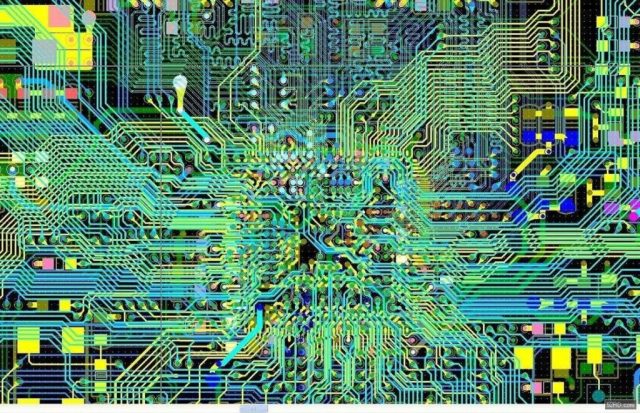
5.1 Minimize Signal Path Length
Shorter traces reduce:
- Delay
- Loss
- Crosstalk
5.2 Ground Plane Optimization
A continuous ground plane helps:
- Reduce EMI
- Improve return current path
- Stabilize impedance
5.3 Via Optimization
High-frequency vias must be:
- Short
- Low inductance
- Back-drilled if necessary
5.4 Copper Surface Quality
Smooth copper reduces:
- Skin effect losses
- High-frequency attenuation
6. Applications of High-Frequency PCBs
High-frequency PCBs are widely used in:
- 5G / 6G base stations
- RF front-end modules
- Automotive radar systems (ADAS)
- Satellite communication systems
- Wi-Fi 6 / Wi-Fi 7 devices
- Data center high-speed interconnects
- Aerospace communication systems
These systems rely heavily on stable high-speed signal transmission and RF integrity.
7. Manufacturing Requirements for High-Frequency PCBs
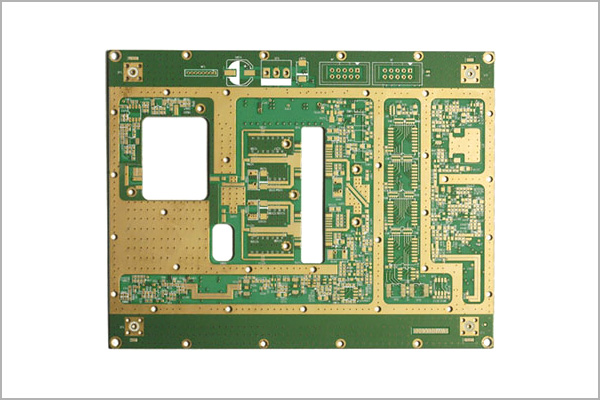
Producing high-frequency PCBs requires advanced manufacturing control:
- Controlled impedance fabrication (±5% tolerance)
- Precision lamination process
- Laser drilling for microvias
- Copper roughness control
- RF performance testing (VNA measurement)
At KKPCB, strict process control ensures:
- Stable impedance performance
- Low-loss signal transmission
- High reliability in mass production
8. Conclusion
High-frequency PCBs are the foundation of modern high-speed signal transmission systems, enabling reliable performance in RF, microwave, and high-speed digital applications.
As communication systems continue to evolve toward higher frequencies and faster data rates, the importance of optimized HF PCB design becomes even more critical.
With advanced engineering capabilities, KKPCB delivers high-performance PCB solutions for next-generation communication and electronic systems.
