
With the continuous development of electronic products toward miniaturization, higher performance, and increased production efficiency, traditional through-hole assembly methods are gradually being complemented by more advanced manufacturing technologies.
SMT (Surface Mount Technology) assembly is one of the most widely used electronic manufacturing processes today. It enables electronic components to be mounted directly onto the surface of a printed circuit board (PCB) without requiring component leads to pass through drilled holes.
Compared with traditional through-hole technology (THT), SMT assembly provides:
- Higher component density
- Smaller product size
- Faster production speed
- Improved automation capability
- Better electrical performance for high-speed circuits
SMT is widely applied in:
- Consumer electronics
- Automotive electronics
- Industrial control systems
- Medical devices
- Communication equipment
- IoT products
This article explains the concept, process, equipment, advantages, challenges, and key considerations of SMT assembly.
1. What Is SMT Assembly?
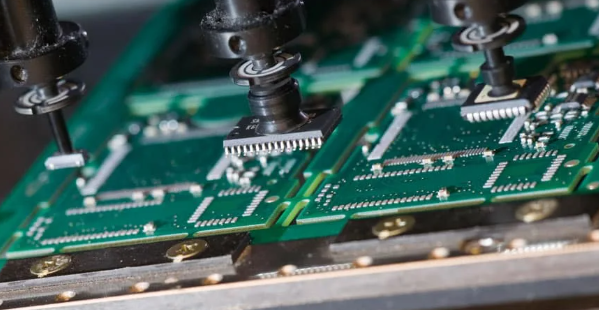
SMT Assembly (Surface Mount Technology Assembly) is an electronic manufacturing process in which surface mount components (SMDs) are placed directly onto the surface of a PCB and soldered using methods such as reflow soldering.
Unlike through-hole components, SMD components do not require long leads inserted into PCB holes.
The basic structure is:
PCB → Solder Paste → SMD Components → Reflow Soldering → Inspection → Testing
2. What Are Surface Mount Devices (SMDs)?
Surface Mount Devices are electronic components designed specifically for SMT assembly.
Common SMD components include:
Passive Components
Examples:
- Resistors
- Capacitors
- Inductors
Characteristics:
- Small size
- High placement density
Integrated Circuits (ICs)
Examples:
- Microcontrollers
- Processors
- Memory chips
Common packages:
- QFP
- QFN
- BGA
- CSP
Semiconductor Components
Examples:
- Diodes
- Transistors
- MOSFETs
Applications:
- Power management
- Signal processing
3. SMT Assembly Process
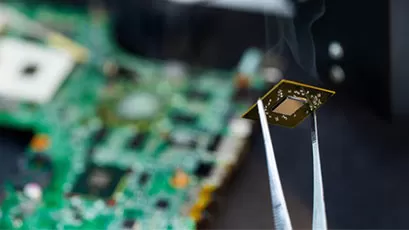
The SMT assembly process involves several precise manufacturing stages.
3.1 PCB Preparation
Before assembly, PCB boards undergo preparation steps:
- Incoming inspection
- Cleaning
- Moisture control
- Verification of PCB specifications
Important checks include:
- Surface finish quality
- Pad dimensions
- PCB warpage
3.2 Solder Paste Printing
Solder paste is applied onto PCB pads using a stencil printer.
The solder paste contains:
- Metal solder particles
- Flux materials
The printing process directly affects soldering quality.
Key parameters include:
- Paste thickness
- Printing alignment
- Stencil design
Poor solder paste printing may cause:
- Insufficient solder
- Solder bridging
- Component connection failures
3.3 Component Placement
A pick-and-place machine accurately places components onto the PCB.
The equipment controls:
- Component position
- Rotation angle
- Placement accuracy
Modern placement machines can handle:
- High-speed placement
- Fine-pitch components
- Complex IC packages
3.4 Reflow Soldering
After component placement, the PCB passes through a reflow oven.
The process includes:
- Preheating
- Thermal soaking
- Reflow melting
- Cooling
During reflow:
- Solder paste melts
- Components bond with PCB pads
- Electrical connections are formed
Proper temperature profile control is essential to avoid:
- Cold solder joints
- Component damage
- PCB deformation
3.5 Inspection Process
After soldering, PCB assemblies require inspection.
Automated Optical Inspection (AOI)
AOI checks:
- Component placement
- Solder defects
- Missing components
X-Ray Inspection
Used for hidden solder joints such as:
- BGA packages
- QFN components
It detects:
- Voids
- Solder defects
- Internal connection issues
Electrical Testing
Common tests include:
- ICT (In-Circuit Test)
- Functional testing
These verify:
- Electrical continuity
- Circuit operation
4. SMT Assembly Equipment
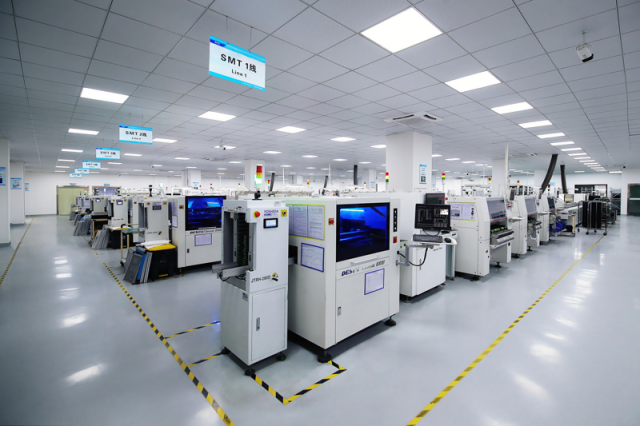
4.1 Stencil Printer
Function:
- Applies solder paste accurately
Key factors:
- Stencil thickness
- Aperture design
- Printing accuracy
4.2 Pick-and-Place Machine
Function:
- Automatically places components
Capabilities include:
- High-speed placement
- Fine-pitch positioning
- Multiple component types
4.3 Reflow Oven
Function:
- Creates controlled soldering conditions
Important parameters:
- Temperature zones
- Heating rate
- Cooling rate
4.4 Inspection Equipment
Includes:
- AOI machines
- X-ray inspection systems
- SPI (Solder Paste Inspection)
5. Advantages of SMT Assembly
5.1 Higher Component Density
SMT allows components to be mounted on:
- Both sides of PCB
- Smaller board areas
Benefits:
- Reduced PCB size
- More functions in compact products
5.2 Improved Production Efficiency
SMT supports automated manufacturing.
Advantages:
- Faster assembly speed
- Consistent quality
- Reduced manual labor
5.3 Better Electrical Performance
Shorter component connections provide:
- Reduced parasitic effects
- Improved high-frequency performance
This benefits:
- High-speed circuits
- RF applications
5.4 Reduced Product Size and Weight
Smaller components enable:
- Compact electronic designs
- Lightweight products
Applications:
- Wearable devices
- Mobile electronics
6. SMT Assembly vs THT Assembly
| Feature | SMT Assembly | THT Assembly |
|---|---|---|
| Component Mounting | Surface mounted | Through PCB holes |
| Component Size | Smaller | Larger |
| Production Speed | High | Lower |
| Automation Level | High | Medium |
| Mechanical Strength | Moderate | High |
| Repair Difficulty | Higher | Easier |
| Typical Applications | Compact electronics | High-stress applications |
7. Common SMT Assembly Challenges
7.1 Solder Bridging
Cause:
- Excess solder paste
- Incorrect stencil design
- Fine-pitch spacing issues
Solution:
- Optimize stencil parameters
- Control solder paste volume
7.2 Component Misalignment
Causes:
- Placement accuracy issues
- PCB positioning errors
Solution:
- Improve machine calibration
- Optimize fiducial design
7.3 Solder Voids
Common in:
- BGA
- QFN
- Power components
Impact:
- Reduced thermal performance
- Lower reliability
Solutions:
- Optimize reflow profile
- Improve solder paste selection
7.4 PCB Warpage
Causes:
- Uneven copper distribution
- Thermal stress during reflow
Solutions:
- Optimize PCB stack-up
- Control manufacturing processes
8. SMT Design Considerations (DFM)
Successful SMT production requires PCB design optimization.
Important considerations include:
Component Placement
Design should consider:
- Assembly sequence
- Component accessibility
- Thermal requirements
Pad Design
Correct pad geometry helps ensure:
- Reliable solder joints
- Better yield
Thermal Management
For power components:
- Thermal vias
- Copper areas
- Heat dissipation paths
should be considered.
Testability
Design should include:
- Test points
- Programming interfaces
- Inspection access
9. Applications of SMT Assembly
Consumer Electronics
Examples:
- Smartphones
- Tablets
- Wearable devices
Requirements:
- Miniaturization
- High integration
Automotive Electronics
Applications:
- Control modules
- Sensor systems
- Battery management systems
Requirements:
- Reliability
- Environmental resistance
Medical Electronics
Applications:
- Monitoring equipment
- Diagnostic devices
Requirements:
- High reliability
- Stable performance
Industrial Electronics
Applications:
- Automation controllers
- Industrial communication equipment
Requirements:
- Long service life
- Robust operation
10. Future Trends of SMT Assembly
Advanced Miniaturization
Development toward:
- Smaller components
- Fine-pitch packages
- Higher placement density
Smart Manufacturing
Future SMT production will integrate:
- AI inspection
- Automated process optimization
- Data-based quality control
Integration with Advanced PCB Technologies
SMT will continue developing alongside:
- HDI PCB
- Flexible PCB
- Rigid-flex PCB
- Advanced semiconductor packages
Conclusion
SMT assembly is a core technology in modern electronic manufacturing, enabling compact, high-performance, and highly automated PCB assembly.
Its key advantages include:
- High assembly efficiency
- High component density
- Improved electrical performance
- Support for advanced electronic products
However, successful SMT production requires careful control of:
- PCB design
- Solder paste printing
- Component placement
- Reflow process
- Inspection and testing
Through proper DFM optimization and manufacturing process control, SMT assembly can achieve high reliability and production efficiency for applications ranging from consumer electronics to automotive and industrial systems.
