
The Role of Ceramic PCBs in Advanced Electronics
As electronic devices continue to demand higher power density, faster signal speeds, and improved thermal performance, traditional organic PCB materials may no longer meet the requirements of certain high-performance applications.
A Ceramic PCB (Ceramic Printed Circuit Board) uses ceramic materials as the substrate instead of conventional FR-4, providing outstanding:
- Thermal conductivity
- Electrical insulation performance
- Dimensional stability
- High-temperature reliability
- Mechanical strength
Due to these advantages, ceramic PCBs are widely used in power electronics, RF/microwave systems, LED lighting, automotive electronics, semiconductor devices, and high-reliability applications.
Different ceramic materials and manufacturing technologies provide different performance characteristics. Selecting the right ceramic PCB type is essential for achieving optimal electrical and thermal performance.
Main Types of Ceramic PCBs
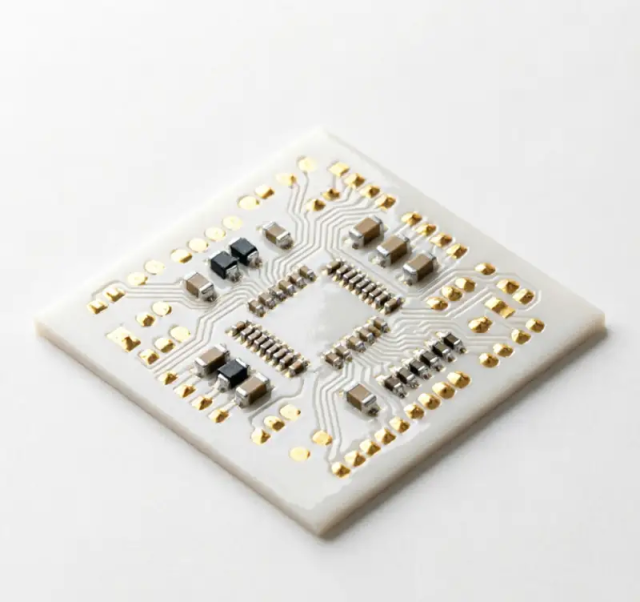
1. Single-Layer Ceramic PCB
A single-layer ceramic PCB consists of one conductive circuit layer built on a ceramic substrate.
Key Features:
- Simple circuit structure
- Excellent thermal dissipation
- High electrical insulation
- Cost-effective for basic applications
Typical Applications:
- LED modules
- Power components
- Simple high-temperature circuits
Single-layer ceramic PCBs are suitable for applications where thermal performance is more important than circuit complexity.
2. Multilayer Ceramic PCB
Multilayer ceramic PCBs integrate multiple ceramic layers with internal conductive traces connected through vias.
Advantages:
- High-density circuit integration
- Improved signal integrity
- Compact design capability
- Better electrical performance
Applications:
- RF modules
- Semiconductor packaging
- High-frequency circuits
- Advanced electronic systems
Multilayer ceramic PCBs are commonly used when space limitations and electrical performance are critical.
3. Thick Film Ceramic PCB
Thick film ceramic PCBs use thick-film printing technology to create conductive and resistive patterns on ceramic substrates.
Characteristics:
- Strong environmental resistance
- High reliability
- Suitable for harsh operating conditions
Applications:
- Automotive electronics
- Industrial control systems
- Power circuits
- Sensor modules
Thick-film technology provides robust performance in demanding environments.
4. Thin Film Ceramic PCB
Thin film ceramic PCBs are manufactured by depositing extremely thin conductive and insulating layers onto ceramic substrates.
Advantages:
- High circuit precision
- Excellent electrical consistency
- Suitable for high-frequency applications
Applications:
- RF circuits
- Microwave devices
- Miniaturized electronic modules
Thin-film ceramic technology enables precise electrical performance for advanced communication and sensing applications.
5. Hybrid Ceramic PCB
Hybrid ceramic PCBs combine ceramic materials with other substrate technologies, such as:
- Organic PCB materials
- Metal core structures
- Composite materials
Benefits:
- Balanced thermal performance
- Improved design flexibility
- Cost optimization
Hybrid ceramic solutions are often used when engineers need to combine ceramic advantages with specific mechanical or manufacturing requirements.
Common Ceramic PCB Materials
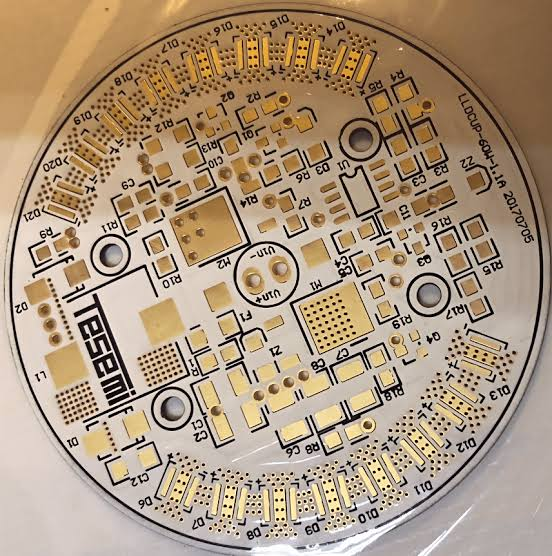
1. Alumina (Al₂O₃) Ceramic PCB
Alumina is one of the most widely used ceramic PCB materials due to its balance of performance and cost.
Key Advantages:
- Good thermal conductivity
- Excellent electrical insulation
- High mechanical strength
- Stable material properties
Applications:
- LED circuits
- Power electronics
- RF components
- Industrial electronics
Alumina ceramic PCBs are suitable for many general high-performance applications.
2. Aluminum Nitride (AlN) Ceramic PCB
Aluminum nitride provides significantly higher thermal conductivity than alumina, making it suitable for advanced thermal management applications.
Advantages:
- Excellent heat dissipation
- Low thermal expansion
- Good electrical insulation
Applications:
- High-power semiconductor modules
- Power converters
- High-brightness LED systems
- Advanced electronic cooling applications
AlN ceramic PCBs are preferred where heat removal is a primary design concern.
3. Beryllium Oxide (BeO) Ceramic PCB
Beryllium oxide ceramic offers extremely high thermal conductivity.
Characteristics:
- Exceptional heat dissipation capability
- High-temperature performance
Applications:
- High-power RF amplifiers
- Microwave systems
- Specialized power electronics
Due to material handling considerations, BeO is typically used only in specialized applications.
4. Silicon Carbide (SiC) Ceramic PCB
Silicon carbide ceramic materials provide excellent thermal and electrical performance under extreme conditions.
Advantages:
- High-temperature resistance
- Strong mechanical durability
- Excellent electrical properties
Applications:
- High-temperature electronics
- Power semiconductor systems
- Harsh-environment applications
SiC ceramic substrates are increasingly important for next-generation power electronics.
5. LTCC (Low Temperature Co-fired Ceramic) PCB
LTCC technology forms multilayer ceramic structures by co-firing ceramic materials at relatively low temperatures.
Key Benefits:
- High-density multilayer integration
- Excellent RF performance
- Compact size
- Reliable dimensional control
Applications:
- RF modules
- Antenna systems
- Sensors
- Wireless communication devices
LTCC ceramic PCBs are widely used in compact high-frequency electronic systems.
How to Select the Right Ceramic PCB Type?
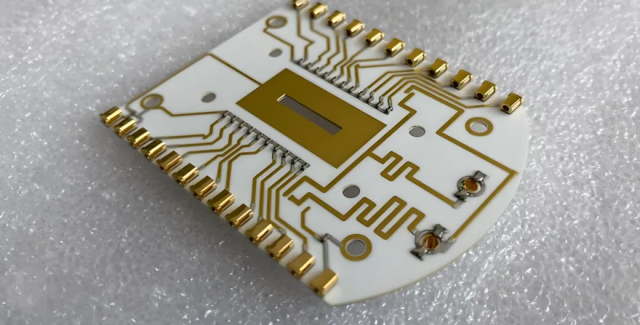
The ideal ceramic PCB depends on several engineering requirements:
Thermal Requirements
For high-power applications:
- AlN
- BeO
- SiC
are preferred due to their superior thermal conductivity.
Frequency Performance
For RF and microwave applications:
- LTCC
- Thin film ceramic PCB
- Alumina ceramic PCB
provide excellent electrical stability.
Circuit Complexity
For complex designs:
- Multilayer ceramic PCB
- LTCC PCB
offer better integration capability.
Environmental Reliability
For harsh environments:
- Thick film ceramic PCB
- SiC ceramic PCB
provide enhanced durability.
Applications of Ceramic PCBs
Ceramic PCBs are widely used in:
- High-power LED systems
- Semiconductor power modules
- RF and microwave devices
- Automotive electronics
- Aerospace electronics
- Sensors
- High-temperature industrial equipment
Their excellent thermal and electrical properties make them suitable for applications where conventional PCB materials cannot provide sufficient reliability.
Conclusion: Ceramic PCBs Enable High-Performance Electronic Design
Ceramic PCBs provide unique advantages in thermal management, electrical insulation, and high-frequency performance, making them essential for advanced electronic systems.
From Alumina and Aluminum Nitride ceramic PCBs to LTCC and thin-film ceramic technologies, different ceramic PCB solutions meet different requirements in power electronics, RF systems, semiconductor devices, and high-reliability applications.
Selecting the right ceramic PCB material and manufacturing technology helps engineers achieve better thermal performance, improved reliability, and longer product lifecycles.
With experience in advanced PCB technologies including ceramic PCB, high-frequency PCB, HDI PCB, rigid-flex PCB, and complex multilayer PCB manufacturing, KKPCB supports customized PCB solutions for demanding electronic applications.
