
In the modern electronics landscape, where devices are becoming smaller, faster, and more complex, the margin for error in PCB manufacturing has shrunk to nearly zero. A single microscopic defect in a multilayer PCB can lead to system-wide failure, costly recalls, or even safety hazards. Ensuring peak electronic circuit performance is not just about high-quality design; it is about the rigorous application of PCB testing standards. For a premier manufacturer like KKPCB, testing is the definitive bridge between a theoretical design and a high-reliability end product.
1. Ensuring Signal Integrity and Electrical Functionality
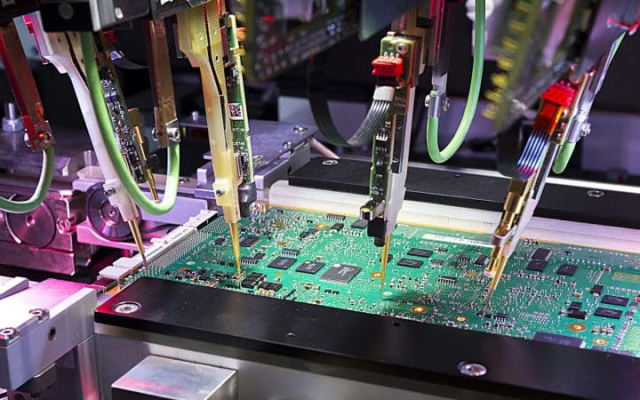
The primary goal of PCB testing is to verify that the electrical paths function exactly as intended. High-speed digital circuits are incredibly sensitive to impedance fluctuations.
- Continuity & Isolation Testing: This fundamental test ensures that all intended connections are closed (continuity) and that no unintended connections (shorts) exist.
- Controlled Impedance Testing (TDR): For high-frequency boards, such as those used in 5G or AI servers, Time Domain Reflectometry (TDR) is used to ensure that traces maintain a consistent impedance. Without this, signal reflections can occur, leading to data corruption and degraded circuit performance.
2. Adherence to Global Quality Standards (IPC-Class)
Reliability is often measured by a board’s adherence to IPC Standards. These standards define the acceptability criteria for different industries:
- IPC-Class 2: Standard for general electronic products (consumer electronics).
- IPC-Class 3: Reserved for high-reliability electronics, such as medical devices, aerospace, and automotive systems, where downtime is not an option.
Reliable testing ensures that every solder joint, via, and copper trace meets these strict international benchmarks, providing clients with “peace of mind” and long-term durability.
3. Early Detection of Manufacturing Defects
Testing acts as a critical filter during the PCB fabrication and PCB assembly (PCBA) phases. By catching defects early, manufacturers can prevent the “rule of ten,” where the cost of a defect increases tenfold at each subsequent stage of production.
- Automated Optical Inspection (AOI): High-resolution cameras scan the board for missing components, solder bridges, or incorrect polarity.
- In-Circuit Testing (ICT): Often called the “bed-of-nails” test, ICT checks individual components (resistors, capacitors, ICs) for correct values and placement.
- Flying Probe Testing: An extremely flexible testing method that uses robotic probes to touch test points, ideal for prototyping and low-to-medium volume runs where a custom fixture is too expensive.
4. Mechanical and Environmental Reliability
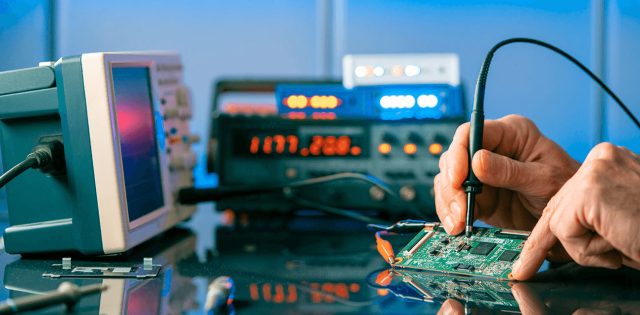
Electronic circuits often operate in harsh environments. Testing standards must account for physical stresses like vibration, thermal expansion, and humidity.
- Thermal Cycling/Shock: Boards are subjected to extreme temperature swings to ensure that the PCB laminate and copper traces do not delaminate or crack under thermal stress.
- Solderability Testing: This ensures that the surface finish (such as ENIG or HASL) allows for a strong, reliable bond during the soldering process, preventing “cold joints” that fail over time.
- X-Ray Inspection (AXI): For boards using BGA (Ball Grid Array) components, X-ray is the only way to inspect solder joints hidden beneath the component body, ensuring there are no internal voids or shorts.
5. Long-Term Performance and Brand Reputation
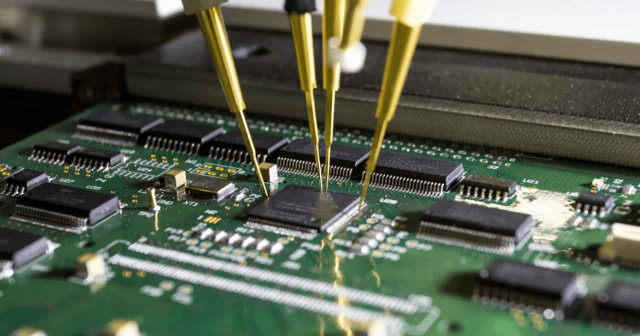
In a competitive global market, reliability is a brand’s greatest asset. Implementing comprehensive PCB testing protocols minimizes the risk of field failures. For high-stakes industries like automotive EV systems or industrial automation, a failure in the field can result in millions of dollars in liability. By prioritizing testing standards, manufacturers like KKPCB guarantee that the electronic circuit will maintain its performance throughout its intended lifecycle.
Conclusion
The importance of reliable PCB testing standards cannot be overstated. From verifying signal integrity through TDR to ensuring structural durability through thermal stress tests, rigorous validation is what separates a mediocre product from a world-class one. At KKPCB, we integrate these testing phases into every step of our workflow, ensuring that every board we ship is optimized for maximum electronic circuit performance.
