
What is High Reliability PCB?
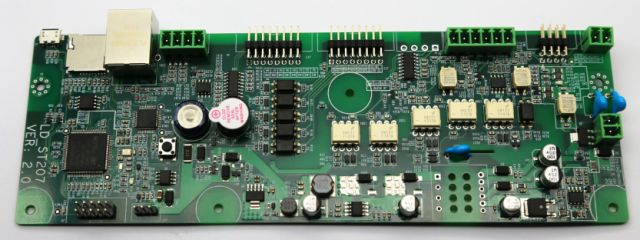
High Reliability PCBs are designed to operate consistently in demanding environments where failure is not an option. These boards are used in aerospace, defense, medical devices, automotive, and industrial systems, where extreme conditions like high temperatures, vibration, humidity, and high-frequency operation can challenge standard PCBs.
A High Reliability PCB focuses on:
-
Mechanical durability: Maintaining structural integrity under stress and repeated thermal cycles.
-
Electrical stability: Ensuring signal integrity, impedance control, and low defect rates.
-
Thermal resilience: Managing heat dissipation effectively in dense multilayer boards.
High Reliability PCB Design
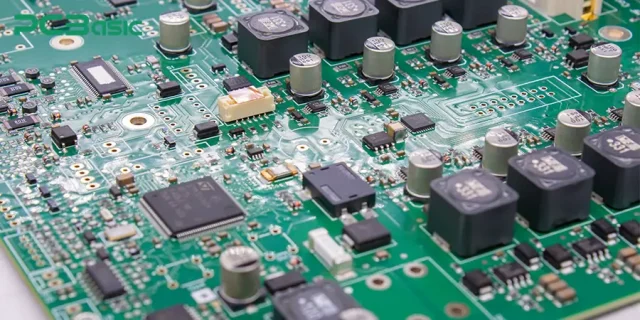
Designing a High Reliability PCB requires careful consideration of materials, layout, and component placement:
-
Material Selection:
High Tg laminates, low-loss substrates, and reinforced copper layers are chosen to withstand thermal stress and mechanical fatigue. -
Layer Stack-Up Optimization:
Proper stack-up ensures signal integrity, effective grounding, and thermal management. Multilayer configurations often include dedicated power and ground planes to reduce EMI and voltage drops. -
Signal and Power Integrity:
High-speed signals require controlled impedance traces, differential pair routing, and shielding where necessary. Power planes and decoupling strategies are optimized to maintain stable voltage levels even under heavy load. -
Thermal Management:
Thermal vias, copper pours, and heat-spreading layers help maintain uniform temperature distribution, preventing hotspots and enhancing board longevity. -
Component Placement and Mechanical Support:
Critical components are placed to minimize stress during vibration and thermal cycling. Reinforced pads or vias may be used for high-pin-count or heavy components.
Manufacturing Considerations
High Reliability PCBs demand precise fabrication:
-
Advanced Lamination: Sequential lamination for multilayer boards ensures layer alignment and integrity.
-
Via Reliability: Blind, buried, or filled vias maintain connectivity under stress.
-
Surface Finishes: ENIG, OSP, or hard-gold finishes improve solderability and long-term contact reliability.
-
Testing & Quality Assurance: AOI, X-ray inspection, electrical testing, and thermal cycling validate performance before deployment.
Applications of High Reliability PCBs
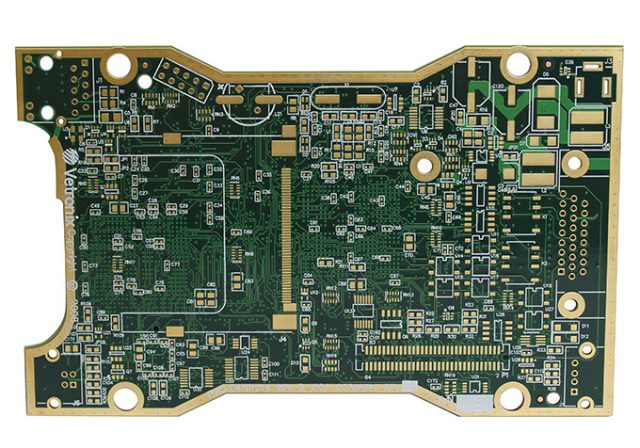
High Reliability PCBs are essential in industries where failures are costly or dangerous:
-
Aerospace & Defense: Avionics, radar, and satellite systems.
-
Medical Devices: Pacemakers, imaging systems, and life-support electronics.
-
Automotive Electronics: ADAS modules, powertrain controllers, and electric vehicle systems.
-
Industrial IoT & Harsh Environments: Sensors, controllers, and communication modules operating in extreme conditions.
By integrating advanced design principles, precise manufacturing, and comprehensive testing, KKPCB delivers High Reliability PCBs that meet stringent performance, durability, and safety standards.
