
Robotic systems are rapidly transforming industries ranging from manufacturing and logistics to healthcare and service automation. Behind every robotic movement lies a complex network of electronics responsible for sensing, processing, and controlling mechanical actions.
At the center of these systems is the Robotics PCB, a specialized printed circuit board designed to support the electronic architecture of robotic devices.
Robotics PCBs integrate microcontrollers, motor drivers, communication modules, and sensor interfaces, enabling robots to perform precise and coordinated tasks.
What Is a Robotics PCB?

A Robotics PCB is a circuit board used in robotic systems to manage electronic control, signal processing, and power distribution.
Depending on the robot’s complexity, these PCBs may include:
• microcontrollers or embedded processors
• motor driver circuits
• sensor interface modules
• wireless communication chips
• power management components
The PCB acts as the control hub that coordinates mechanical motion and environmental interaction.
Key Design Considerations for Robotics PCBs
Robotic systems operate in dynamic environments, so PCB design must prioritize reliability and performance.
Motor Control Integration
Robots rely heavily on motors for movement. PCBs must support motor drivers, PWM control circuits, and current monitoring.
Sensor Connectivity
Robots use various sensors such as cameras, LiDAR, encoders, and inertial measurement units. The PCB must support high-speed data interfaces and precise signal processing.
Power Management
Many robots run on batteries or high-current power supplies. Efficient power distribution and voltage regulation are critical.
Durability and Vibration Resistance
Industrial robots often operate in environments with mechanical vibration and temperature variation, requiring robust PCB structures.
Materials and PCB Structures for Robotics

Robotics PCBs may use different PCB technologies depending on system requirements.
Common options include:
Multilayer PCBs
Allow complex routing for processors, communication buses, and sensors.
High-current PCBs
Use thick copper layers to support motor drivers and power electronics.
Rigid-Flex PCBs
Used in compact robots where space constraints require flexible interconnections.
High-Tg materials
Provide better thermal stability for demanding environments.
Applications of Robotics PCBs
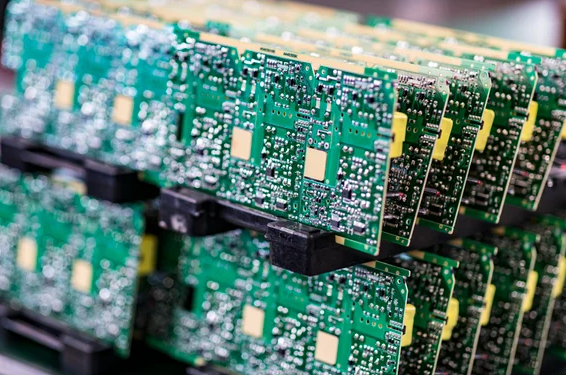
Robotics PCBs support a wide range of automation and intelligent systems.
Industrial Robots
Used in manufacturing for assembly, welding, and material handling.
Service Robots
Robots used in hospitality, healthcare, and customer service.
Autonomous Mobile Robots (AMR)
Warehouse robots rely heavily on PCBs for navigation, sensing, and control.
Medical Robotics
Precision surgical robots require highly reliable electronic systems.
Why Robotics PCB Design Matters
As robotics technology advances, systems are becoming more intelligent, compact, and power-dense. These trends place increasing demands on PCB design in terms of signal integrity, power management, and thermal performance.
A well-designed Robotics PCB ensures reliable motor control, accurate sensor integration, and stable system communication.
In the rapidly growing field of automation and intelligent machines, PCB technology forms the foundation that allows robots to sense, think, and act.
