
High Current PCB: Design Principles for Reliable Power Delivery
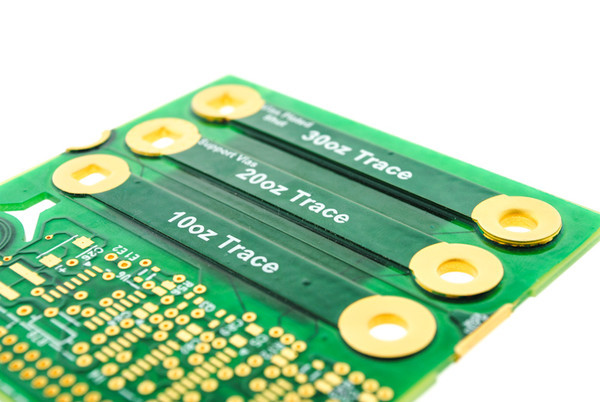
Modern electronic devices and industrial systems increasingly require PCBs capable of handling high currents. A High Current PCB is specifically engineered to safely transmit large amounts of electrical current while minimizing heat generation, voltage drop, and reliability risks. These PCBs are widely used in power electronics, automotive systems, LED lighting, electric vehicles, and industrial control equipment.
Proper high current PCB design ensures efficient power distribution, enhanced thermal management, and long-term operational stability.
What Is a High Current PCB?
A High Current PCB is a printed circuit board designed to carry significant electrical current, often above several amperes per trace. Unlike standard PCBs, high current PCBs require wider traces, thicker copper layers, and optimized thermal management to prevent overheating and maintain performance.
Key characteristics include:
-
Thick copper traces or planes for current handling
-
Low impedance to reduce voltage drop
-
Enhanced thermal conductivity for heat dissipation
-
Robust insulation and mechanical strength
Design Considerations for High Current PCB
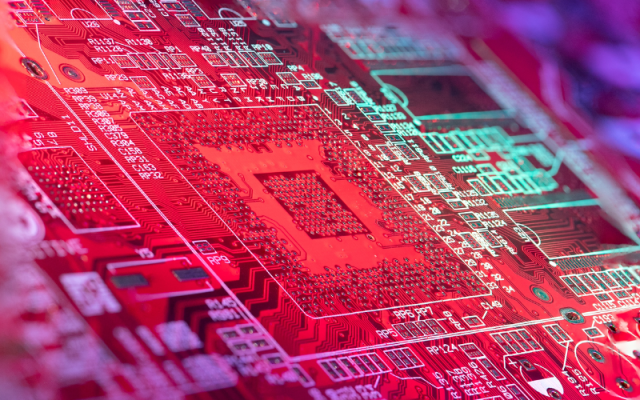
1. Copper Thickness
Higher currents require thicker copper layers. Typical options include:
-
2 oz/ft² (70 µm) for moderate currents
-
3–4 oz/ft² for higher currents
-
Custom heavy copper PCBs up to 10–20 oz/ft² for extremely high current applications
Thicker copper reduces resistance and limits heat generation in the traces.
2. Wide Trace Widths
The width of a trace directly affects its current carrying capacity. Calculating trace width requires consideration of:
-
Current load
-
Allowable temperature rise
-
PCB copper thickness
Standards such as IPC-2221 provide formulas to calculate proper trace width for high current PCBs.
3. Thermal Management
High current traces generate heat. Effective thermal design strategies include:
-
Using copper planes to spread heat
-
Incorporating thermal vias to dissipate heat to internal layers
-
Selecting high-Tg materials to withstand elevated temperatures
-
Adding heat sinks or metal cores for extreme applications
4. Power Plane Utilization
For very high currents, designers often use solid power planes instead of individual traces. Power planes distribute current evenly, reduce voltage drop, and improve thermal dissipation.
5. Minimizing Resistance and Inductance
-
Short, straight traces reduce resistance and inductive effects
-
Parallel traces or multiple vias for current sharing
-
Balanced differential or parallel routing in high-speed power circuits
Applications of High Current PCB
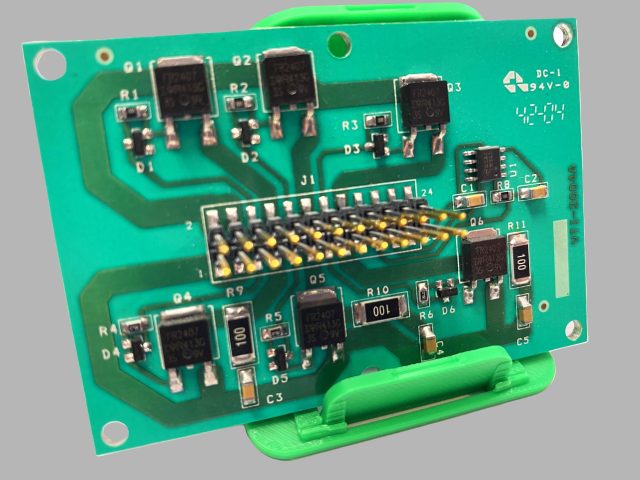
High current PCBs are widely applied in:
-
Power supply units and converters
-
Electric vehicle battery management and motor controllers
-
LED lighting systems
-
Industrial machinery and robotics
-
High-power amplifiers
-
Renewable energy systems, including solar inverters
In these applications, maintaining stable power delivery is essential for efficiency and safety.
Manufacturing Considerations
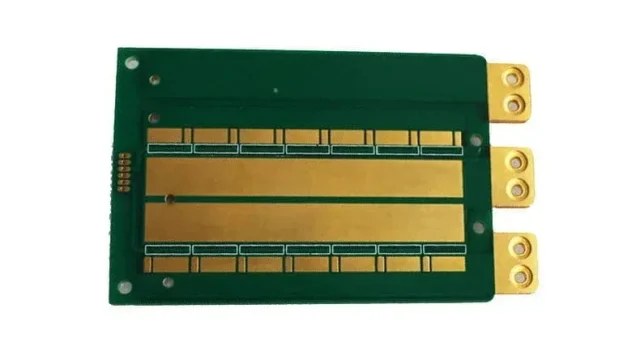
High current PCBs often require advanced manufacturing techniques:
-
Heavy copper lamination
-
Precise etching to maintain trace integrity
-
Thermal relief pads for soldering large components
-
Rigorous quality inspection to ensure current carrying capability
Working closely with manufacturers ensures compliance with electrical and thermal specifications.
Conclusion
Designing a High Current PCB requires careful attention to copper thickness, trace width, thermal management, and power plane distribution. Properly engineered high current PCBs ensure safe, reliable, and efficient power delivery in industrial, automotive, and high-power electronic systems.
As electronic devices and power systems demand higher currents, high current PCB design becomes a critical part of modern PCB engineering.
