
What Is an ADAS PCB?

An ADAS PCB is a printed circuit board specifically developed for Advanced Driver Assistance Systems in modern vehicles. These systems rely on sensors, processors, and communication modules to support functions such as adaptive cruise control, lane keeping, collision avoidance, and automatic emergency braking.
ADAS PCBs must operate reliably under harsh automotive conditions, including wide temperature ranges, vibration, and long service life, while supporting high-speed data processing and RF signal transmission.
Key Requirements for ADAS PCB
An automotive-grade ADAS PCB must meet strict technical and quality requirements:
-
High reliability and long lifespan
Designed for 10–15 years of vehicle operation. -
High-speed signal integrity
Supports high-speed interfaces for cameras, radar, and processors. -
RF performance
Required for radar, wireless communication, and sensor modules. -
Thermal management
Handles heat from processors and power components. -
EMI/EMC compliance
Meets automotive electromagnetic standards. -
Wide temperature resistance
Stable operation from –40°C to +125°C.
These requirements make ADAS PCB design and manufacturing highly demanding.
Material Selection for ADAS PCB
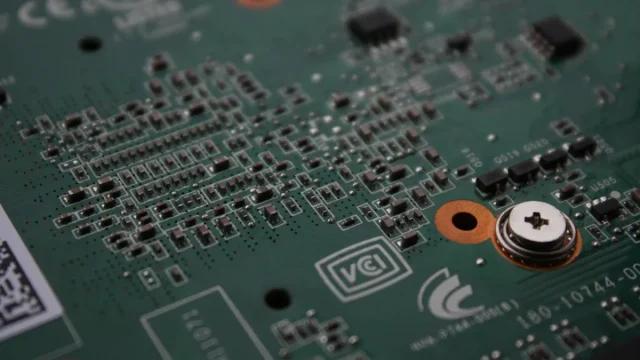
Material choice is critical for ADAS PCB performance and reliability:
-
High-speed digital laminates
Megtron 6 / Megtron 7 for data-intensive processing. -
RF materials
Rogers RO4350B, Taconic RF-35 for radar and RF sections. -
High-Tg automotive-grade FR-4
For control and power layers. -
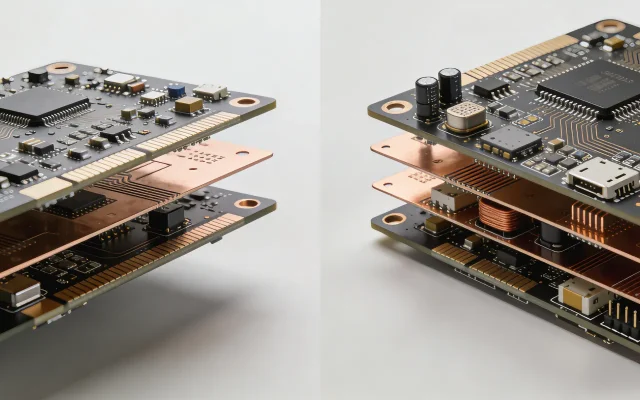
Hybrid PCB stack-ups
Combine RF, high-speed, and standard layers in one board. -
Low-profile copper foils
Improve high-frequency signal performance.
Automotive-qualified materials ensure stable long-term operation.
Manufacturing Challenges of ADAS PCB
Producing a reliable ADAS PCB requires advanced manufacturing capability:
-
Multilayer and HDI structures
For compact and high-density designs. -
Tight impedance control
For high-speed and RF signal paths. -
Back drilling and via optimization
Reduces signal reflection and loss. -
Automotive-grade quality control
Including AOI, X-ray, and electrical testing. -
Traceability and process consistency
Required for automotive compliance.
An experienced automotive PCB supplier is essential.
Advantages of Professional ADAS PCB Manufacturing
Working with a specialized ADAS PCB manufacturer provides:
-
Automotive-standard process control
-
Proven reliability in harsh environments
-
Optimized signal integrity and RF performance
-
Stable quality from prototype to mass production
-
Support for automotive certification requirements
These advantages are critical for safety-related systems.
Applications of ADAS PCB
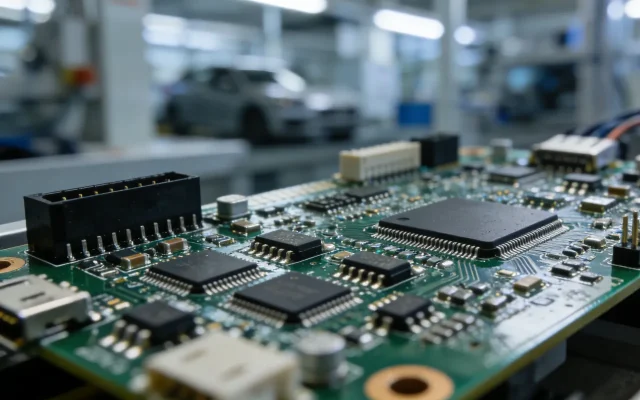
ADAS PCBs are widely used in:
-
Radar sensor modules
-
Camera and vision processing units
-
LiDAR systems
-
Central ADAS control units
-
Sensor fusion and data processing boards
-
Vehicle-to-everything (V2X) communication modules
ADAS PCB is a core component in intelligent vehicles.
Conclusion
An ADAS PCB is a mission-critical component in modern automotive safety systems. By combining high-speed signal integrity, RF performance, and automotive-grade reliability, ADAS PCBs enable accurate sensing and real-time decision-making.
Choosing a qualified ADAS PCB manufacturer ensures compliance with automotive standards, consistent quality, and long-term reliability for advanced driver assistance systems.
