PCB substrate materials are the foundation of printed circuit boards, providing the mechanical support, electrical insulation, and thermal stability required for reliable electronic assemblies. The selection of the right PCB base material directly influences a circuit board’s signal integrity, heat dissipation capability, mechanical strength, manufacturing reliability, and long-term performance.
Different applications require different substrate characteristics. While standard FR-4 materials are widely used in general electronics, advanced applications such as high-frequency communication, automotive electronics, semiconductor testing, power electronics, and aerospace systems often require specialized materials including high-frequency laminates, metal-core substrates, ceramic materials, and flexible polyimide substrates.
This guide explores the major types of PCB substrate materials, their characteristics, and key considerations for selecting the right material for specific applications.
What Is PCB Substrate Material?
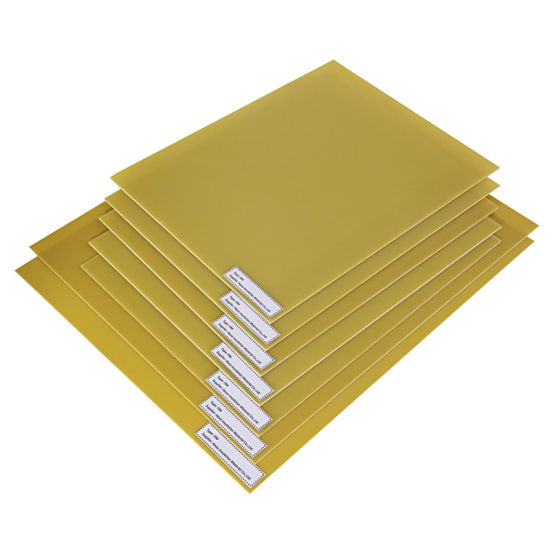
A PCB substrate material is the insulating base layer that supports copper circuits and electronic components. It typically consists of a dielectric material combined with reinforcement materials to provide mechanical strength, thermal resistance, and electrical insulation.
The substrate serves several critical functions:
- Provides structural support for copper traces and components
- Maintains electrical isolation between conductive layers
- Controls signal transmission characteristics such as impedance and loss
- Withstands thermal stress during soldering and operation
- Ensures mechanical reliability throughout the product lifecycle
During PCB manufacturing, copper foil is laminated onto the substrate, then patterned and etched to form electrical circuits. Components are subsequently assembled onto the board to create a complete PCBA.
Types of PCB Substrate Materials
PCB materials can be classified according to their composition, resin system, reinforcement structure, and performance characteristics.
1. PCB Materials Based on Material Composition
a) Paper-Based PCB Materials
Paper-based substrates are economical materials mainly used in low-cost and simple electronic applications.
FR-1
- Reinforced with cotton paper and phenolic resin
- Suitable for low-temperature and low-cost applications
FR-2
- Uses phenolic resin with cellulose paper reinforcement
- Commonly used in basic consumer electronics
FR-3
- Combines cotton paper with epoxy resin
- Provides improved electrical performance and thermal resistance compared with FR-2
These materials are mainly selected for cost-sensitive products where high reliability and advanced electrical performance are not required.
b) Epoxy Glass Cloth PCB Materials
FR-4
FR-4 is the most widely used PCB substrate material in the electronics industry.
Key advantages include:
- Excellent mechanical strength
- Good electrical insulation performance
- Stable dimensional characteristics
- Suitable thermal resistance
- Cost-effective manufacturing
Typical applications include:
- Consumer electronics
- Industrial control systems
- Communication equipment
- Automotive electronics
FR-5
FR-5 is an enhanced version of FR-4 with improved thermal performance.
Advantages:
- Higher glass transition temperature (Tg)
- Better thermal reliability
- Improved resistance to heat exposure
It is commonly used in applications requiring greater thermal endurance.
c) Composite PCB Materials
CEM-1
CEM-1 combines paper reinforcement with epoxy resin.
Features:
- Lower cost compared with FR-4
- Suitable for single-sided and simple double-sided PCBs
- Used in cost-sensitive applications
CEM-3
CEM-3 uses non-woven glass reinforcement and epoxy resin.
Advantages:
- Better mechanical strength than CEM-1
- Improved thermal stability
- Suitable for medium-performance electronics
d) HDI PCB Materials
RCC (Resin Coated Copper)
RCC materials are commonly used in high-density interconnect (HDI) PCB structures.
Key characteristics:
- Enables microvia formation
- Supports fine-line routing
- Reduces PCB thickness
- Suitable for compact electronic devices
Applications include:
- Smartphones
- Wearable devices
- High-density semiconductor modules
e) Special PCB Substrate Materials
Metal Core PCB (MCPCB)
Metal-based PCBs typically use aluminum or copper as the core material.
Advantages:
- Excellent heat dissipation
- High mechanical strength
- Improved thermal management
Applications:
- LED lighting systems
- Power electronics
- Automotive power modules
Ceramic PCB
Ceramic substrates provide outstanding thermal and electrical performance.
Advantages:
- High thermal conductivity
- Excellent dimensional stability
- Superior high-frequency performance
- Reliable operation under harsh environments
Applications:
- RF and microwave circuits
- High-power electronics
- Aerospace and defense systems
2. PCB Materials Based on Resin Type
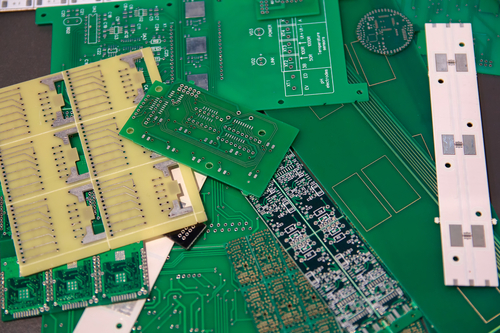
Epoxy Resin
Epoxy resin is the most common resin system used in PCB manufacturing.
Advantages:
- Strong bonding capability
- Good electrical insulation
- Reliable mechanical performance
- Cost-effective
It is widely used in FR-4 and composite PCB materials.
Polyester Resin
Polyester resin is mainly used in economical PCB applications.
Characteristics:
- Lower cost
- Suitable for simple electronic products
- Lower thermal resistance compared with epoxy resin
Polyimide (PI) Resin
Polyimide is widely used in flexible PCB manufacturing.
Advantages:
- Excellent thermal stability
- High flexibility
- Strong resistance to chemical and environmental stress
Applications:
- Flexible circuits
- Rigid-flex PCBs
- Aerospace electronics
- High-temperature applications
3. PCB Materials Based on Flame-Retardant Properties
UL94-V0 Flame-Retardant Materials
UL94-V0 materials provide high flame resistance.
Characteristics:
- Self-extinguishing after ignition
- Prevent rapid flame propagation
- Widely used in safety-critical electronics
UL94-V1 Materials
UL94-V1 materials provide moderate flame resistance.
They are suitable for applications requiring improved safety but with less demanding requirements than UL94-V0.
UL94-HB Materials
HB-grade materials provide basic flammability protection.
They are generally used in non-critical applications where strict flame-retardant requirements are not necessary.
4. PCB Materials Based on Reinforcement Structure
FR-1 / FR-2 / FR-3
Paper-based materials designed for:
- Low-cost electronics
- Simple circuit structures
- Basic consumer applications
FR-4 / FR-5
Glass-fiber reinforced epoxy materials offering:
- Balanced electrical performance
- Good mechanical strength
- Reliable thermal performance
These remain the industry standard for most PCB applications.
CEM-1 / CEM-3
Composite materials providing:
- Cost-performance balance
- Improved manufacturability
- Moderate mechanical reliability
How to Select the Right PCB Substrate Material?
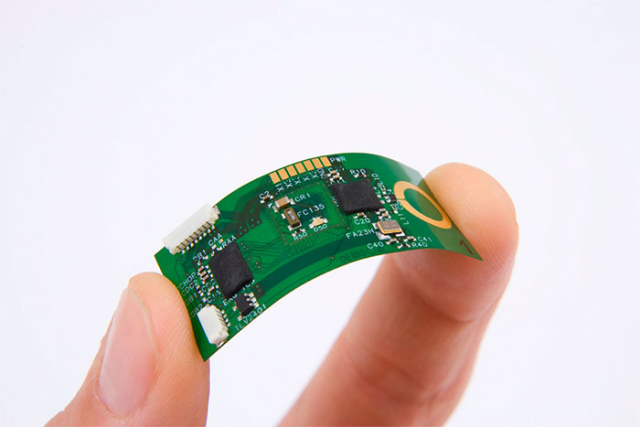
Choosing the correct PCB substrate requires evaluating multiple engineering factors.
1. Thermal Requirements
Applications with high operating temperatures require materials with:
- Higher Tg values
- Better thermal conductivity
- Improved thermal stability
Examples:
- FR-5
- Polyimide
- Ceramic PCB
- Metal-core PCB
2. Electrical Performance
High-frequency and high-speed applications require materials with:
- Stable dielectric constant (Dk)
- Low dissipation factor (Df)
- Low signal loss
- Controlled impedance capability
Common choices:
- Rogers high-frequency laminates
- PTFE materials
- Ceramic substrates
3. Mechanical Reliability
Harsh environments may require substrates with:
- High dimensional stability
- Strong mechanical strength
- Resistance to vibration and thermal cycling
Examples:
- Ceramic PCB
- Metal-core PCB
- High-Tg FR-4
4. Cost Considerations
Material selection must balance performance requirements and production cost.
Examples:
- FR-1 / CEM-1: Low-cost applications
- FR-4: General-purpose electronics
- High-frequency laminates: Advanced RF applications
Conclusion
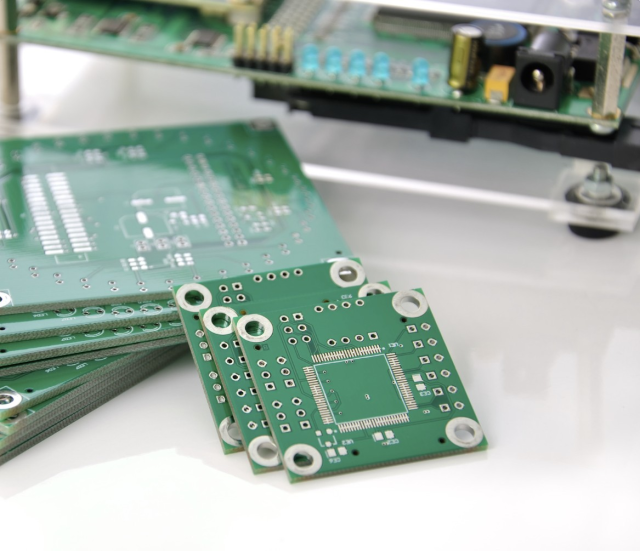
PCB substrate materials play a critical role in determining the performance, reliability, and manufacturability of printed circuit boards. From standard FR-4 materials to advanced solutions such as ceramic substrates, metal-core PCBs, polyimide flexible materials, and high-frequency laminates, each material offers unique advantages for different applications.
Selecting the appropriate PCB substrate material helps engineers achieve:
- Improved electrical performance
- Better thermal management
- Enhanced mechanical reliability
- Higher manufacturing consistency
- Longer product lifetime
With the increasing complexity of modern electronics, proper PCB material selection has become a key factor in achieving reliable performance across consumer electronics, automotive systems, communication equipment, semiconductor testing, and high-frequency applications.