
What Is a Load Board PCBs?
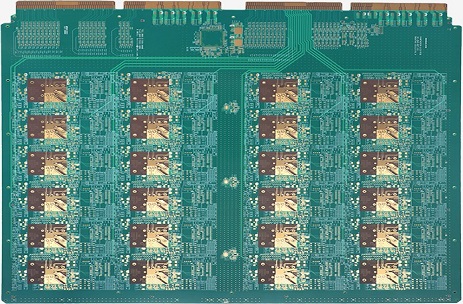
A Load Board PCB is a specialized printed circuit board designed to interface a device under test (DUT) with automated test equipment (ATE). It routes high-speed signals, power, and measurement paths between the tester and the DUT, ensuring accurate and reliable test results.
Load board PCBs are widely used in semiconductor manufacturing, IC validation, and system-level testing, where high precision and repeatable performance are essential. They allow engineers to test complex devices efficiently while maintaining signal integrity and electrical reliability.
Key Functions of Load Board PCBs
1. Signal Routing
Load boards connect test signals from the ATE to the DUT. Proper routing ensures minimal signal distortion, reflection, and loss, which is critical for high-speed or high-frequency devices.
2. Power Distribution
These PCBs deliver precise power to the DUT and supporting circuitry, ensuring stable voltage levels and minimal noise during testing.
3. Component and Socket Integration
Load boards support test sockets, connectors, and other interface components, enabling rapid insertion and removal of devices for high-volume testing.
4. Signal Conditioning
Some load boards include signal amplification, filtering, or impedance matching components to optimize test accuracy for sensitive devices.
Design Considerations for Load Board PCBs
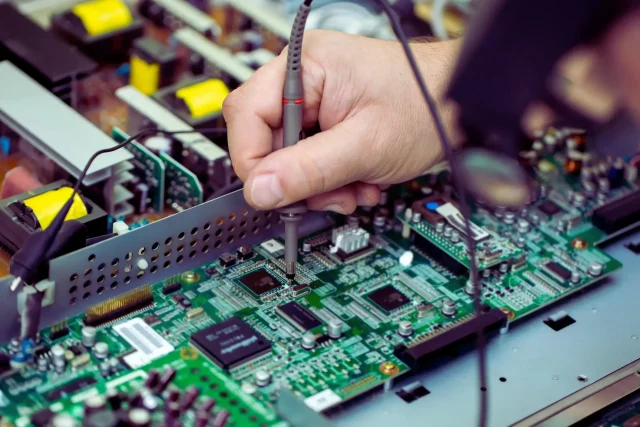
Designing an effective load board requires careful attention to multiple factors:
-
Signal Integrity: Maintain controlled impedance, short trace lengths, and proper ground planes to reduce crosstalk and reflections.
-
High-Density Interconnects: Support devices with hundreds or thousands of pins using microvias and precise multilayer stack-ups.
-
Thermal Management: Include copper planes, heat-spreading layers, and proper spacing to prevent overheating during testing.
-
Mechanical Reliability: Ensure robust socket mounting and reinforced PCB structures to withstand repeated insertion cycles.
-
Testing Accuracy: Design for minimal parasitic capacitance and inductance to ensure precise measurements.
Applications of Load Board PCBs
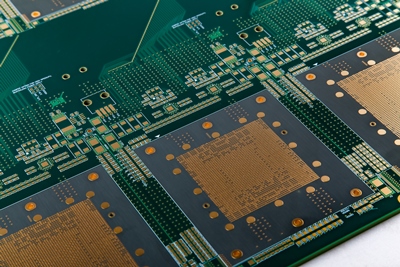
Load board PCBs are essential in many advanced electronics testing scenarios:
-
Semiconductor IC testing: Validating functionality and performance of chips.
-
High-speed digital devices: Testing motherboards, memory modules, and CPUs.
-
RF and communication modules: Ensuring signal integrity for RFICs and transceivers.
-
Automotive electronics: Testing ECUs, sensors, and safety-critical modules.
-
Consumer electronics: Rapid verification of smartphones, tablets, and wearable devices.
By providing reliable electrical connections between the DUT and ATE, load board PCBs improve testing efficiency, reduce errors, and support high-volume production.
Conclusion
A Load Board PCB is a crucial element in modern automated testing systems, ensuring that devices under test are evaluated accurately and efficiently. Through careful design of signal routing, power distribution, mechanical reliability, and thermal management, load boards enable engineers to maintain high testing standards across semiconductors and complex electronic modules.
As electronics become faster, smaller, and more complex, the role of load board PCBs in quality control and production testing will continue to grow.
