
1. Introduction: Why Solder Paste Printing Is Critical in SMT Assembly
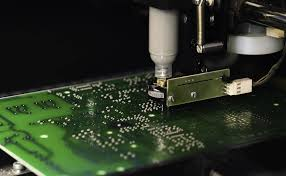
In modern PCB assembly (PCBA) manufacturing, especially in Surface Mount Technology (SMT) processes, solder paste printing is one of the most critical initial steps.
Although it may appear simple, solder paste printing directly determines the quality of:
- Component placement accuracy
- Solder joint strength
- Electrical conductivity
- Long-term product reliability
Even the most advanced PCB design and high-quality components cannot compensate for poor solder paste printing.
At KKPCB, solder paste printing is treated as a core process control point (CTQ – Critical to Quality) in ensuring high-reliability PCB assembly.
2. What is Solder Paste Printing?
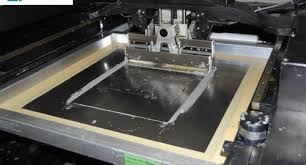
Solder paste printing is the process of applying a precise amount of solder paste onto PCB pads using a stainless steel stencil before component placement.
Solder paste is a mixture of:
- Metal solder particles (tin, silver, copper alloys)
- Flux material (for cleaning and adhesion improvement)
The stencil defines where and how much solder paste is applied.
3. Why Solder Paste Printing Is So Important in PCB Assembly
3.1 Foundation of SMT Process Quality
Solder paste printing is the first critical step in SMT assembly, setting the foundation for all subsequent processes:
- Component placement
- Reflow soldering
- Final electrical performance
If printing is inaccurate, all downstream processes are affected.
3.2 Direct Impact on Solder Joint Reliability
Proper solder paste volume ensures:
- Strong mechanical bonding
- Stable electrical connection
- Reduced joint fatigue under vibration
Too much or too little solder paste leads to:
- Weak solder joints
- Cold solder joints
- Intermittent electrical failure
3.3 Reduction of Assembly Defects
Accurate solder paste printing helps prevent common SMT defects:
- Solder bridging (short circuits)
- Tombstoning of components
- Insufficient solder joints
- Misalignment during reflow
This significantly improves overall PCB manufacturing yield rate.
3.4 Improvement of Electrical Performance
Stable solder joints ensure:
- Low resistance connections
- Reduced parasitic inductance
- Better high-speed signal transmission
- Improved RF performance stability
This is especially important in:
- High-speed digital PCBs
- RF and microwave circuits
- Automotive electronics
3.5 Enhanced Manufacturing Efficiency
Optimized solder paste printing improves:
- First-pass yield (FPY)
- Reduced rework and repair cost
- Faster production cycle time
- Higher mass production stability
This directly impacts PCB assembly cost efficiency.
4. Key Factors Affecting Solder Paste Printing Quality
4.1 Stencil Design Accuracy
Stencil thickness and aperture design determine:
- Paste volume
- Release efficiency
- Printing consistency
Poor stencil design leads to inconsistent solder deposition.
4.2 PCB Pad Design (Land Pattern)
Pad geometry must align with:
- Component package type
- IPC standards
- Thermal and electrical requirements
Improper pad design causes printing imbalance.
4.3 Solder Paste Properties
Key properties include:
- Particle size
- Viscosity
- Metal content ratio
- Flux activity level
These affect printability and reflow performance.
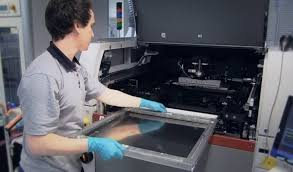
4.4 Printing Machine Parameters
Modern SMT printers control:
- Printing pressure
- Squeegee speed
- Alignment accuracy
- Stencil cleaning cycles
Incorrect parameters lead to defects.
4.5 Environmental Conditions
- Temperature stability
- Humidity control
- Cleanroom environment
Environmental fluctuations affect solder paste behavior.
5. Role of Solder Paste Printing in High-Reliability Industries
Solder paste printing is especially critical in:
5.1 Automotive Electronics
- ECU modules
- ADAS systems
- Radar sensors
5.2 Aerospace Systems
- Avionics control boards
- Communication systems
5.3 Medical Electronics
- Diagnostic devices
- Monitoring systems
5.4 High-Speed Communication
- 5G RF modules
- Network equipment
These industries require zero-defect manufacturing standards.
6. KKPCB SMT Assembly and Solder Printing Control
At KKPCB, solder paste printing is controlled through:
- High-precision automatic stencil printers
- SPI (Solder Paste Inspection) systems
- Real-time process monitoring
- IPC-standard stencil design optimization
- Strict DFM/DFA evaluation before production
This ensures:
- High first-pass yield
- Consistent solder volume control
- Reliable long-term PCB performance
7. Conclusion
Solder paste printing is a fundamental and critical process in PCB assembly, directly influencing solder joint quality, electrical performance, and manufacturing yield.
In high-reliability industries such as automotive, aerospace, and communication systems, precise solder paste printing is essential for achieving stable, defect-free, and high-performance electronic products.
With advanced SMT process control and strict quality systems, KKPCB ensures consistent and reliable solder paste printing performance for global electronic manufacturing applications.
