
In modern electronics manufacturing and PCB assembly, effective thermal management is critical for ensuring system performance, reliability, and longevity. As electronic devices become more compact and powerful, heat generation increases significantly, making temperature control a key engineering challenge.
Infrared thermal imaging technology has emerged as a powerful tool for analyzing and optimizing thermal behavior in electronic systems. By providing real-time visualization of heat distribution, it enables engineers to identify thermal issues and improve PCB design and performance.
What is Infrared Thermal Imaging?
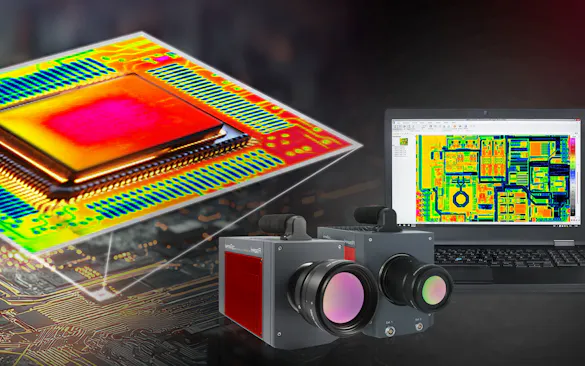
Infrared thermal imaging is a non-contact measurement technique that detects infrared radiation emitted by objects and converts it into a visual temperature map. In the electronics industry, it is widely used to monitor heat distribution across PCBs, components, and electronic systems.
This technology allows engineers to:
- Detect hot spots on PCBs
- Analyze thermal performance
- Identify potential failure points
- Optimize heat dissipation design
Role of Infrared Thermal Imaging in PCB Thermal Management
1. Identifying Hot Spots
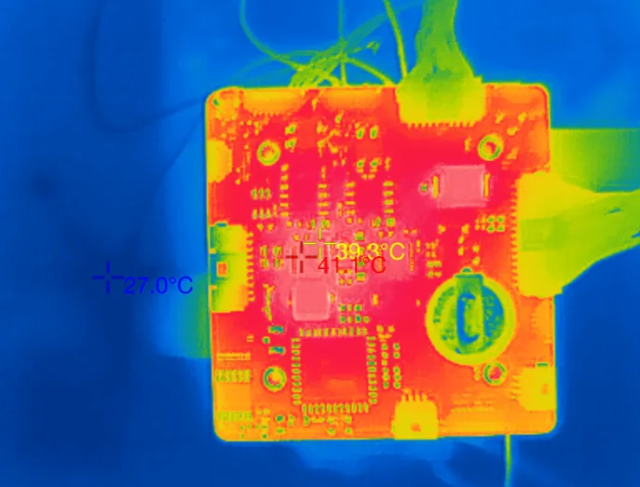
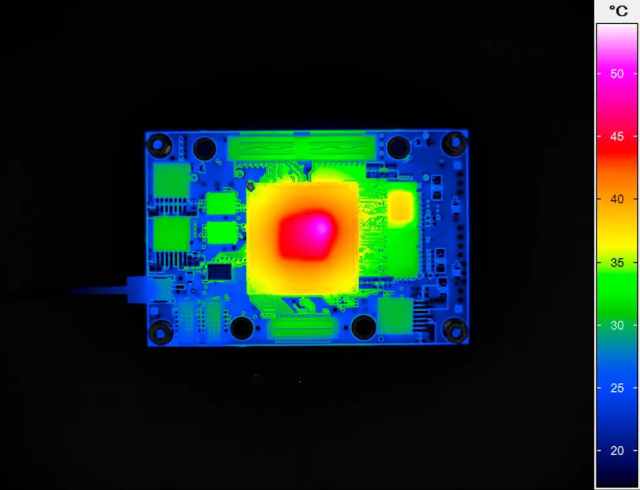
One of the primary uses of infrared thermal imaging is to detect localized overheating in:
- Power components
- ICs and processors
- Voltage regulators
Early detection of hot spots helps prevent component failure and improves system reliability.
2. Evaluating Heat Distribution
Thermal imaging provides a clear visualization of temperature distribution across the PCB, helping engineers:
- Optimize component placement
- Improve heat flow paths
- Balance thermal loads
3. Enhancing PCB Design Optimization
By integrating thermal analysis into the design process, engineers can:
- Improve PCB layout for better cooling
- Optimize copper thickness and planes
- Select appropriate thermal vias and materials
4. Supporting Failure Analysis
Infrared thermal imaging is an effective tool for PCB troubleshooting, helping to identify:
- Overloaded circuits
- Short circuits or leakage paths
- Poor solder joints
Key Benefits of Infrared Thermal Imaging in Electronics
1. Non-Contact and Real-Time Analysis
Thermal imaging allows for real-time monitoring without physical contact, making it ideal for sensitive electronic components.
2. Improved Product Reliability
By identifying thermal issues early, manufacturers can reduce:
- Component failure rates
- System downtime
- Maintenance costs
3. Faster Design Validation
Engineers can quickly verify whether a thermal design meets performance requirements, reducing development cycles.
4. Enhanced Quality Control
In PCB manufacturing and assembly, thermal imaging helps ensure consistent product quality and performance.
Applications in the Electronics Industry
Infrared thermal imaging is widely used across multiple sectors:
- PCB design and validation
- Power electronics and converters
- Automotive electronics (EV systems, ADAS)
- Telecommunication equipment
- Industrial automation systems
These applications rely on accurate thermal management for stable operation.
Best Practices for Using Thermal Imaging in PCB Design
To maximize the effectiveness of infrared thermal imaging, consider the following:
- Perform thermal analysis during both design and testing stages
- Combine thermal imaging with simulation tools
- Focus on high-power and high-density areas
- Use results to optimize heat dissipation strategies
- Collaborate with experienced PCB manufacturers
Future Trends in Thermal Management Technology
As electronics continue to evolve, thermal management solutions will become even more advanced. Emerging trends include:
- Integration of AI-driven thermal analysis
- Advanced thermal materials and substrates
- Real-time monitoring in smart systems and IoT devices
These innovations will further enhance the role of infrared thermal imaging in electronics.
Conclusion
Infrared thermal imaging is a powerful and essential tool in the electronics industry, enabling engineers to optimize thermal management, improve PCB performance, and enhance overall system reliability. By providing real-time insights into heat distribution, it supports better design decisions, faster troubleshooting, and higher-quality products.
As electronic systems become more complex, leveraging thermal imaging technology will be key to achieving high-performance and reliable designs.
