
Modern electronic systems are becoming increasingly powerful, compact, and thermally demanding. Devices such as industrial controllers, automotive electronics, and networking equipment often operate under elevated temperatures.
To maintain reliability under these conditions, engineers frequently use High TG PCB materials, which provide greater thermal stability compared with standard PCB laminates.
These materials help ensure that the circuit board maintains structural integrity and electrical performance even in challenging environments.
What Is High TG in PCB?

TG, or Glass Transition Temperature, refers to the temperature at which the PCB substrate material changes from a rigid state to a softer, more flexible state.
For standard FR-4 materials, the TG value typically ranges from 130°C to 140°C.
In contrast, High TG PCB materials usually have TG values above 170°C, and in some advanced laminates, TG values can exceed 180°C or even 200°C.
A higher TG value means the PCB can withstand higher temperatures without significant structural deformation.
Advantages of High TG PCB Materials
Improved Thermal Stability
High TG materials maintain mechanical strength and dimensional stability at elevated temperatures.
Better Reliability in Multilayer PCBs
High-layer boards often experience thermal stress during manufacturing and operation. High TG laminates help prevent delamination and warping.
Enhanced Performance in Lead-Free Soldering
Lead-free soldering processes require higher temperatures. High TG materials can withstand these thermal cycles more effectively.
Longer Product Lifespan
PCBs exposed to continuous heat benefit from reduced material degradation over time.
Key Applications of High TG PCBs
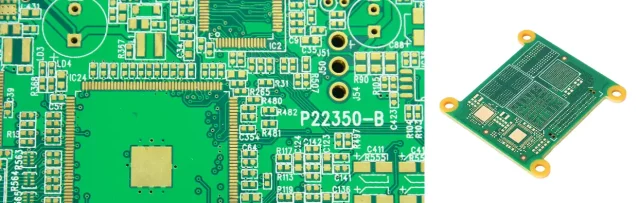
High TG PCB materials are widely used in industries where thermal performance is critical.
Automotive Electronics
Engine control units, power electronics, and advanced driver assistance systems operate in high-temperature environments.
Industrial Control Systems
Factory automation equipment often runs continuously under demanding conditions.
Telecommunications Infrastructure
Networking devices and base station equipment generate significant heat during operation.
Power Electronics
Converters, inverters, and power supplies require PCB materials that can tolerate thermal stress.
High TG PCB vs Standard FR-4

Although both materials belong to the FR-4 family, their thermal characteristics differ significantly.
Standard FR-4 boards are suitable for general electronics with moderate heat levels.
High TG PCBs are designed for applications that involve:
• higher operating temperatures
• thicker or multilayer PCB structures
• demanding soldering processes
• long-term thermal reliability
Choosing the correct TG value depends on the application environment and system design requirements.
Why High TG PCBs Are Important in Modern Electronics
Electronics continue to evolve toward higher power density and greater performance. As devices become more compact, heat management becomes increasingly challenging.High TG PCB materials provide a reliable solution for maintaining structural stability and electrical performance under elevated temperatures.
For many advanced electronic systems, selecting High TG PCB materials is an essential step toward ensuring long-term product reliability and performance.
