
Why Photoresist Selection Matters in PCB Manufacturing
Printed Circuit Boards (PCBs) are the foundation of all electronic products. Whether used in consumer electronics, automotive systems, or high-frequency RF applications, accurate circuit pattern transfer is critical to PCB performance and reliability.
In PCB fabrication, photoresist films—commonly divided into dry film and wet film—play a key role in transferring circuit patterns from CAD data to copper-clad laminates. Choosing the right type of photoresist directly affects:
-
Line width accuracy
-
Via protection
-
Yield and manufacturability
-
Cost and environmental impact
At KKPCB, we apply the most suitable photoresist processes based on PCB structure, material type (FR4 / Rogers), and application requirements.
1. What Is Wet Film Photoresist?
Wet film is a liquid photosensitive resist, typically blue in color, with a viscous or filament-like consistency. It is formulated through chemical processes using:
-
Resin
-
Fillers
-
Pigments
-
Solvents
-
Photosensitizers
Key Characteristics of Wet Film
-
Excellent filling capability, suitable for uneven PCB surfaces
-
Can achieve thin and uniform coating on rough substrates
-
Requires higher exposure energy due to limited surface protection
-
Thickness uniformity is harder to control
-
Generates chemical waste, less environmentally friendly
-
Lower material cost compared to dry film
Wet film is often selected when surface flatness is poor or when extremely thin resist layers are required.
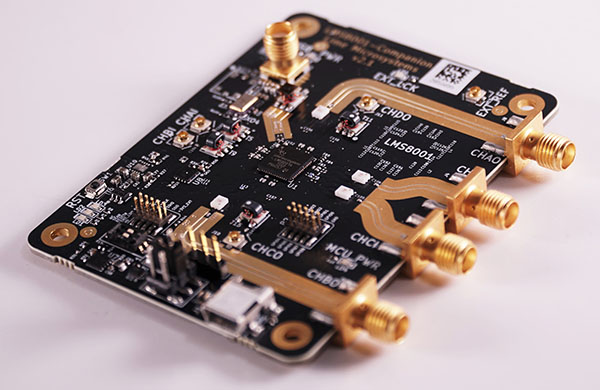
2. What Is Dry Film Photoresist?
Dry film photoresist is a solid polymer-based photosensitive film, laminated onto the PCB surface using heat and pressure.
Key Characteristics of Dry Film
-
Easy to handle and process
-
Stable thickness and excellent uniformity
-
Does not flow into vias—ideal for multilayer and via-rich PCBs
-
Suitable for high-density and fine-line circuits
-
Better process control and repeatability
-
Higher cost than wet film
Dry film photoresist can be categorized into:
-
Photopolymerization type
-
Photodecomposition type
3. Dry Film vs Wet Film: Key Differences
| Aspect | Dry Film | Wet Film |
|---|---|---|
| Form | Solid polymer film | Liquid photosensitive resist |
| Cost | Higher | Lower |
| Process Control | Excellent | More difficult |
| Via Protection | Very good | Poor |
| Surface Filling | Limited | Excellent |
| Environmental Impact | Cleaner | Chemical waste generated |
| Suitable for HDI | Yes | Limited |
Conclusion:
-
Dry film → better stability, easier control, higher precision
-
Wet film → better for uneven surfaces, lower cost
4. Role of Photoresist in PCB Manufacturing
It is an indisputable fact that circuit patterns must be accurately transferred from design files to physical PCBs. Photoresists act as temporary chemical protection layers during:
-
Exposure
-
Development
-
Etching
Both dry and wet films are photosensitive materials that undergo chemical reactions when exposed to light of a specific wavelength.
At KKPCB, photoresist selection is determined by:
-
Circuit density
-
Via structure
-
Base material (FR4, Rogers, hybrid stack-up)
-
Production volume
5. PCB Substrate Materials and Their Relationship with Photoresist
Common PCB Materials
-
Substrate (Copper-Clad Laminate): Resin-based board with copper foil
-
Copper Foil: Conductive layer formed via electro-deposition or calendering
-
Prepreg (PP): Resin-based bonding layer enabling multilayer lamination
-
Solder Mask Ink: Protective layer for soldering
-
Film: Used for circuit imaging and pattern transfer
6. Rogers PCB Materials vs FR4
FR4 PCB Material
-
Glass fiber + epoxy resin composite
-
Flame Retardant Rating 4
-
Cost-effective and widely used
Rogers PCB Materials
-
Superior dielectric stability
-
Low dielectric loss
-
Low moisture absorption
-
Excellent thermal performance
-
Ideal for high-speed, high-frequency, RF & microwave circuits
Rogers materials overcome many limitations of traditional PTFE substrates by offering matched CTE with copper, ensuring better reliability.
7. Advantages of Rogers PCB Substrates
Rogers laminates offer:
-
Low electrical and dielectric losses
-
Stable Dk over frequency and temperature
-
Better thermal management
-
Wide dielectric constant range (2.55–10.2)
-
Low outgassing (space-grade applications)
-
Improved impedance control
These properties make Rogers PCBs ideal for:
-
Aerospace & defense
-
Automotive radar
-
5G and microwave communication
8. Rogers PCB Manufacturing Challenges & KKPCB Expertise
Many PCB factories avoid Rogers materials due to:
-
Complex processing requirements
-
Lower demand volume
-
Higher manufacturing difficulty
At KKPCB, we specialize in:
-
Rogers PCB fabrication
-
Hybrid Rogers + FR4 stack-ups
-
Controlled impedance RF PCBs
-
Prototype and mass production
We apply optimized dry film processes for Rogers substrates to ensure precision, yield, and electrical performance.
FAQ: Dry Film & Wet Film in PCB Manufacturing
Q1: Which is better, dry film or wet film?
Technically, dry film is more stable and controllable, especially for multilayer and fine-line PCBs. Wet film is cheaper but harder to control.
Q2: Why is dry film preferred for Rogers PCBs?
Dry film offers better dimensional stability, cleaner processing, and superior via protection—critical for RF and high-frequency designs.
Q3: Can wet film be used on high-frequency PCBs?
In limited cases, yes—but strict control is required. Most high-frequency PCBs use dry film for reliability.
Both dry film and wet film play important roles in PCB manufacturing, but they serve different production needs.
-
Dry film → precision, stability, high-density circuits
-
Wet film → cost efficiency, uneven surfaces
With the growing demand for high-frequency and Rogers-based PCBs, dry film photoresist has become the preferred choice despite its higher cost.
KKPCB provides professional PCB manufacturing solutions using optimized photoresist processes to ensure performance, reliability, and manufacturability.
