
1. Why Heat Dissipation Has Become a Critical PCB Design Challenge
With the rapid development of integrated circuits (ICs) and microelectronic packaging technologies, electronic systems are becoming:
-
Smaller in physical size
-
Higher in power density
-
More integrated and compact
As a result, heat flux density around electronic devices continues to rise sharply. Excessive heat accumulation leads to:
-
Degraded electrical performance
-
Reduced reliability and lifespan
-
Increased failure rates
In high-power, high-frequency, and high-density applications, traditional FR4 PCBs are no longer sufficient. Efficient thermal management has become a core research and engineering focus in modern electronics manufacturing.
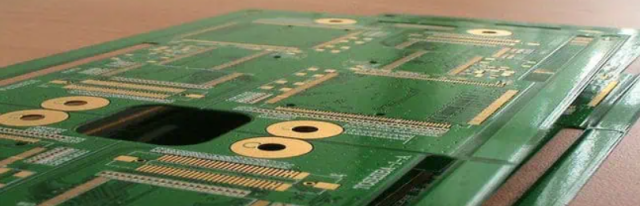
2. Thermal Conductivity PCBs: Core Thermal Management Strategies
To address thermal challenges, PCB engineers typically adopt several complementary strategies:
2.1 Improve PCB Thermal Conductivity
-
Use high thermal conductivity PCB materials
-
Enhance Z-axis heat transfer from components to inner layers or heat sinks
2.2 Increase Thermal Stability of Materials
-
High glass transition temperature (Tg)
-
High thermal decomposition temperature (Td)
2.3 Control Thermal Expansion
-
Low coefficient of thermal expansion (CTE) to improve via reliability and reduce mechanical stress
2.4 Reduce Heat Generation
-
Use low-loss dielectric materials
-
Optimize circuit efficiency and power consumption
Among these methods, using high thermal conductivity PCB materials is the most direct and effective approach.
3. Common PCB Heat Dissipation Methods in Practice
Heat dissipation occurs through three mechanisms:
-
Heat conduction
-
Heat convection
-
Heat radiation
Common PCB-Level Thermal Solutions
-
Increasing copper thickness (Thick Copper PCB)
-
Large-area power and ground copper pours
-
Dense thermal via arrays
-
Embedded copper blocks
-
Metal heat sinks or aluminum bases
-
Forced air cooling (fans)
-
Thermal interface materials (TIMs)
-
Heat pipes and vapor chambers
While these methods help, they do not fundamentally change the thermal conductivity of the PCB substrate itself.
4. High Thermal Conductivity PCB Materials: A New Generation Solution
A more advanced approach is to select PCB laminates with both high thermal conductivity (TC) and high thermal decomposition temperature (Td).
At KKPCB, we provide manufacturing support for high thermal conductivity PCB materials, including Rogers high-TC laminates, which significantly outperform conventional FR4.
5. Rogers 92ML High Thermal Conductivity PCB Material Overview
Rogers 92ML series is a specialty high thermal conductivity PCB laminate, designed for high-power and high-reliability applications.
Key Technical Properties of Rogers 92ML
| Property | Value |
|---|---|
| Thermal conductivity (Z-axis) | 2.0 W/m·K (ASTM E1461) |
| Glass transition temperature (Tg) | 160 °C |
| Thermal decomposition temperature (Td, 5%) | 400 °C |
| Z-axis CTE (50–260 °C) | 1.8% |
| UL maximum operating temperature | 150 °C |
| Halogen-free | Yes |
| Dielectric stability | Excellent |
The thermal conductivity of Rogers 92ML is 4–8× higher than standard FR4.
6. Performance Advantages Over Conventional FR4 PCBs
In standard thermal simulation and industrial test models, PCB materials are often treated as isotropic, with heat spreading mainly in the X-Y plane.
High thermal conductivity PCB materials like Rogers 92ML provide multi-directional heat dissipation advantages:
6.1 Lower Junction Temperature
-
Device junction temperature reduction of 30–35 °C compared to FR4 (design-dependent)
6.2 Higher Power Output
-
Power output improvement of 15% or more under the same thermal limits
6.3 Enhanced Z-Axis Heat Transfer
-
Faster heat transfer from components to internal layers and heat sinks
6.4 Improved Reliability
-
Lower Z-axis CTE improves PTH and via reliability
-
Reduced thermal stress during thermal cycling
6.5 Excellent Planarity
-
Tight thickness tolerance improves PCB flatness
-
Better compatibility with high-density assembly and power modules
7. Application Scenarios for High Thermal Conductivity PCBs
High thermal conductivity PCB materials are widely used in:
-
High-power DC-DC converters
-
Power modules and power supplies
-
Automotive electronics
-
Industrial control systems
-
High-voltage and high-current PCBs
-
RF and high-frequency power amplifiers
-
LED power drivers
For example, in quarter-brick DC-DC converters, Rogers 92ML enables higher output power without exceeding device temperature limits.
8. Material Availability and Manufacturing at KKPCB
The Rogers 92ML series is available in multiple formats:
-
Copper-clad laminates (CCL)
-
Prepreg
-
Metal substrate versions (SC92®)
All materials have passed Interconnect Stress Testing (IST), ensuring long-term reliability.
At KKPCB, we offer:
-
High thermal conductivity PCB fabrication
-
Thick copper PCB manufacturing
-
Rogers PCB prototyping and mass production
-
Thermal design and DFM support
9. Conclusion: Why High Thermal Conductivity PCBs Matter
As electronic systems continue to evolve toward higher power density and miniaturization, thermal performance is no longer optional—it is a design necessity.
Compared to conventional thermal management methods, high thermal conductivity PCB materials provide a fundamental improvement in heat dissipation, enabling:
-
Lower operating temperatures
-
Higher power output
-
Improved reliability and lifespan
KKPCB helps engineers turn advanced thermal materials into manufacturable, reliable PCB solutions.
Contact KKPCB
Looking for high thermal conductivity PCB solutions, Rogers PCB manufacturing, or thick copper PCBs?
Contact KKPCB today for engineering support and fast quotation.
