
Rogers CuClad 6700 is a CTFE thermoplastic adhesive film with a low melting point, low dielectric constant, and excellent CTE compatibility, specifically designed for bonding PTFE-based laminates and stripline structures in multilayer RF and microwave PCBs.
At KKPCB, Rogers CuClad 6700 is widely used in high-frequency multilayer PCB stack-ups, especially where PTFE substrates require reliable, low-loss bonding without degrading electrical performance.
1. What Is Rogers CuClad 6700 Adhesive Film?
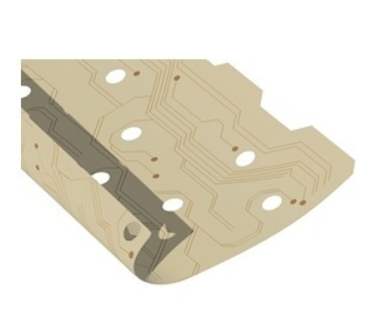
Rogers CuClad 6700 is a chlorotrifluoroethylene (CTFE) thermoplastic copolymer adhesive film engineered to bond:
-
PTFE-based RF laminates
-
Stripline and multilayer microwave PCB structures
-
Dissimilar dielectric materials requiring CTE matching
Key Material Characteristics
-
Thermoplastic (re-meltable, no chemical curing)
-
Very low melting temperature
-
Excellent dielectric matching with low-Dk laminates
-
Complies with ESA / NASA outgassing standards
-
Suitable for space, satellite, aerospace, and military RF PCBs
2. Special Features of Rogers CuClad 6700
Rogers CuClad 6700 adhesive film stands out due to its balanced electrical, thermal, and mechanical properties, making it ideal for demanding RF multilayer applications.
Core Advantages
-
Excellent bonding to PTFE substrates
-
Uniform electrical performance across bonded layers
-
Low dielectric constant minimizes impedance discontinuities
-
Extremely low volatility and outgassing
-
Short lamination press cycles
3. Available Forms & Dimensions
Rogers CuClad 6700 adhesive film is available in:
Formats
-
Sheet form
-
Roll form
Standard Width
-
24 inches (610 mm)
This flexibility allows efficient processing for prototype, small-batch, and volume RF PCB production.
4. Storage, Shelf Life & Handling Guidelines
Shelf Life
-
Unlimited shelf life if stored under proper conditions
Recommended Storage Conditions
-
Store in original sealed packaging
-
Temperature: ≤ 25°C
-
Relative Humidity: ≤ 70%
-
Avoid direct sunlight exposure
Storage Positioning
-
Hang rolls on a roll core or store vertically
-
Avoid flat stacking to prevent wrinkles or deformation
Proper storage ensures consistent bonding performance and material integrity.
5. Key Features & Thickness Options
Thickness Options
Rogers CuClad 6700 is available in two standard thicknesses:
-
0.0015 inch (0.038 mm)
-
0.003 inch (0.076 mm)
These options allow engineers to fine-tune:
-
Stripline impedance
-
Layer spacing
-
Mechanical thickness tolerance
6. Electrical Performance of Rogers CuClad 6700
Electrical properties are critical when bonding RF and microwave PCB layers.
Electrical Properties (Typical)
-
Dielectric Constant (Dk) @ 10 GHz: 2.35
-
Dissipation Factor (Df) @ 10 GHz: 0.0025
-
Volume Resistivity: 1.0 × 10¹⁸ ohm·cm
-
Surface Resistivity: 1.0 × 10¹⁶ ohms
-
Dielectric Strength (ASTM D149): 98.4 kV/mm
These values make CuClad 6700 electrically compatible with low-Dk PTFE laminates, minimizing signal degradation at high frequencies.
7. Thermal Properties & Temperature Limits
Thermal stability is essential for multilayer RF PCB lamination and long-term reliability.
Thermal Characteristics
-
Thermal Conductivity: 0.170 W/m·K
-
Melting Point: 184°C (≈ 397°F)
-
Maximum Continuous Operating Temperature (Air): ≤ 176°C
The low melting point enables:
-
Lower lamination temperatures
-
Shorter press cycles
-
Reduced thermal stress on PTFE substrates
8. Physical Properties
Physical Performance
-
Density: 2.10 g/cm³
-
Water Absorption: 0.005% (minimum)
Low moisture uptake ensures stable performance in:
-
High-humidity environments
-
Outdoor and automotive RF systems
-
Aerospace and satellite applications
9. Advantages of Using Rogers CuClad 6700
Using Rogers CuClad 6700 adhesive film provides several key benefits:
-
Inherent flame retardancy
-
Dielectric properties closely matched to low-Dk laminates
-
Excellent CTE compatibility with PTFE materials
-
Short press cycle → higher production efficiency
-
Proven reliability in aerospace and space-grade PCBs
10. Typical Applications
Rogers CuClad 6700 adhesive film is commonly used in:
-
Multilayer PTFE RF PCBs
-
Stripline and buried RF transmission lines
-
Radar and phased-array antennas
-
Satellite communication modules
-
Aerospace and defense microwave circuits
-
Hybrid PTFE + Rogers laminate stack-ups
11. Rogers CuClad 6700 – FAQ
Q1: Is Rogers CuClad 6700 suitable for PTFE multilayer PCBs?
Yes. It is specifically designed to bond PTFE laminates with excellent electrical and mechanical reliability.
Q2: Does CuClad 6700 affect RF performance?
No. Its low dielectric constant and low loss tangent ensure minimal impact on impedance and insertion loss.
Q3: Is Rogers CuClad 6700 suitable for space applications?
Yes. It complies with ESA/NASA requirements for low volatility and low outgassing.
Q4: What is the main advantage over epoxy bonding films?
CuClad 6700 offers:
-
Better dielectric matching
-
Lower loss
-
Re-meltable thermoplastic bonding
-
Reduced thermal stress
12. Why Choose KKPCB for Rogers CuClad 6700 PCBs?
KKPCB specializes in Rogers RF PCB manufacturing, offering:
-
Rogers CuClad 6700 multilayer lamination
-
PTFE + Rogers hybrid PCB stack-ups
-
Controlled impedance RF PCBs
-
Aerospace & automotive-grade process control
-
Prototype to mass production support
Request a Rogers CuClad 6700 PCB Quote from KKPCB Today
